




Bookkeeping for eBay sellers is no longer optional in 2026—it’s the difference between running a hobby and building a profitable ecommerce business.
Many sellers think they’re making money because sales look good on eBay. But when fees, returns, shipping, and taxes are factored in, profits often shrink dramatically.
If you’ve ever wondered:
- “Why doesn’t my bank balance match my eBay sales?”
- “Am I actually making profit?”
- “Why are taxes higher than expected?”
Then your bookkeeping system needs fixing.
This guide will walk you through a complete, real-world bookkeeping system for eBay sellers, helping you track accurate profit, stay compliant, and scale smarter.
What Is Bookkeeping for eBay Sellers and Why It Matters in 2026
Bookkeeping for eBay sellers is the process of recording, organizing, and analyzing all financial transactions related to your eBay business.
This includes:
- Sales revenue
- eBay fees
- Shipping costs
- Product sourcing costs
- Refunds and returns
Why It Matters More in 2026
- eBay Managed Payments changed how payouts work
- Tax reporting (1099-K) is stricter
- Multi-platform selling is increasing
- Profit margins are tighter
Without proper bookkeeping, you’re guessing—not running a business.
Understanding eBay Numbers: What You Must Track (Most Sellers Don’t)
One of the biggest mistakes sellers make is relying only on eBay’s dashboard.
Here’s what you actually need to track:
1. Gross Sales vs Net Sales
Gross = total order value
Net = what you actually receive after fees
2. eBay Fees
- Final value fees
- Promoted listing fees
- Store subscription costs
3. Shipping Costs
Even if buyers pay shipping, your actual cost matters.
4. Cost of Goods Sold (COGS)
What you paid to source products.
5. Refunds and Returns
These directly reduce profit but are often ignored.
6. Payment Processing Adjustments
eBay deducts these before payout.
👉 Missing even one of these = inaccurate profit.

eBay Managed Payments: Why Your Numbers Don’t Match
This is where most confusion happens.
eBay doesn’t send you full order amounts. Instead:
- It deducts fees
- Adjusts refunds
- Then sends payouts
Result:
Your bank deposits ≠ your sales
Example:
- Sale: $100
- Fees: $15
- Shipping: $10
- Payout: $75
Without bookkeeping, you might think:
👉 “I made $100” (wrong)
Actual profit could be much lower depending on product cost.
Step-by-Step Bookkeeping System for eBay Sellers
Here’s a simple system that actually works in 2026:
Step 1: Separate Business Finances
Use a dedicated bank account. Never mix personal and business.
Step 2: Export eBay Reports
Download:
- Transaction reports
- Payout summaries
- Fee breakdowns
Step 3: Categorize Every Transaction
Create categories:
- Sales
- Fees
- Shipping
- Inventory
- Expenses
Step 4: Track Inventory Costs
Every product must have a cost attached.
Step 5: Reconcile Payouts
Match eBay payouts with your records.
Step 6: Generate Monthly Reports
Track:
- Profit
- Expenses
- Growth trends
Cash vs Accrual Accounting: Which Is Better for eBay Sellers?
Cash Method (Best for Beginners)
- Record income when received
- Simple and easy
Accrual Method (For Scaling Sellers)
- Record income when sale happens
- More accurate financial picture
2026 Recommendation
Start with cash → switch to accrual when scaling.

Manual vs Automated Bookkeeping in 2026
Manual (Spreadsheets)
✅ Free
✅ Flexible
❌ Time-consuming
❌ Error-prone
Automated Tools
✅ Saves time
✅ Reduces errors
✅ Real-time insights
Best Strategy
Use a hybrid:
- Spreadsheet for control
- Automation for scaling
How to Calculate Real Profit on eBay (Simple Formula)
Profit Formula:
Profit = Sales – Fees – Shipping – Product Cost – Other Expenses
Example:
- Sales: $100
- Fees: $15
- Shipping: $10
- Product cost: $40
👉 Profit = $35
Most sellers overestimate profit because they ignore hidden costs.
Inventory Accounting: The Missing Piece
Inventory is often ignored—but it directly affects profit.
Key Concepts:
- COGS (Cost of Goods Sold)
- Unsold inventory = asset (not expense yet)
Methods:
- FIFO (First In First Out) – most common
- LIFO – less common
Accurate inventory tracking = accurate taxes.
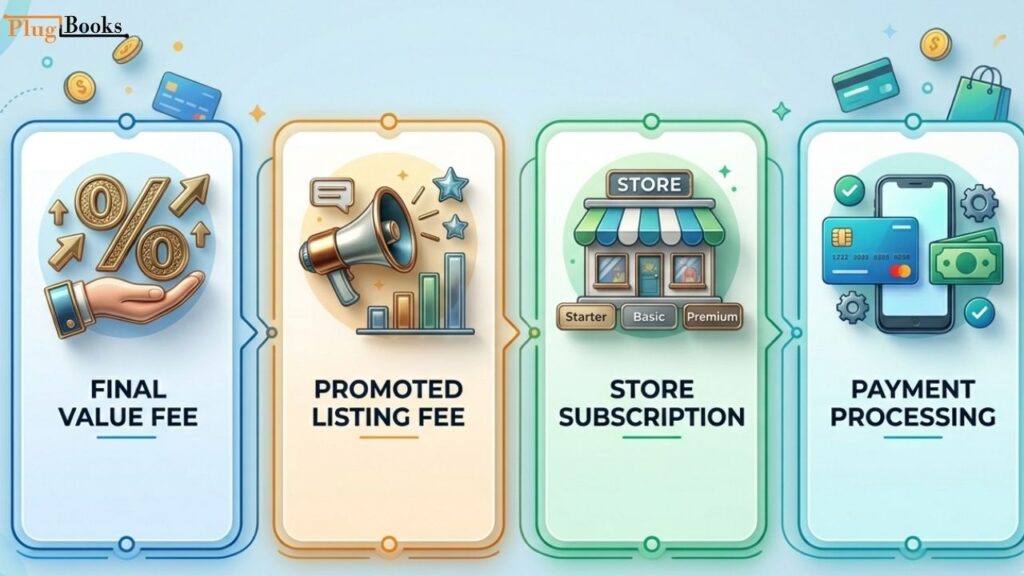
eBay Fees Breakdown (And How to Record Them)
You should record fees separately:
- Final value fee
- Promoted listing fee
- Store subscription
- Payment processing
Why?
👉 Helps identify where money is leaking.
Tax Rules for eBay Sellers in 2026
1099-K Reporting
eBay reports your income to tax authorities.
Important Points:
- You’re taxed on profit, not revenue
- Expenses reduce taxable income
- Poor bookkeeping = higher taxes
Common Tax Mistakes
- Not tracking expenses
- Ignoring inventory
- Misreporting income
Monthly Bookkeeping Checklist
Weekly:
- Record transactions
- Update inventory
Monthly:
- Reconcile payouts
- Check profit margins
Quarterly:
- Prepare for taxes
Consistency is key.
Common Bookkeeping Mistakes eBay Sellers Must Avoid
❌ Mixing personal and business finances
❌ Ignoring small expenses
❌ Not tracking returns
❌ Relying only on eBay reports
❌ Not reconciling payouts
These mistakes silently kill profits.
How Bookkeeping Helps You Scale Faster
Good bookkeeping isn’t just for taxes—it’s a growth tool.
It Helps You:
- Identify profitable products
- Cut unnecessary costs
- Improve pricing strategy
- Forecast future growth
Data-driven sellers always win.

When Should You Stop DIY Bookkeeping?
Signs:
- You’re making consistent sales
- Managing multiple platforms
- Spending hours on spreadsheets
At this stage:
👉 Automation or professional help saves time and money.
Streamline Bookkeeping for eBay Sellers Using PlugBooks
If you want to simplify bookkeeping without losing accuracy, tools like PlugBooks can help.
Benefits:
- Automatic syncing with eBay
- Real-time profit tracking
- Multi-platform support
- Clean financial reports
This removes manual errors and saves hours every week.

FAQs
1. Do eBay sellers need bookkeeping?
Yes, to track profit accurately and stay tax compliant.
2. What is the best bookkeeping method for eBay?
Cash method for beginners, accrual for advanced sellers.
3. Can I use Excel for eBay bookkeeping?
Yes, but it becomes inefficient as you scale.
4. How often should I update my books?
Weekly updates are recommended.
5. Do I need to track every expense?
Yes—every cost impacts your profit.
6. Why is my profit different from eBay sales?
Because eBay deducts fees, shipping, and adjustments.
7. What accounting software for eBay sellers should I use?
It automates fee tracking, sales, and taxes.
8. How does an eBay bookkeeping spreadsheet help?
It tracks sales, fees, and profit in one place.
9. Do I need eBay seller accountants?
They help high-volume sellers with bookkeeping and taxes.
Quick Recap
- Track all income and expenses
- Don’t rely only on eBay dashboard
- Understand payouts vs sales
- Use a structured bookkeeping system
- Automate as your business grows
Final Thoughts
Bookkeeping for eBay sellers in 2026 is no longer just about staying organized—it’s about survival and growth.
The sellers who win are the ones who:
- Know their real numbers
- Track every cost
- Make data-driven decisions
If you ignore bookkeeping, you risk:
👉 Overpaying taxes
👉 Losing profit
👉 Making poor business decisions
But if you do it right:
👉 You gain clarity, control, and confidence
Start simple, stay consistent, and scale smart.
Now ask yourself:
Do you actually know your real profit—or are you just guessing?