




Selling on Amazon in 2026 offers incredible opportunities, but it also comes with challenges. Fees, shipping costs, storage charges, and fluctuations in fulfillment fees can seriously eat into your profits if you’re not careful. That’s why an Amazon seller calculator is essential.
A reliable calculator helps sellers estimate net profit, track fees, and make smarter pricing decisions before investing in inventory. Using the right tool can be the difference between a thriving store and lost revenue.
Key points you’ll learn in this guide:
- Why using an Amazon seller calculator is critical for your 2026 business strategy.
- Features to look for in the best calculators.
- Step-by-step instructions for maximizing profits.
- Common mistakes and how to avoid them.
- How to account for 2026-specific changes in Amazon fees.
By the end of this guide, you’ll have all the knowledge to choose and use the best Amazon seller calculator confidently.
What is an Amazon Seller Calculator?
An Amazon seller calculator is a tool designed to help sellers calculate revenue, fees, and profit margins for any product they plan to sell on Amazon. It considers multiple factors, including:
- FBA (Fulfillment by Amazon) fees: Charges for storing, packing, and shipping products.
- Referral fees: A percentage Amazon takes from each sale, based on the product category.
- Shipping and storage costs: Costs vary by product size, weight, and storage duration.
- Cost of Goods Sold (COGS): How much you pay to acquire or produce the product.
With this data, sellers can decide if a product is profitable before purchasing inventory. It also allows them to compare multiple products quickly, helping them focus on the most promising items.

Why You Must Track Amazon Selling Profits in 2026
With Amazon updating its fee structures almost every year, using a calculator is no longer optional. Here’s why:
- Accurate Profit Estimates – Avoid nasty surprises by calculating fees upfront.
- Pricing Optimization – Determine a competitive selling price that still maximizes profits.
- Inventory Planning – Decide which products to stock and which ones to avoid.
- Fee Awareness – Stay updated on 2026 fee adjustments, including long-term storage and FBA fulfillment changes.
- Decision-Making Confidence – Take action based on numbers rather than guesswork.
For example, a small gadget that seems profitable at first glance may lose money once FBA fees and shipping costs are factored in. Using a calculator ensures you know the real profit margin before making the investment.
What to Check in the Best Amazon Revenue Calculator
Not all calculators are created equal. When searching for the best Amazon seller calculator for 2026, keep an eye on these features:
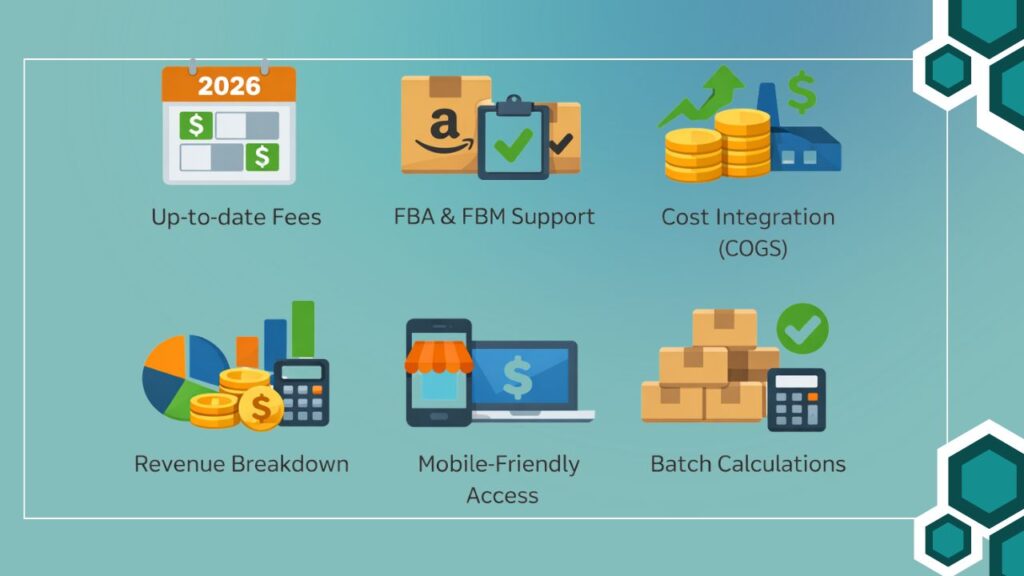
- Up-to-date 2026 Fee Structure – Make sure the tool includes the latest FBA, referral, and storage fees.
- FBA and FBM Support – Many sellers use both Fulfillment by Amazon (FBA) and Fulfillment by Merchant (FBM), so the calculator should handle both methods.
- COGS Integration – Factor in your product costs for accurate profit calculation.
- Revenue Breakdown – View net profit after all fees and expenses.
- Mobile-Friendly Access – Sellers need quick access, whether on a laptop, tablet, or phone.
- Batch Calculations – Some advanced tools let you calculate profits for multiple products at once.
A good calculator saves you time, reduces errors, and ensures that your pricing strategy aligns with actual costs.
How to Calculate Your Amazon Selling Profits Easily
Using a calculator is simple, but to get the most accurate results, follow these steps:
Step 1: Enter Product Details
Input your product price, shipping costs, and cost of goods. The more precise your data, the more accurate your results.
Step 2: Choose Fulfillment Method
Select FBA or FBM. FBA includes Amazon handling shipping, returns, and customer service, while FBM requires you to manage these yourself. Fees differ, so choosing correctly is essential.
Step 3: Review Fees and Profit
The calculator shows referral fees, FBA or FBM fees, and estimated net profit. Look at both profit per unit and profit percentage to compare products efficiently.
Step 4: Adjust Pricing
Experiment with different selling prices to see how profit changes. You can also simulate discounts, promotions, or seasonal pricing adjustments.
Step 5: Make Data-Driven Decisions
Based on the results, decide which products are worth investing in. Avoid low-margin items that may cost more in fees than they generate in profit.
Common Mistakes Sellers Make
Even experienced sellers can fall into traps if they rely on calculators incorrectly:
- Ignoring Storage Fees – Long-term storage fees can dramatically reduce profits.
- Using Outdated Tools – Always check that the calculator reflects 2026 fee updates.
- Overlooking Shipping Costs – Especially for FBM products, shipping can be a hidden cost.
- Neglecting Promotions and Discounts – Temporary price cuts can affect net profit calculations.
- Not Considering Seasonal Changes – FBA and referral fees may vary during high-demand periods like holidays.
Avoiding these mistakes ensures your calculations are reliable and actionable.
Security Tips When Using Calculators
- Use trusted and verified calculators to ensure accurate results.
- Avoid sharing your Amazon account login unless the tool is officially recognized.
- Double-check percentages and fees against Amazon’s official 2026 fee schedule.
A secure, reliable calculator protects your business data and prevents costly errors.
Top Long-Tail 2026 Keywords You Can Target Around Calculators
To rank higher and attract serious Amazon sellers, you can optimize your content with long-tail keywords like:
- Amazon FBA seller profit margin calculator 2026
- Amazon seller revenue estimator 2026
- Amazon product profitability and cost calculator online 2026
- Free Amazon FBA income and fees tracker 2026
- How to calculate Amazon seller profit accurately 2026
Integrating these naturally into your blog, headings, and meta content will improve SEO and attract users ready to act.
How PlugBooks Helps Amazon Sellers in 2026
Managing multiple Amazon listings, tracking fees, and calculating profits can be overwhelming, especially with 2026’s updated FBA and referral charges. PlugBooks.io simplifies this process by automatically importing your Amazon orders, categorizing expenses, and providing real-time profit calculations.
By integrating seamlessly with accounting tools like QuickBooks and Xero, PlugBooks helps sellers save time, avoid costly mistakes, and make smarter decisions using accurate data. Whether you’re evaluating new products or monitoring ongoing sales, PlugBooks complements your Amazon seller calculator strategy, ensuring your business stays profitable and compliant throughout the year.

FAQs
Q1: Are Amazon seller calculators free?
Yes, many are free online, while some premium tools offer advanced features for a subscription.
Q2: Can calculators predict exact profits?
Calculators provide estimates. Actual profit may vary slightly due to unexpected costs like returns or promotions.
Q3: Do I need separate calculators for FBA and FBM?
Some calculators handle both. Check features before using one tool.
Q4: Are calculators updated for 2026 fees?
The best calculators update regularly to include Amazon’s latest fees. Always verify before relying on numbers.
Q5: Can I calculate multiple products at once?
Yes, advanced calculators allow batch calculations for sellers with many listings, saving time and effort.
Q6: How often should I use a calculator?
Use it before adding new products, updating pricing, or during fee changes to make informed decisions.
Quick Recap
- An Amazon seller calculator helps estimate profits, fees, and revenue accurately.
- It’s crucial in 2026 due to updated FBA, referral, and storage fees.
- Use calculators for pricing optimization, inventory decisions, and profit planning.
- Avoid mistakes like ignoring storage fees, using outdated tools, or overlooking shipping costs.
- Look for calculators that are up-to-date, reliable, mobile-friendly, and flexible.
Conclusion
Selling successfully on Amazon in 2026 requires data-driven decisions. The right Amazon seller calculator ensures you understand fees, profit margins, and pricing strategies before investing in inventory. By factoring in all costs, testing multiple pricing strategies, and staying updated on 2026 fee changes, you can confidently grow your Amazon business without unexpected financial surprises.
Start using a calculator today and turn data into profits, making smarter decisions for your Amazon store every step of the way.
One thought on “What’s the Best Amazon Seller Calculator for 2026?”