



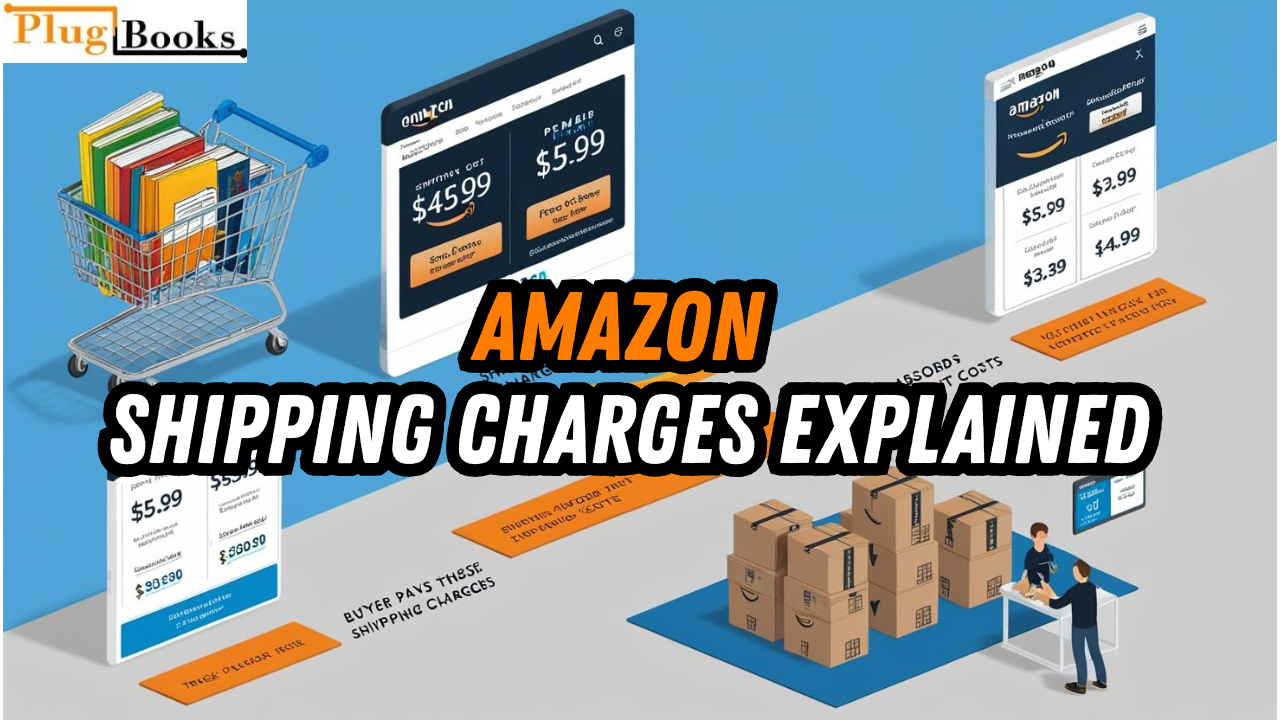
Amazon Shipping Charges: Have you ever added items to your Amazon cart only to find unexpected shipping costs? Understanding these fees can help you avoid extra charges and improve your overall shopping experience. This guide covers Amazon’s shipping policies and tips to manage or reduce costs.
Keynotes
- Amazon shipping charges depend on item, order size, and delivery speed.
- Prime members may still incur fees in some cases.
- Seller fees vary by fulfillment type (FBA/FBM).
- PlugBooks.io simplifies tracking and managing shipping costs.
- Always check delivery charges before ordering or shipping.
Shipping Charges Amazon Buyers Should Expect
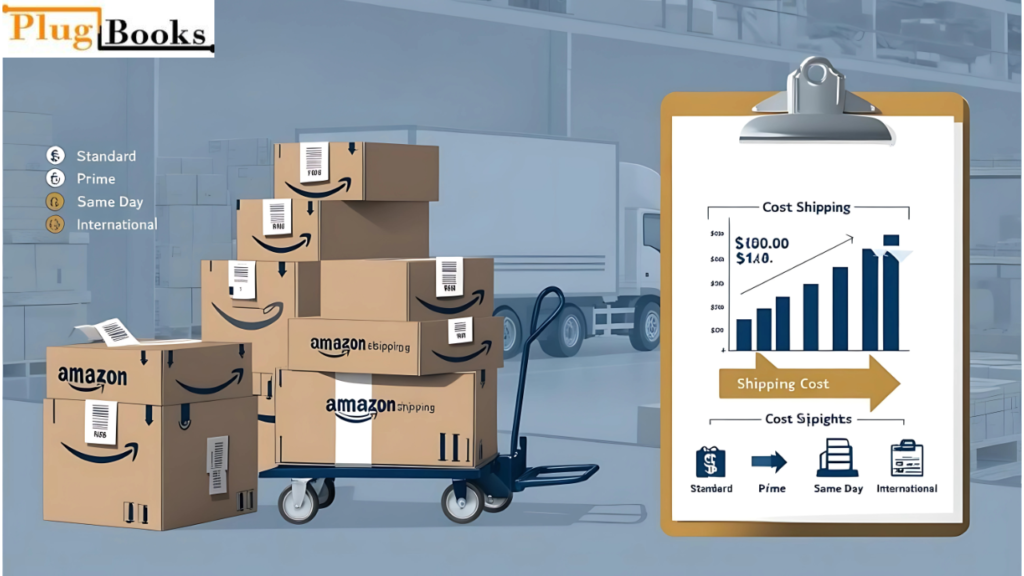
Things like the kind of item, where the seller is situated, the speed of delivery, and the member’s standing affect Amazon’s shipping prices. Here’s a broad estimate of what Amazon might charge for shipping should you be curious:
- Standard Shipping (Non-Prime): Should your order be less than the minimum, you will usually be required to pay more.
- Prime Shipping: With Amazon Prime, many things are free for shipping; but, not all of them.
- Same-Day/One-Day Delivery: Depending on your residence and the goods, one-day or same-day delivery could cost more.
- International Orders: Usually, orders from abroad have more import and transportation costs.
Look for items marked “Fulfilled by Amazon” or Prime eligible if you wish to cut amazon shipping charges.
Understanding Shipping Charges on Amazon for Sellers
If you sell on Amazon, you need to be aware that shipping charges are computed if you want to maximize profits. Based on the kind of item and delivery method, Amazon deducts shipping expenses from your funds. You pay Amazon to have your things shipped via Fulfilled by Amazon (FBA). Included in this cost are handling and packing expenses.Shipping expenses for Fulfilled by Merchant (FBM) sellers either passed on to the buyer or paid for by the seller, affecting your profit margins.
Here’s how to manage them:
- Shipping expenses can be recorded with plugbooks.io.
- Calculate your earning margins following Amazon’s costs.
- Discover the most cost-effective methods of shipping items.
Why Do Amazon Shipping Charges Vary?
The variation in amazon shipping charges depends on several dynamic factors:
- Package weight and size
- Shipping speed
- Shipping origin/destination
- Seller fulfillment method

How PlugBooks Helps Sellers Control Shipping Costs
PlugBooks.io helps sellers take full control of their shipping costs by automatically tracking every fee, giving a clear view of expenses, and providing insights to optimize pricing and improve profit margins. With seamless integration for bookkeeping, it simplifies financial management so sellers can focus on growing their business.
Conclusion
You must understand amazon shipping charges if you wish to buy and sell wisely on Amazon. Whether you are a Prime member curious about what those expenses might be or a seller trying to figure them out, knowing about shipping charges Amazon can help you save money and improve your experience.
Maintaining accurate expense records is more crucial than ever since rules and fees are continually changing. By tracking everything from your end revenues to delivery costs tools like Plugbooks.io keep you one step ahead. Recalling these pointers will enable you to maximize every offer and avoid shocks.

FAQs
1. What are Amazon charges for shipping based on?
They depend on delivery speed, order amount, and whether you have Prime.
2. Can I avoid shipping charges on Amazon?
Yes, by ordering eligible items and subscribing to Amazon Prime.
3. Do sellers pay Amazon charges for shipping?
Yes, especially if they’re using Fulfillment by Amazon or shipping directly.
4. Are shipping charges the same on all Amazon marketplaces?
No, they vary by country, product category, and seller fulfillment type.
5. How does Plugbooks.io help with Amazon shipping fees?
It tracks every fee, helping sellers manage and reduce shipping expenses.
One thought on “Amazon Shipping Charges Explained: Fees & How to Save”