




If you want to grow your ecommerce business and reach millions of potential customers, selling on Walmart in 2026 is one of the most promising opportunities. Walmart Marketplace has expanded rapidly, hosting millions of products from third-party sellers, providing vast exposure, high buyer intent, and competitive growth potential.
In this blog, you’ll learn how to become a seller on Walmart, the requirements to sell on Walmart, and the most effective strategies to succeed in 2026. By the end, you’ll have a clear roadmap to start selling confidently and profitably.
1. What is Walmart Marketplace?
Walmart Marketplace is an online platform where third-party sellers list their products directly on Walmart.com. Unlike being a traditional Walmart supplier, Marketplace sellers maintain their own inventory and manage sales alongside Walmart’s catalog.
Benefits of selling on Walmart Marketplace include:
- Access to millions of shoppers on Walmart.com.
- Low upfront costs – no subscription or listing fees; only a percentage of sales as referral fees.
- Optional fulfillment services through Walmart Fulfillment Services (WFS).
- Advertising and promotional tools to increase visibility.
Walmart Marketplace is an ideal platform for sellers who want to expand their online presence without heavy upfront investments.

2. Requirements to Sell on Walmart in 2026
Walmart is selective about who joins its Marketplace. Meeting the eligibility criteria increases your approval chances and ensures a smooth selling experience.
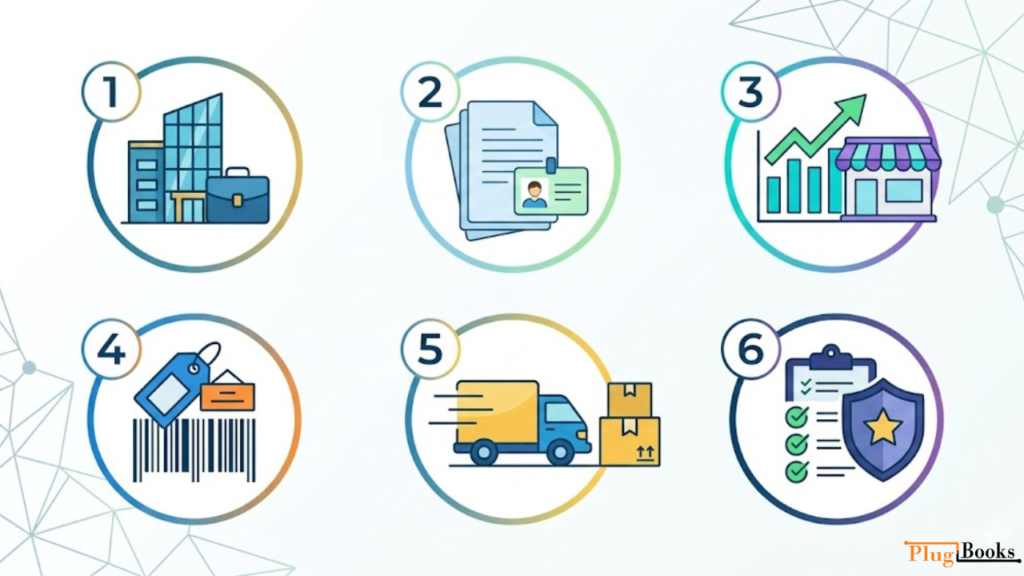
A. Registered Business
To sell on Walmart, you need a legally registered business:
- LLC, corporation, or other formal business entity.
- Business Tax ID (EIN) is required; Social Security Numbers are typically not accepted.
Having a registered business helps verify your legitimacy and protects both you and your customers.
B. Supporting Documentation
Walmart will ask for:
- Documents verifying your business name and address.
- Identity verification for the owner or legal representative.
- Bank account information for payments.
Accuracy is essential — missing or incorrect documents can delay approval.
C. Ecommerce Track Record
Walmart prefers sellers who have prior experience selling online:
- Previous marketplace experience on Amazon, eBay, Shopify, or other platforms.
- Proven order fulfillment and customer service capability.
A strong track record increases trust and may speed up the application process.
D. GTIN/UPC Codes
Every product listed must have a Global Trade Item Number (GTIN) or UPC, usually purchased from GS1. Walmart uses these codes to maintain catalog accuracy.
If you sell handmade or private-label products, you can request a GTIN exemption during setup.
E. Fulfillment & Returns
You must provide reliable fulfillment and returns. Options include:
- Walmart Fulfillment Services (WFS) for streamlined shipping and returns.
- Your own U.S. based fulfillment center.
Fast and accurate fulfillment directly affects your seller performance metrics.
F. Compliant Catalog
All products must comply with Walmart’s Prohibited Products Policy:
- No counterfeit or unsafe products.
- Certain categories like hazardous materials or restricted items are not allowed.
Ensuring compliance avoids listing removals and penalties.
3. How to Become a Seller on Walmart — Step-by-Step
Follow these steps to start selling successfully:
Step 1: Create a Seller Account
- Visit the Walmart Marketplace sign-up page.
- Submit your business email and legal business information.
- Agree to Walmart Marketplace terms.
This initial process takes only a few minutes.
Step 2: Complete Business Verification
After signing up, Walmart will:
- Verify your Business Tax ID and legal name.
- Request supporting documents if necessary.
- Approve your account in approximately 7–14 days, depending on verification speed.
Step 3: Set Up Payments
- Link your bank account or preferred payment processor.
- Note that early payment holds may apply until you establish a sales history.
Accurate payment setup ensures smooth payouts once orders start flowing.
Step 4: Configure Fulfillment & Shipping
- Choose shipping methods and delivery times.
- Integrate Walmart Fulfillment Services (optional but recommended).
- Set up returns handling for customer satisfaction.
Fast shipping and hassle-free returns improve your rankings on Walmart search.
Step 5: Upload Your Catalog
- Add products via Walmart Seller Center manually or using bulk file uploads.
- Include accurate product titles, descriptions, GTIN/UPC codes, and high-quality images.
- Optimize listings for search relevance and customer experience.
Well-optimized listings attract more clicks and conversions.
4. Walmart Marketplace Fees in 2026
Walmart Marketplace’s fee structure is simple and performance-based:
- No subscription or listing fees – list unlimited products for free.
- Referral fees – charged only after a sale; ranges from 8% to 20% depending on category.
This makes Walmart an attractive option for sellers seeking low-risk, scalable growth opportunities.
5. New-Seller Savings Program
In 2026, Walmart introduced New-Seller Savings, offering new sellers incentives to accelerate growth:
- Up to $2,000 WFS credits for fulfillment.
- Up to $1,000 in search marketing credits.
- Up to $500 in Walmart Connect ad credits.
- Discounts on referral fees for new sellers.
These programs help new sellers offset costs while building an initial customer base.
6. Tips for Success on Walmart Marketplace
Optimize Listings
- Use keywords in product titles and descriptions.
- Include multiple high-quality images.
- Highlight features and benefits.
Competitive Pricing
Monitor competitors to remain price-competitive without sacrificing profit margins.
Fast Fulfillment
Faster delivery improves customer satisfaction and conversion rates.
Use Advertising
Walmart Connect ads boost visibility and drive sales, especially during the first 90 days.
Monitor Performance Metrics
Maintain:
- Accurate shipping and low cancellation rates.
- Positive customer reviews.
- Compliance with all Walmart policies.
Poor performance can lead to listing suppression or account warnings.
7. Common Seller Challenges
- Verification delays: Incomplete or inaccurate documentation can slow approval.
- Compliance issues: Non-compliant listings may be removed or suspended.
- Marketplace support: Seller support can be slower than expected, so proactive management is essential.
Being prepared and staying informed reduces these challenges.
Manage Your Walmart Sales Effortlessly with PlugBooks.io
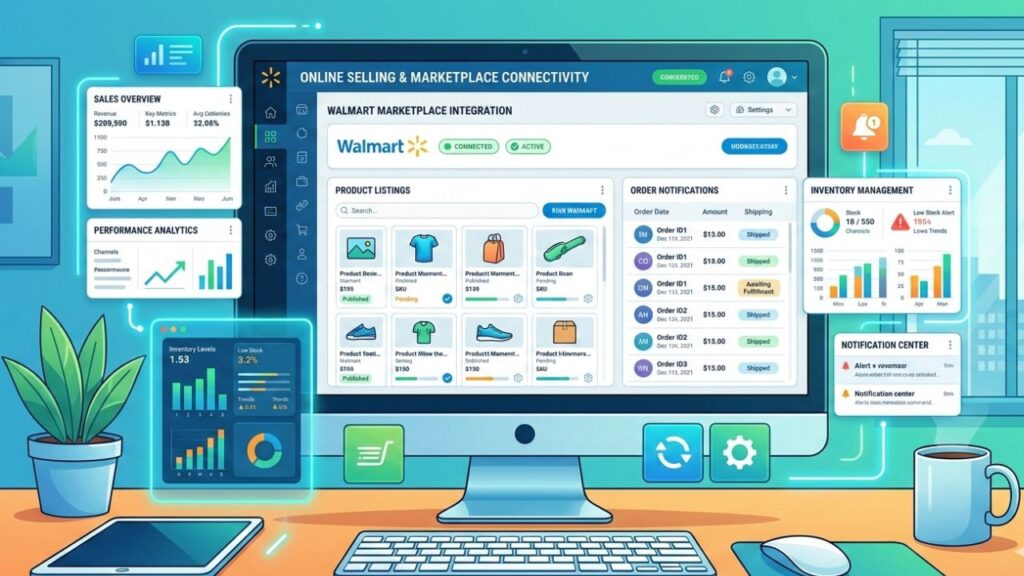
PlugBooks.io makes selling on Walmart easier than ever by automating inventory syncing, order management, and bookkeeping. Whether you’re juggling multiple products or marketplaces, PlugBooks.io ensures your data stays accurate, your orders are fulfilled on time, and your finances are organized.
Save hours of manual work, reduce errors, and focus on growing your business while PlugBooks.io handles the heavy lifting behind the scenes.
8. FAQs
Q: Can individuals sell on Walmart?
A: Walmart prefers registered businesses; individuals without formal business registration usually cannot join.
Q: How long does approval take?
A: Typically 7–14 days after document submission.
Q: Can international sellers participate?
A: Yes, but additional tax and U.S. business documentation is required.
Q: What products are prohibited?
A: Hazardous, counterfeit, or restricted items are not allowed.
Q: Is Walmart Fulfillment Services necessary?
A: Optional, but recommended for faster delivery and improved rankings.
9. Conclusion
Selling on Walmart in 2026 offers significant growth potential, especially for businesses prepared to meet its requirements and maintain high performance standards. The platform’s low upfront costs, performance-based fees, and new-seller incentives make it a highly attractive option alongside Amazon, eBay, and your own ecommerce store.
By following this guide:
- Understand the requirements to sell on Walmart.
- Complete the seller application accurately.
- Set up fulfillment, payments, and optimized product listings.
- Leverage advertising and promotional credits to grow faster.
With dedication, strategic planning, and attention to Walmart’s policies, selling on Walmart Marketplace can become a profitable and scalable part of your ecommerce business in 2026.

One thought on “How to Start Selling on Walmart 2026: Complete Guide”