




How to sell on Walmart marketplace step-by-step
Ecommerce is growing rapidly in 2026, and after Amazon, one of the fastest-growing marketplaces is Walmart.
Walmart Seller Central is Walmart’s official seller dashboard where businesses can list products, manage orders, track payments, and monitor performance.
Today’s online sellers no longer rely on a single platform. They often sell across Amazon, Shopify, and Walmart. While this creates more opportunities, it also introduces a major challenge:
👉 complex financial tracking and bookkeeping
In this guide, you will learn:
- What Walmart Seller Central is
- How it works
- Fee structure
- Common seller problems
- Best practices for success
What is Walmart Seller Central?
Walmart Seller Central is an online portal that allows approved sellers to operate on Walmart Marketplace.
Through this system, sellers can:
- List products for sale
- Manage inventory
- Process customer orders
- Track earnings and performance
It works as Walmart’s equivalent of Amazon Seller Central, but with a more selective approval process.
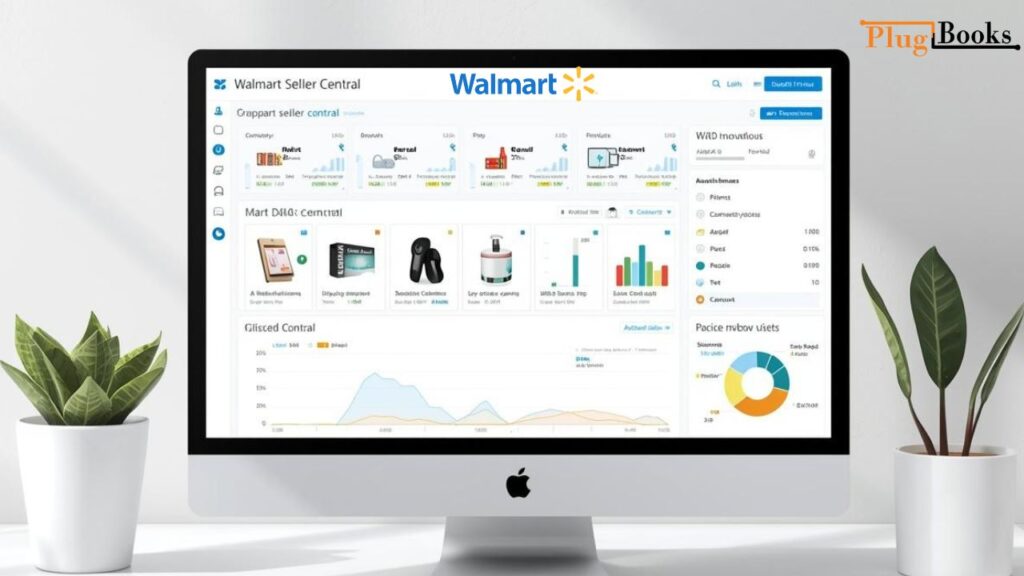
How Walmart Seller Central Works
The platform operates through a structured workflow:
1. Product Listing
Sellers upload products with:
- Title
- Description
- Images
- Pricing
2. Order Management
When a customer places an order:
- Seller receives notification
- Product is shipped
- Tracking is updated
3. Payment Processing
Walmart processes payments and sends payouts weekly or bi-weekly after deducting fees.
4. Performance Tracking
Sellers can monitor:
- Sales performance
- Return rates
- Customer feedback
- Order defects
Requirements to Become a Walmart Seller
To join Walmart Marketplace, sellers must meet strict requirements:
Basic requirements:
- Registered business entity
- Tax identification number
- Valid business address (mostly US-based requirement)
- Ecommerce selling experience
Approval is not automatic, and Walmart reviews applications carefully.
Walmart Seller Fees Explained
Unlike subscription-based platforms, Walmart does not charge a monthly fee. Instead, it uses a commission-based model.
Typical fees include:
- Referral fees (5% to 20% depending on category)
- Shipping costs (if applicable)
- Optional advertising costs
👉 The biggest challenge is that fee structures vary by category, making profit calculation more complex.
Common Problems Walmart Sellers Face
Understanding challenges is key for ranking content because it matches real user intent.
1. Profit Tracking Confusion
Sellers often struggle to understand:
- True profit after fees
- Net vs gross earnings
2. Multi-Channel Complexity
Selling on multiple platforms creates:
- Scattered data
- Inconsistent reporting
- Manual reconciliation issues
3. Inventory Management Issues
Stock levels may not sync properly across channels.
4. Tax Season Difficulties
Without organized records, tax filing becomes stressful and time-consuming.

Why Walmart Marketplace is Growing Fast
Walmart is expanding aggressively in ecommerce due to:
- Strong brand trust
- Lower competition compared to Amazon
- High organic traffic
- Increasing third-party seller adoption
This makes it a strong opportunity for new and experienced sellers.
Accounting Challenges for Sellers
One of the biggest hidden issues in ecommerce is bookkeeping.
Sellers must manage:
- Sales transactions
- Platform fees
- Refunds and returns
- Tax reporting
- Cross-platform reconciliation
As businesses grow, spreadsheets and manual tracking become unreliable.

Multi-Channel Seller Use Case: How Modern Ecommerce Businesses Manage Accounting
Today’s ecommerce sellers rarely operate on a single platform. Most businesses sell across multiple marketplaces like Amazon, eBay, and Shopify, which creates a major challenge: keeping financial data accurate, organized, and up to date.
When sales come from different channels, sellers often face issues such as:
- Scattered transaction data
- Difficult profit tracking
- Manual reconciliation errors
- Time-consuming bookkeeping
This is where automation becomes essential for scaling businesses.
Many growing sellers use solutions like PlugBooks to simplify this process. It helps businesses consolidate financial data from multiple ecommerce platforms such as Amazon, eBay, and Shopify, making it easier to understand true profit and performance in one place.
In addition, PlugBooks connects with leading accounting systems like QuickBooks and Xero, allowing sellers to keep their bookkeeping fully synced and audit-ready without manual effort.

The Real Problem: Fragmented Data
When sellers operate on multiple platforms:
- Each marketplace stores data separately
- Financial reports become inconsistent
- Profit visibility decreases
This leads to poor decision-making and inaccurate forecasting.
Industry Direction: Automation Trend
Modern ecommerce sellers are shifting toward automation tools that help:
- Consolidate sales data
- Categorize fees automatically
- Generate financial reports
- Improve profit visibility
These tools are becoming essential for scaling businesses.
Best Practices for Walmart Sellers
1. Optimize Product Listings
Use clear titles, keywords, and high-quality images.
2. Track Fees Regularly
Monitor deductions weekly to avoid profit leakage.
3. Maintain Clean Inventory Records
Avoid stock mismatches across platforms.
4. Use Automation for Scaling
Manual accounting becomes inefficient as sales grow.
Future of Walmart Marketplace (2026 & Beyond)
Walmart continues to invest heavily in its marketplace:
- Expansion of global sellers
- AI-powered seller tools
- Faster fulfillment systems
- Improved analytics dashboards
The platform is becoming more competitive and data-driven.
Smart Seller Strategy
Successful ecommerce sellers are not just focused on sales—they focus on:
- Accurate data tracking
- Profit clarity
- Operational efficiency
- Scalable systems
Without financial visibility, scaling becomes risky.
Where Automation Tools Fit In
As sellers expand across Amazon, Shopify, and Walmart, they often need systems that:
- Consolidate multi-channel data
- Automate bookkeeping tasks
- Improve financial accuracy
- Provide real-time profit insights
This is becoming a standard requirement for growing ecommerce businesses.
FAQs
Q1: Is Walmart Seller Central free to use?
Yes, there is no monthly subscription fee.
Q2: Is Walmart Marketplace hard to join?
Yes, approval is selective and based on business credibility.
Q3: How does Walmart compare to Amazon?
Both are strong platforms but differ in competition, pricing, and traffic.
Q4: How can sellers track profits accurately?
Using automation tools or accounting software is the most reliable method.
Quick Recap
- Walmart Seller Central is a growing ecommerce platform
- Fees are commission-based, not subscription-based
- Multi-channel selling creates accounting challenges
- Automation is becoming essential for scaling sellers
Final Conclusion
Walmart Seller Central is a major opportunity for ecommerce sellers in 2026. However, success depends on more than just selling products.
True growth comes from:
- Understanding financial data
- Tracking fees and profits accurately
- Using systems that reduce manual work
As competition increases, sellers who focus on data clarity and automation will have a strong advantage in the marketplace.
4 thoughts on “Walmart Seller Central Guide 2026: Setup & Tips”