



Choosing the right accounting software can be overwhelming, especially with multiple QuickBooks versions available. Whether you are a freelancer, contractor, or small business owner, selecting the right QuickBooks product can save you time, money, and stress.
In this guide, we’ll compare QuickBooks for Self Employed vs Small Business, helping you understand:
- Key features of each version
- Pricing differences and plans
- Ease of use for different types of businesses
- Pros and cons to help you make an informed decision
By the end, you’ll know which QuickBooks version suits your business in 2026.
QuickBooks for Self Employed
Who Is It For?
QuickBooks Self-Employed is specifically designed for freelancers, gig workers, and independent contractors. If your business income comes from multiple clients and you don’t have employees, this version is ideal.
It focuses on simplicity, easy tax tracking, and expense management — everything you need to manage your finances without the complexity of full business accounting.
Key Features
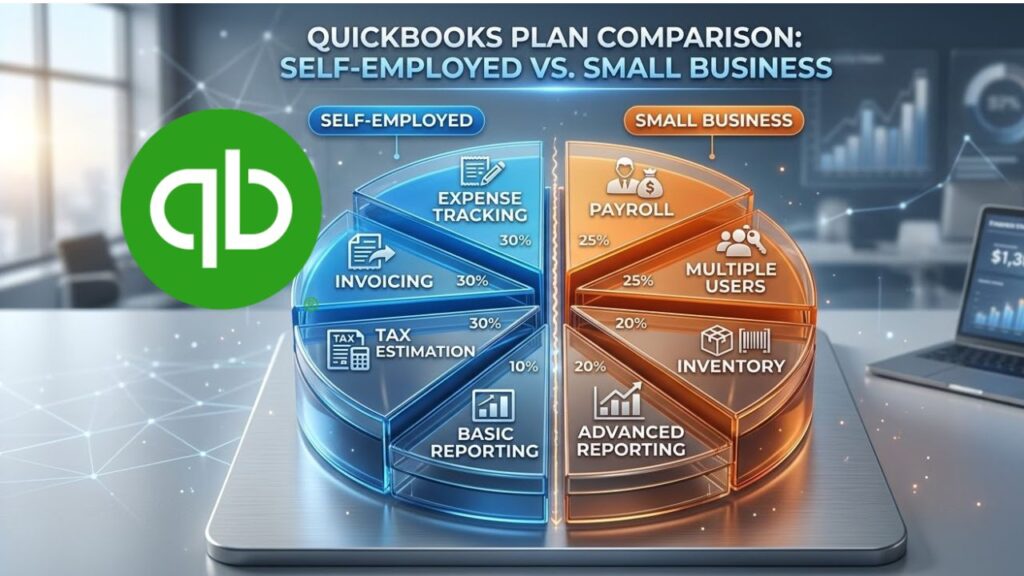
- Expense Tracking: Automatically categorize business expenses and track receipts. This ensures you never miss a deduction during tax season.
- Invoicing: Create professional invoices quickly and send them directly to clients.
- Tax Estimation: Helps you calculate quarterly taxes, track deductible expenses, and avoid surprises during tax season.
- Mileage Tracking: Use the mobile app to track business miles automatically.
- Simple Dashboard: Clean interface showing income, expenses, and tax estimates in one place.
Pricing & Plans
- Self-Employed: $15/month (billed annually)
- Self-Employed + Tax Bundle: $30/month (includes TurboTax integration for filing taxes)
Pros & Cons
Pros:
- Affordable for freelancers and gig workers
- Easy to navigate, even for beginners
- Focused on tax management and deductions
Cons:
- Limited reporting capabilities
- No payroll support
- Single-user only
QuickBooks for Small Business
Who Is It For?
QuickBooks Small Business is perfect for registered businesses, LLCs, or companies with employees. It provides comprehensive accounting features, including payroll, inventory management, and advanced reporting.
If you have a growing team or plan to scale your business, this version ensures you can handle more complex financial operations.

Key Features
- Payroll: Manage employees, calculate taxes, and run direct deposits.
- Inventory Tracking: Keep track of stock levels, product sales, and reorder points.
- Advanced Reporting: Generate profit & loss statements, balance sheets, and customizable reports for decision-making.
- Multi-User Access: Allow multiple team members to work simultaneously.
- Customizable Invoices: Add logos, payment links, and professional templates.
Pricing & Plans
- Simple Start: $30/month
- Essentials: $55/month
- Plus: $85/month
- Advanced: $200/month
Pros & Cons
Pros:
- Full-featured accounting for growing businesses
- Payroll and inventory management included
- Multi-user support for teams
Cons:
- Higher cost than Self-Employed version
- Slightly more complex interface for beginners

QuickBooks for Self Employed vs Small Business: Comparison Table
| Feature | Self-Employed | Small Business | Notes |
| Expense Tracking | ✅ | ✅ | Both track expenses easily |
| Invoicing | ✅ | ✅ | Small Business offers more templates and branding |
| Payroll | ❌ | ✅ | Only in Small Business plans |
| Tax Estimation | ✅ | ✅ | Self-Employed focuses on freelancers |
| Users | 1 | Multiple | Small Business supports teams |
| Inventory | ❌ | ✅ | Not available in Self-Employed |
| Reporting | Basic | Advanced | Small Business provides detailed reports |
Which One Should You Choose?
Your choice depends on your business structure, team size, and needs.
- Freelancers & Gig Workers: QuickBooks Self-Employed is ideal for managing income, expenses, and taxes without complexity.
- Small Businesses & LLCs: QuickBooks Small Business provides payroll, inventory, and multi-user capabilities.
- Growing Businesses: Start with Self-Employed if you’re solo, and upgrade as your business scales.
Scenario Examples:
- A freelance graphic designer → Self-Employed version
- A bakery with 5 employees → Small Business Plus plan
- A consultant planning to hire staff → Start with Self-Employed, then upgrade
Tips for Maximizing QuickBooks
- Track Expenses Regularly: Categorize every transaction to make tax filing easy.
- Link Bank Accounts: Automate expense tracking and reduce manual work.
- Use Mobile App: Manage finances anywhere, anytime.
- Backup Data: Ensure your financial data is safe and recoverable.
- Leverage Reporting Tools: Use reports to monitor profits, cash flow, and growth trends.
Streamline Your Finances with PlugBooks
PlugBooks helps you sync Shopify, Amazon, and eBay sales to QuickBooks automatically. Track expenses, generate reports, and save time, making accounting simple for freelancers and small business owners. Stay organized and make smarter financial decisions effortlessly.
FAQs
- Can I switch from Self-Employed to Small Business later?
Yes, QuickBooks allows upgrading your account as your business grows. - Does QuickBooks Self-Employed handle payroll?
No, payroll features are exclusive to Small Business plans. - Is there a free trial for both versions?
Yes, QuickBooks offers a 30-day free trial for Self-Employed and Small Business. - Which version is more affordable for freelancers?
Self-Employed is cheaper at $15/month, ideal for solo entrepreneurs. - Can the Small Business version handle multiple currencies?
Yes, the Plus and Advanced plans support multi-currency transactions. - Is QuickBooks easy for beginners?
Self-Employed is very beginner-friendly, while Small Business may require some learning for advanced features.
Quick Recap
- Self-Employed: Best for freelancers, simple tracking, and tax-focused tools.
- Small Business: Best for companies with employees, needing payroll, inventory, and multi-user support.
- Key Tip: Start with what you need now; upgrade as your business grows.
Conclusion
Selecting between QuickBooks for Self Employed vs Small Business depends on your business type and goals. Freelancers benefit from simplicity and tax management, while small businesses get full accounting, payroll, and inventory tools.
Start your QuickBooks free trial today to see which version works best for your business in 2026. Proper accounting software can help you save time, reduce errors, and focus on growing your business.
One thought on “QuickBooks for Self Employed vs Small Business 2026”