



Managing inventory is one of the most important parts of running a product-based business. Whether you sell through eCommerce, retail stores, or wholesale channels, knowing the true value of your inventory helps you track profits, manage taxes, and make smarter purchasing decisions.
This is where inventory valuation methods come in. These accounting techniques determine how businesses calculate the value of their unsold inventory and the cost of goods sold (COGS). Choosing the right method ensures accurate financial reports and better decision-making.
Key Takeaways
- Inventory valuation affects profit, taxes, and financial reporting.
- Businesses use different inventory accounting methods depending on their operations.
- FIFO, LIFO, and weighted average are the most common inventory costing methods.
- Each approach follows a specific inventory valuation formula.
- Understanding these inventory pricing methods helps businesses control costs and stay compliant.
What Are Inventory Valuation Methods?
Inventory valuation methods are accounting techniques used to calculate the value of inventory that remains unsold at the end of an accounting period.
They help businesses determine:
- Cost of goods sold (COGS)
- Ending inventory value
- Profit margins
- Taxable income
In simple terms, these methods answer an important question: How should a business assign cost to the products it sells and the products still in stock?
Different businesses use different inventory accounting methods depending on industry standards, financial goals, and tax strategies.
Types of Inventory Valuation Methods
There are several types of inventory valuation methods used in accounting, but the most widely used include:
- FIFO (First In, First Out)
- LIFO (Last In, First Out)
- Weighted Average Cost Method

These inventory costing methods determine how inventory costs flow through a company’s accounting system.
Let’s explore each one.
FIFO Inventory Valuation Explained
One of the most popular inventory valuation methods is FIFO inventory valuation.
FIFO stands for First In, First Out, which means the oldest inventory items are sold first while the newest inventory remains in stock.
How FIFO Works
If a company buys products in different batches at different prices, FIFO assumes the earliest purchased items are sold first.
Example:
| Purchase Batch | Quantity | Cost |
| Batch 1 | 100 units | $10 |
| Batch 2 | 100 units | $12 |
If the company sells 100 units, FIFO assumes they came from Batch 1 at $10 each.
Why Businesses Use FIFO
- Reflects real inventory flow for many industries
- Often results in higher profits when prices increase
- Simplifies financial reporting
Because of these advantages, fifo inventory valuation is commonly used in retail, manufacturing, and eCommerce.
How to Calculate Ending Inventory Using FIFO
Understanding how to calculate ending inventory using FIFO is essential for accurate accounting.
Step-by-Step Example
Assume a business purchases inventory like this:
| Purchase | Units | Cost |
| January | 100 | $10 |
| February | 100 | $12 |
| March | 100 | $14 |
Total inventory = 300 units
If the company sells 180 units, FIFO assumes the earliest units are sold first.
Calculation
- First 100 units → $10 = $1000
- Next 80 units → $12 = $960
COGS = $1960
Remaining inventory:
- 20 units from February = $240
- 100 units from March = $1400
Ending inventory = $1640
This example clearly shows how to calculate ending inventory using FIFO using a simple inventory valuation formula.
FIFO vs LIFO Inventory Method
When comparing the fifo vs lifo inventory method, the main difference lies in how costs are assigned.
| Method | Meaning | Cost Flow |
| FIFO | First In First Out | Oldest inventory sold first |
| LIFO | Last In First Out | Newest inventory sold first |
Key Differences
FIFO
- Higher profit in inflation
- More accurate inventory value
- Widely accepted globally
LIFO
- Lower taxes during inflation
- Used mainly in the United States
- Not allowed under IFRS
Understanding fifo vs lifo inventory method helps businesses choose the best inventory pricing methods for their financial strategy.
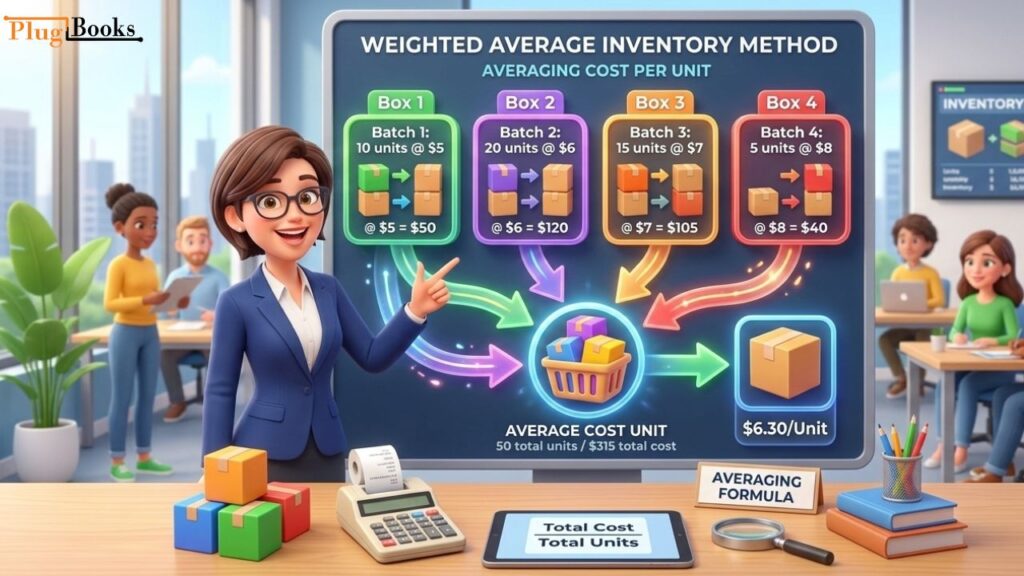
Weighted Average Inventory Method Explained
Another commonly used option among inventory costing methods is the weighted average inventory method.
Instead of tracking individual purchase batches, this method calculates a single average cost for all units.
Inventory Valuation Formula
Average Cost =
Total Cost of Inventory ÷ Total Units Available
Example:
Total inventory cost = $3000
Total units = 300
Average cost = $10 per unit
This approach simplifies accounting and is widely used when products are identical and difficult to track individually.
Inventory Pricing Methods Businesses Use
Businesses use various inventory pricing methods depending on their operational needs.
The most common include:
- FIFO
- LIFO
- Weighted Average
- Specific Identification
These inventory pricing methods influence financial reports, profit margins, and tax obligations.
Choosing the right approach among these inventory valuation methods ensures financial accuracy and better inventory management.
How to Value Inventory in Accounting
Knowing how to value inventory in accounting is essential for accurate financial statements.
Businesses must consider:
- Purchase costs
- Freight or shipping costs
- Manufacturing costs
- Storage expenses
Using proper inventory accounting methods ensures that inventory is recorded correctly in balance sheets and income statements.
Accurate inventory valuation also helps businesses maintain reliable inventory costing methods for financial analysis.
2026 Update: Inventory Accounting Policies to Know
In 2026, businesses—especially eCommerce sellers—are focusing more on automated inventory accounting systems and stricter financial transparency.
Important Notes for 2026
- Many companies are shifting toward real-time inventory valuation through accounting software.
- IFRS standards continue restricting the use of LIFO internationally.
- Businesses selling online must maintain accurate inventory accounting methods to meet digital tax reporting requirements.
- Cloud accounting tools now automate inventory valuation formula calculations to reduce errors.
Adapting to these updates ensures businesses remain compliant and maintain accurate financial records.
Common Challenges with Inventory Valuation
Even though inventory valuation methods are essential, businesses often face several challenges.
1. Price Fluctuations
Changing supplier prices affect the accuracy of inventory costing methods.
2. Inventory Tracking Errors
Poor inventory tracking can distort financial reports.
3. Choosing the Right Method
Many businesses struggle to decide between fifo vs lifo inventory method or weighted average.
4. Complex Calculations
Understanding how to calculate ending inventory using FIFO or other formulas can be confusing without proper systems.
Implementing reliable inventory pricing methods and accounting software can help solve these problems.
Why Inventory Valuation Matters for Businesses
The right inventory valuation methods can significantly impact a company’s financial health.
Benefits include:
- Accurate profit calculations
- Better tax planning
- Improved financial reporting
- Stronger inventory control
- Smarter purchasing decisions
Businesses that understand how to value inventory in accounting gain better insights into costs and profitability.
Simplify Inventory Accounting with PlugBooks
Managing inventory valuation methods, tracking stock costs, and maintaining accurate financial records can be challenging for online sellers. PlugBooks helps eCommerce businesses automate inventory accounting, monitor cost of goods sold, and keep financial reports organized.
With the right tools and expert support, sellers can easily manage inventory data and make better financial decisions in 2026.

Quick Recap
- Inventory valuation methods determine how businesses calculate inventory value.
- The most common inventory accounting methods include FIFO, LIFO, and weighted average.
- FIFO inventory valuation is widely used because it reflects natural inventory flow.
- Learning how to calculate ending inventory using FIFO improves financial accuracy.
- Businesses use different inventory pricing methods depending on accounting policies and industry needs.
Conclusion
Understanding inventory valuation methods is vital for accurate financial reporting and effective inventory management. Choosing the right inventory costing methods affects profits, taxes, and operations.
In 2026, using modern accounting tools and reliable inventory accounting methods—like PlugBooks—helps businesses stay compliant, track inventory, and make smarter financial decisions.

Frequently Asked Questions (FAQs)
1. What are the main types of inventory valuation methods?
The main inventory valuation methods are FIFO, LIFO, and the weighted average method. These help businesses calculate inventory value and cost of goods sold.
2. Why do businesses use FIFO inventory valuation?
FIFO inventory valuation assumes older stock is sold first. It often reflects real product flow and gives accurate inventory value.
3. Which inventory valuation method is best for small businesses?
FIFO and weighted average are commonly used because they are simple and widely accepted inventory accounting methods.
4. How do inventory pricing methods affect profit?
Different inventory pricing methods change how costs are assigned to products sold, which directly impacts profit and taxes.
5. Can companies change their inventory accounting methods?
Yes, businesses can change inventory accounting methods, but they must follow accounting rules and document the change.
6. What tools help manage inventory valuation in 2026?
Modern accounting software automates inventory valuation methods, helping businesses track stock, calculate costs, and maintain accurate records.