



Entering eCommerce no longer requires building everything from scratch. In 2026, shopify stores for sale have become a powerful shortcut for entrepreneurs who want to skip the time-consuming setup phase and move directly into growth. Instead of spending weeks designing a website, uploading products, and testing suppliers, you can acquire a ready-made store that already has structure, branding, and sometimes even revenue.
However, this opportunity comes with a challenge. Not every store listed in the market is worth buying. Many are under-optimized, some are overhyped, and others are simply built to sell—not to succeed. That’s why a strategic, data-driven approach is essential when evaluating any shopify store for sale.
This guide is designed to give you an advanced understanding of different store types, how they work when sold, and how to choose the right one based on your goals.
Key Points (Quick Overview)
- Shopify stores for sale vary by purpose, not just design
- Prebuilt stores are best for beginners but need marketing
- Dropshipping stores are easy to launch but harder to scale
- Profitable stores offer faster ROI but require deeper analysis
- Proper due diligence is the key to avoiding costly mistakes
Why Shopify Stores for Sale Are Booming in 2026
The rise of ready-made eCommerce assets is not accidental. The business landscape has shifted toward speed, automation, and scalability. Entrepreneurs today value execution over setup. Instead of building everything from zero, they prefer acquiring assets that are already operational.
This shift has significantly increased demand for shopify stores for sale, especially among beginners and intermediate sellers. Additionally, tools like AI product research, automated fulfillment systems, and advanced advertising platforms have made it easier to scale stores faster than ever before.
Another major reason behind this trend is competition. Starting from scratch in a saturated market can take months before you see results. On the other hand, buying a store allows you to skip the initial struggle and focus on optimization and growth.
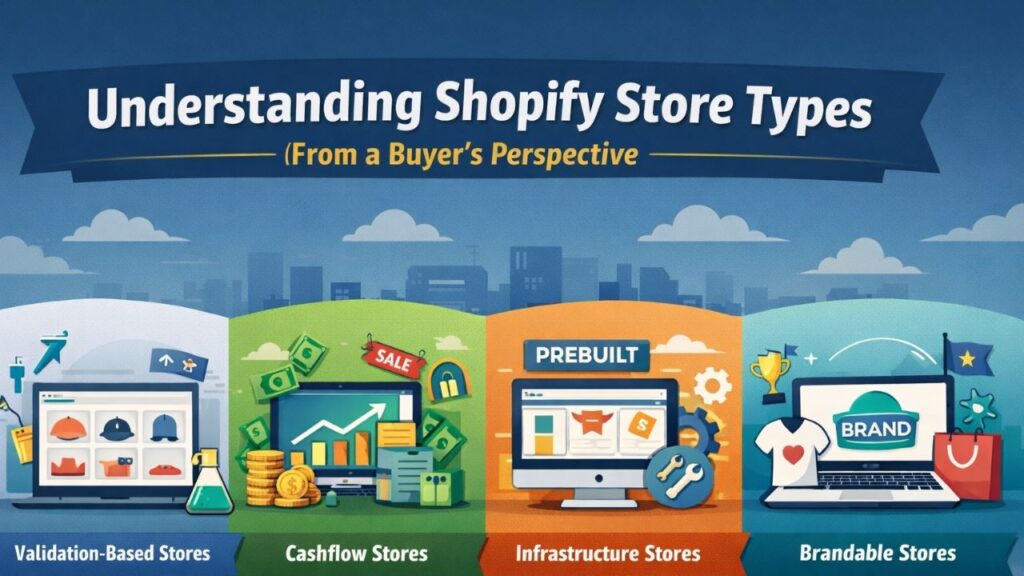
Understanding Shopify Store Types (From a Buyer’s Perspective)
To make a smart purchase, you need to understand that Shopify stores are not just categorized by design or products—they are categorized by intent and monetization model.
1. Validation-Based Stores (Testing Model)
These stores are primarily used for testing products and marketing strategies. Most general stores and many shopify dropshipping stores for sale fall into this category.
They usually include:
- Multiple random products
- Basic design
- Minimal branding
Purpose:
To quickly test which products perform well in the market.
Reality:
These are not long-term businesses. They are temporary setups designed for experimentation.
2. Cashflow Stores (Revenue Model)
This category includes profitable shopify stores for sale that already generate income.
What makes them attractive:
- Existing customer base
- Proven products
- Established revenue streams
However, not all profitable stores are equal. Some rely heavily on paid advertising, which means profits can drop quickly if ads stop performing.
Advanced Tip:
Always focus on net profit, not revenue. A store making $50,000 in sales with high ad costs may be less valuable than a store making $10,000 with strong margins.
3. Infrastructure Stores (Setup Model)
These are commonly known as prebuilt shopify stores for sale. They are designed for convenience rather than profitability.
Typical features include:
- Professionally designed website
- Preloaded products
- Basic niche selection
Important Insight:
These stores are not businesses—they are starting points. You will still need to invest time and effort into marketing, branding, and optimization.
4. Brandable Stores (Long-Term Model)
Brandable stores include niche-focused and branded stores built for long-term growth.
They often have:
- A clear target audience
- Consistent product theme
- Brand identity elements
These stores are ideal for entrepreneurs who want to build a scalable and sustainable business.
How Shopify Stores Are Valued
Understanding valuation is critical when buying any shopify stores for sale. Most experienced buyers use a standard formula:
👉 Store Value = Monthly Net Profit × 20–40x
What Influences the Multiplier?
- Traffic Source: Organic traffic increases value
- Customer Retention: Repeat buyers indicate stability
- Brand Strength: Strong branding leads to higher trust
- Supplier Reliability: Stable supply chain reduces risk
For example, a store earning $1,000 per month could be valued anywhere between $20,000 and $40,000 depending on these factors.
Advanced Due Diligence Checklist
Before purchasing any store, you must perform detailed verification.
1. Traffic Analysis
Check:
- Where the traffic is coming from
- Whether it is organic or paid
- Audience demographics
Organic traffic is more valuable because it reduces dependency on ads.
2. Revenue Verification
Never rely on screenshots. Instead:
- Request live dashboard access
- Verify payment gateway reports
- Check refund rates

3. Product Viability
Ask yourself:
- Is the product evergreen or trending?
- Are there too many competitors?
- Can it be branded or improved?
4. Marketing Systems
A good store should have:
- Email marketing setup
- Retargeting ads
- Social media presence
Common Mistakes Buyers Make
Even experienced buyers can fall into these traps:
Buying Based on Design
A good-looking store does not guarantee sales.
Ignoring Profit Margins
Revenue without profit is meaningless.
Trusting Seller Claims
Always verify data independently.
Choosing Saturated Niches
Highly competitive niches are harder to scale.
Smart Buying Strategy (2026 Framework)
To succeed, follow a structured approach:
Step 1: Define Your Goal
- Learning → Prebuilt stores
- Testing → Dropshipping stores
- Scaling → Profitable stores
Step 2: Select the Right Type
- Beginners → prebuilt shopify stores for sale
- Intermediate → shopify dropshipping stores for sale
- Advanced → profitable shopify stores for sale
Step 3: Analyze Before Buying
Evaluate:
- Profit margins
- Traffic sources
- Growth potential
Step 4: Negotiate the Price
Never accept the listed price immediately. Use data to justify your offer and aim for a better deal.
Step 5: Secure the Transaction
- Use escrow services
- Confirm full ownership transfer
- Ensure access to all assets
Security Tips for Safe Buying
- Verify seller identity and history – Make sure you can trust the seller before proceeding.
- Check domain ownership details – Confirm the domain is legitimately owned by the seller.
- Ensure access to all accounts (Shopify, domain, email) – Gain full control after purchase.
- Review past marketing campaigns – Analyze performance to assess potential growth.
PlugBooks – Scale Your Shopify Store with Confidence
Buying a store is just the beginning. The real challenge is managing finances and scaling profitably.
PlugBooks helps you:
- Automate bookkeeping for Shopify
- Track real profit instead of just revenue
- Integrate with Amazon and eBay
- Simplify financial decision-making
For serious sellers, this can be a game-changing tool.
How to Grow After Buying a Shopify Store
Once you acquire a store, your focus should shift to growth.
1. Improve Branding
- Upgrade logo and visuals
- Build trust with customers
2. Optimize Product Pages
- Add better images
- Improve descriptions
- Include customer reviews
3. Scale Marketing
- Test Facebook and TikTok ads
- Build an email list
- Use influencer marketing
4. Increase Average Order Value
- Add upsells and bundles
- Offer discounts on bulk purchases
FAQs
1. Is buying a Shopify store profitable?
Yes, if you choose the right store and optimize it properly.
2. What is the safest type of store to buy?
Niche-based branded stores are generally more stable.
3. Are prebuilt stores worth it?
They are useful for beginners but require marketing to generate revenue.
4. Are dropshipping stores sustainable?
They can be, but supplier reliability and branding are key factors.
5. How do I verify store performance?
Request live access to analytics and payment reports.
6. What should I do immediately after buying?
Focus on marketing, optimization, and improving customer experience.
Quick Recap
- Shopify stores for sale come in different types and purposes
- Prebuilt stores are starting points, not complete businesses
- Profitable stores require deep analysis before buying
- Branding and marketing determine long-term success
- Data-driven decisions reduce risk and increase ROI
Final Thoughts
In today’s fast-paced digital economy, shopify stores for sale offer a unique opportunity to enter eCommerce quickly. However, success depends on how well you evaluate, manage, and scale the store after purchase.
If you approach the process with a strategic mindset—focusing on data, understanding store types, and applying smart growth techniques—you can turn a simple acquisition into a highly profitable online business.
The key is not just buying a store, but building a system that drives consistent growth and long-term success.