



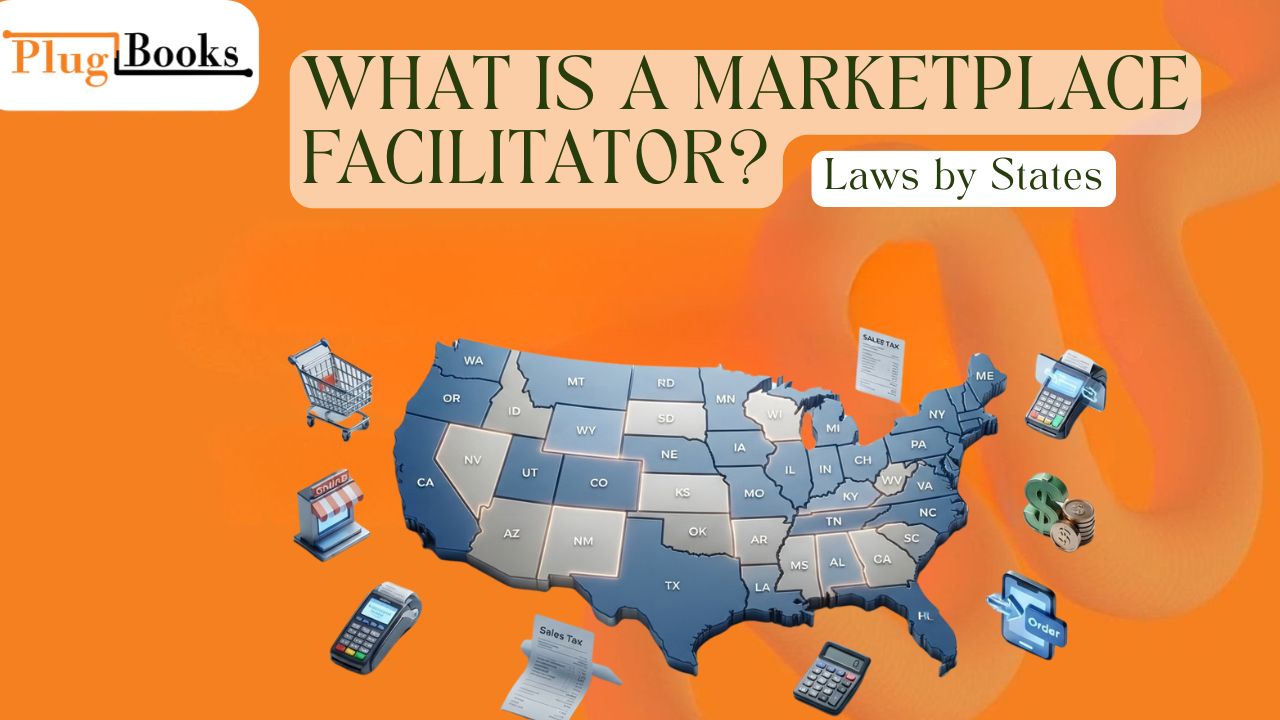
What is a marketplace facilitator? It is a platform that helps complete sales between third-party sellers and customers and may be responsible for collecting and remitting sales tax under applicable state law.
For online sellers, sales tax can feel complicated because the responsibility may vary based on where the customer is located, how the order is processed, and whether a marketplace is involved. If you sell on Amazon, eBay, Etsy, or another third-party platform, understanding who collects the tax is important for clean records and accurate reporting.
This guide explains how marketplace facilitator rules work, what sellers may still need to report, and how marketplace sales can affect your bookkeeping.
What Is a Marketplace Facilitator?
A marketplace facilitator is generally a company that operates or controls an online marketplace and helps third-party sellers complete sales. The platform may list products, process payments, transmit money to sellers, and perform other services that help complete the transaction.
In many states, the facilitator is legally responsible for collecting and remitting sales tax on qualifying marketplace transactions. The exact definition is state-specific, so the same platform activity can be treated differently under different laws. That is why a marketplace facilitator can have a slightly different legal answer from one state to another.
For example, a customer buys a product from your Amazon storefront. Amazon processes the order and collects applicable sales tax. You still made the sale, but the marketplace may have the legal duty to collect and send the tax to the state.
How Marketplace Facilitator Laws Work
These rules generally move sales-tax collection duties from the individual seller to the marketplace for qualifying transactions. States adopted these rules to make tax administration easier when millions of marketplace transactions pass through a relatively small number of platforms.
However, these laws do not mean sellers can ignore sales tax completely. Your obligations can depend on your direct sales, physical presence, economic nexus, marketplace agreements, exemptions, and the particular state’s reporting rules.
The Streamlined Sales Tax Governing Board notes that many states require facilitators to collect and remit tax, but marketplace sellers may still have registration or filing responsibilities in some situations.
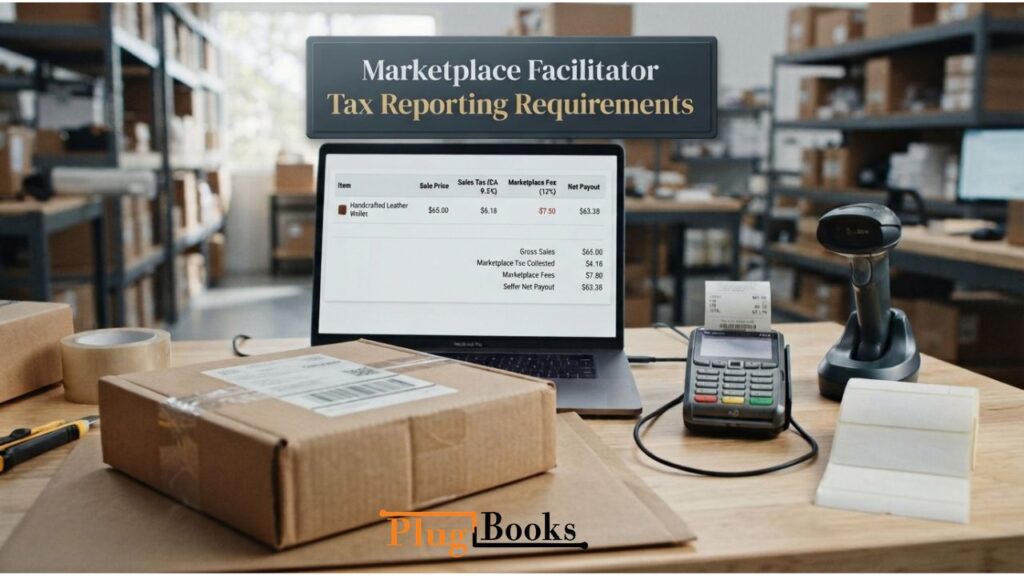
Marketplace Facilitator Tax Reporting Requirements
The marketplace facilitator tax reporting requirements can include registration, collection, remittance, transaction records, return filing, and information provided to marketplace sellers. Which requirements apply depends on the state and the facilitator’s activity.
For sellers, the practical issue is usually recordkeeping. Even when a platform collects the tax, you need to distinguish marketplace sales from direct sales and keep documentation showing how tax was handled.
Some states also require sellers to report facilitated sales in a particular way, while others remove those sales from the seller’s taxable return when the facilitator has assumed the collection responsibility. North Carolina, for example, provides specific reporting treatment for marketplace-facilitated sales, while Georgia uses a dedicated marketplace facilitator account structure.
What Should Sellers Keep?
Keep records for:
- Gross marketplace sales
- Sales tax collected by the platform
- Marketplace fees and commissions
- Refunds and returns
- Payouts and settlement amounts
- Direct website sales
- Exempt transactions
- Sales tax reports or certificates supplied by the marketplace
These records help you reconcile the amount shown in the marketplace account with the amount that actually reaches your bank account.
Marketplace Facilitator Laws by State
There is no single nationwide rule that tells every seller exactly what to do. When researching what is a marketplace facilitator for your business, start with the state where the transaction is sourced and then review the marketplace’s role under that state’s law.
As of 2026, marketplace facilitator collection rules exist across states with general sales taxes, but important details still vary. For example, Utah treats qualifying facilitators as responsible for collecting, reporting, and paying tax on facilitated sales, while North Dakota uses a $100,000 taxable-sales threshold for certain facilitators without physical presence.
Here are examples of how state rules can differ:
| State | Example of marketplace facilitator treatment |
| Georgia | Facilitators meeting the applicable threshold collect and remit Georgia sales tax on qualifying facilitated sales. |
| Michigan | A facilitator with nexus generally handles collection and remittance for facilitated sales; seller obligations can remain in specific circumstances. |
| North Carolina | Facilitators engaged in business in the state generally collect and remit tax, with specific rules for reporting marketplace sales. |
| North Dakota | Certain facilitators without physical presence must register and collect after exceeding the applicable sales threshold. |
| Utah | Facilitators with Utah nexus must collect, report, and pay tax on facilitated sales. |
| Vermont | Facilitators are required to collect and remit tax on qualifying marketplace transactions. |
| Washington | Washington requires marketplace facilitators that meet applicable requirements to collect and remit sales tax on qualifying marketplace sales. See the Washington Department of Revenue: Marketplace Facilitators. |
These examples are not a substitute for checking the current marketplace facilitator laws in the state where you have an obligation. State tax departments can change thresholds, filing procedures, and definitions.

Marketplace Facilitator Registration Requirements
Registration requirements depend on whether you are the marketplace facilitator or the marketplace seller. A facilitator may need to register for a state’s sales tax program when it meets that state’s nexus or marketplace-specific requirements. Some states also provide separate registration procedures for platforms that collect and remit tax on behalf of sellers.
For marketplace sellers, registration is not automatically eliminated just because a platform collects sales tax. A seller may still need a sales tax permit when it has its own physical presence, reaches an economic nexus threshold, makes direct taxable sales, or falls under another state-specific requirement.
Before registering, review:
- Physical presence in the state
- Sales volume compared with the state’s economic nexus threshold
- Marketplace transactions and whether they count toward that threshold
- Direct website sales made outside the marketplace
- Marketplace tax collection for those transactions
- State filing requirements, including marketplace seller or informational returns
This is where marketplace facilitator laws can differ significantly. One state may remove certain seller collection duties when the facilitator handles the tax, while another may still require registration or reporting from the seller.
For example, Washington provides specific guidance on marketplace facilitators, including their sales-tax collection responsibilities and requirements. Washington Department of Revenue: Marketplace Facilitators
Liability Relief for Marketplace Facilitators
Some states provide liability relief to marketplace facilitators when they meet the conditions established by law and properly collect and remit the required tax. This can protect a facilitator from certain seller-related tax liabilities when the facilitator has followed the state’s marketplace rules.
However, liability relief is not necessarily unlimited. State laws can contain exceptions involving incorrect tax collection, failure to remit collected tax, transactions outside the facilitator’s covered responsibilities, or other circumstances defined by the state.
For sellers, the important point is that facilitator liability relief does not necessarily eliminate the seller’s own tax responsibilities. Sellers should continue maintaining transaction records, reviewing nexus, tracking direct sales, and keeping marketplace tax documentation.
Because these protections vary by jurisdiction, sellers and platforms should review the applicable marketplace facilitator laws rather than assuming that one state’s liability rules apply nationwide.
Do Marketplace Rules Remove Seller Tax Obligations?
Not necessarily.
A facilitator collecting sales tax does not automatically eliminate every sales-tax responsibility for the seller. You may still have obligations for:
- Sales made through your own website
- Sales through marketplaces that are not covered by the state’s facilitator rules
- States where you have physical presence
- States where you meet an economic nexus threshold
- Tax-exempt transactions and exemption documentation
- Required registrations or informational filings
For instance, Utah says a marketplace seller may still need a license when the seller has its own Utah nexus, even though the facilitator handles tax on facilitated transactions.
Seller-Side Tax Reporting
The seller-side marketplace facilitator tax reporting requirements are mainly about separating what the platform handled from what your business remains responsible for.
Suppose your store has $100,000 in total online sales. Part of that amount comes from Amazon, while the rest comes directly through Shopify. The marketplace may collect tax on qualifying Amazon orders, but your Shopify transactions can still create separate sales-tax responsibilities.
That means your books should not simply record the bank deposit as “sales.” A single payout can contain product revenue, refunds, marketplace fees, collected tax, and other adjustments.
A clean reconciliation process should connect:
Orders → sales → refunds → tax → fees → settlement → bank deposit
This makes it easier to understand actual revenue and avoid treating tax collected by a marketplace as business income.
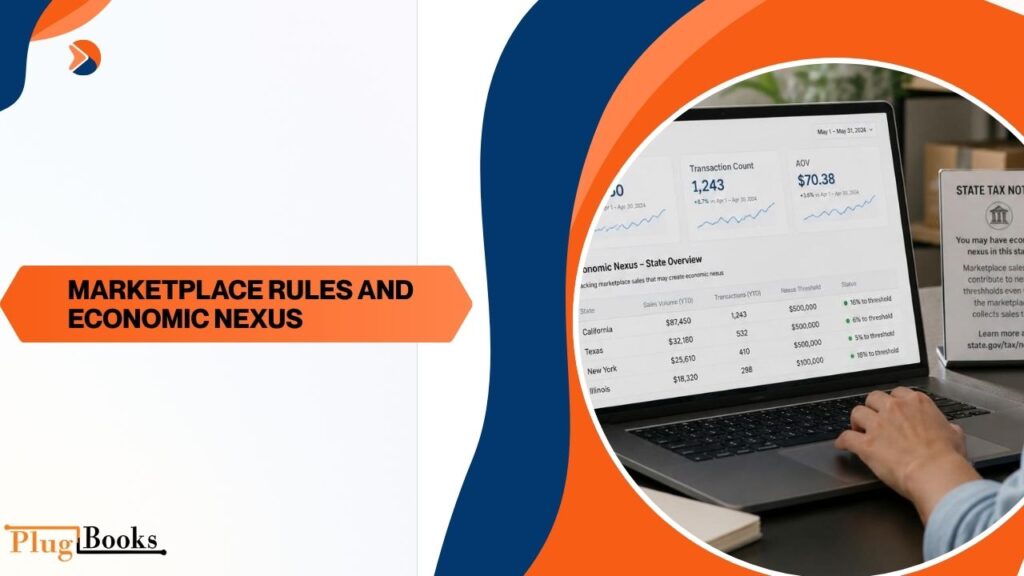
Marketplace Rules and Economic Nexus
The economic nexus is another important piece of the puzzle.
A state may require an out-of-state seller to register or collect sales tax after the seller crosses a specified sales or transaction threshold. Marketplace sales may count toward a state’s threshold even when the marketplace is responsible for collecting the tax on those transactions.
Michigan, for example, says its economic-nexus calculation can include gross sales to Michigan customers, including taxable, nontaxable, and exempt sales.
So, do not assume that “the marketplace collected the tax” means the marketplace sales are irrelevant to your nexus calculation.
What Is the Difference Between a Marketplace Facilitator and a Marketplace Seller?
A marketplace facilitator operates the platform or performs qualifying services that help complete third-party sales. A marketplace seller is the business or individual selling products through that platform.
The distinction matters because the facilitator may have the legal responsibility. This also helps explain why the platform and the seller can have different tax duties.
A seller can also have both marketplace sales and direct sales. Those two channels should be tracked separately because their tax treatment may not be identical.
How Marketplace Tax Collection Affects Your Bookkeeping
Sales tax collected by a marketplace can make your payout reconciliation more complicated.
For sellers learning the concept, this is one of the most important bookkeeping effects to understand.
The amount deposited into your bank account may be lower than the gross order value because the platform can deduct refunds, commissions, payment fees, advertising costs, or other charges before sending the settlement.
Your bookkeeping should therefore capture the full transaction flow instead of treating each bank deposit as total sales.
For example:
- Customer order: $200
- Sales tax collected by marketplace: $16
- Marketplace fees: $25
- Refunds/adjustments: $10
- Bank payout: $165
The exact numbers vary, but the principle is the same: the bank deposit is not necessarily the same as gross sales.

How PlugBooks Helps Marketplace Sellers Keep Records Organized
If you sell on Amazon, eBay, Shopify, or numerous ecommerce channels, PlugBooks will help you bring sales transactions, refunds, marketplace fees, taxes, settlements, reimbursements, and expenses into organised bookkeeping records. It can also help you keep track of COGS and earnings, while integrating with QuickBooks or Xero, so your marketplace data is easier to reconcile and examine.
PlugBooks takes care of your monthly bookkeeping procedures, sales and COGS reports, settlement records and account mapping specifically suited for online sellers. Start with a 3-month free trial on monthly plans and use the records to organise your financial data as your business expands.

What Sellers Should Review Before Filing
The seller-side marketplace facilitator tax reporting requirements should be reviewed alongside your direct sales and state nexus position.
Before filing or registering, review your sales by state and separate marketplace transactions from direct sales. Then check whether the platform collected tax, whether you have physical presence or economic nexus, and whether the state requires a seller filing even when the marketplace collected the tax.
A useful monthly checklist is:
- Reconcile marketplace settlements with orders.
- Separate sales tax from revenue.
- Record refunds and marketplace fees.
- Review direct sales separately.
- Monitor state sales thresholds.
- Save marketplace tax reports and supporting records.
- Check state-specific filing requirements.
Because state rules can change, use the relevant state tax department or an experienced tax professional when you need a filing or registration decision.
Common Questions
What is a marketplace facilitator in simple words?
So, what is a marketplace facilitator? What does that mean in simple terms? It is an online marketplace or platform for facilitating third party sales and, when required by state law, collects and remits sales tax on covered transactions.
Do marketplace facilitators have to collect sales tax for sellers?
A qualifying facilitator generally collects and remits sales tax on covered transactions where the state law requires the facilitator to do so. Seller obligations may continue to apply to subsequent sales or special state regulations.
Do marketplace sales count for economic nexus?
They can. Whether and how marketplace sales count depends on the state’s nexus rules . Some states use marketplace sales to measure the seller’s economic presence.
If Amazon is collecting sales tax, do I need to have a sales tax permit?
No, not by default. Whether you require a permit is dependent on your state’s rules, your own nexus, direct sales and the marketplace’s collection obligation, if it covers the transactions in question.
Do marketplace facilitator rules vary from state to state?
No. States may have varying definitions, criteria, registration requirements, reporting methods and restrictions for marketplace sellers.
What sales records do I need to retain for marketplaces?
Track order information, sales tax information, refunds, fees, settlement statements, payout information, exemption information and direct sales information. These are used for reconciliation and tax reporting purposes.
Marketplace facilitator reports sales to the state?
Generally, a facilitator that is required to collect a state tax will report and remit the tax it is accountable for. The specific format for returns and reporting differs from state to state.
Do I need to pay sales tax on my Shopify transactions?
Yeah. Marketplace facilitator laws normally apply to qualifying marketplace transactions—not to all sales your business makes. If you sell directly through your own store, you can have other sales tax duties.
Concluding thoughts
If you’re still scratching your head, thinking, “What is a marketplace facilitator?” recall, the phrase refers to the role the platform plays in the transaction—not a replacement for your own bookkeeping or tax review.
Marketplace tax rules aim to outsource the collection and payment of sales tax to eligible platforms, but they don’t make seller compliance a nonissue. You may still need to manage nexus, registrations, direct sales, records, and filing laws that are specific to each state for your business.
The best bet is to keep the marketplace and direct channel sales separate, save the platform’s tax documents, and research each state’s current rules before filing.