




Running an Amazon business is exciting, but managing finances can quickly become overwhelming. Many sellers focus only on sales numbers while ignoring the financial side of their business. This is where Amazon seller bookkeeping becomes essential.
Proper bookkeeping helps sellers track revenue, understand real profit, monitor Amazon fees, and prepare for taxes without stress.
In this insider guide, you’ll learn how Amazon bookkeeping works in 2026, which reports you need, how to build a simple spreadsheet, and which tools automate the process.
Key Takeaways
- Why bookkeeping is critical for Amazon sellers
- How Amazon payments and reports work
- A simple bookkeeping spreadsheet example
- Best accounting software for Amazon businesses
- Common bookkeeping mistakes sellers should avoid
Understanding Amazon Seller Financial Data
How Amazon Payments Work in 2026
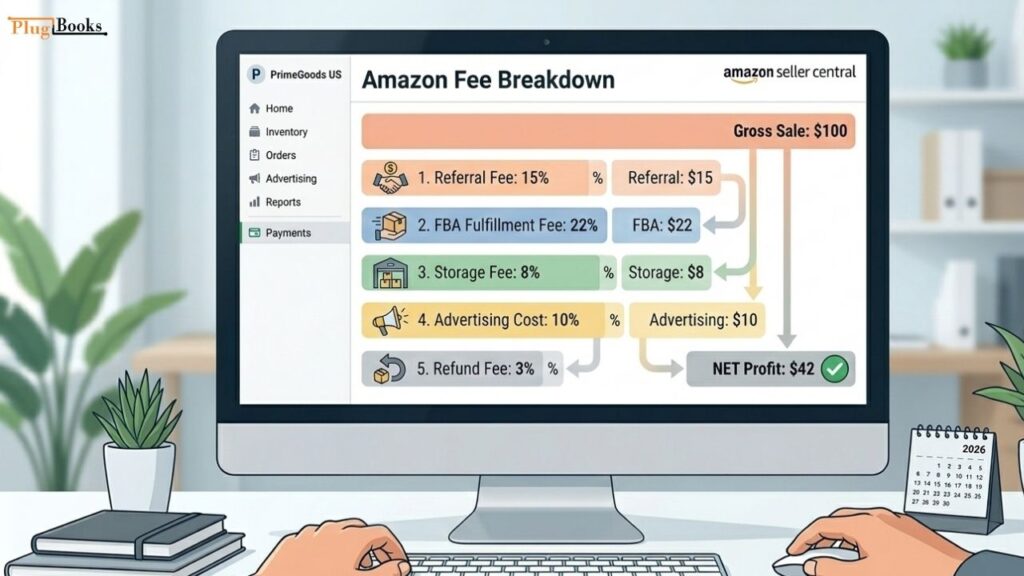
Amazon pays sellers through a bi-weekly settlement system. However, the amount deposited in your bank account may not match your total sales.
Amazon deducts several items before payout:
- Referral fees
- FBA fulfillment fees
- Storage fees
- Advertising costs
- Refund adjustments
Another factor is Account Level Reserve, where Amazon temporarily holds funds to cover refunds or claims.
Important Amazon Reports for Bookkeeping
Amazon Seller Central provides multiple financial reports that help track transactions and fees.
The most important reports include:
1. Settlement Report
Shows every payout cycle and includes:
- sales
- fees
- refunds
- final deposit
2. Transaction Report
Lists every transaction including orders, refunds, and adjustments.
3. Date Range Report
Provides a customizable report for accounting periods.
4. Payments Dashboard
Shows available balance and upcoming payouts.
Step-by-Step Amazon Seller Bookkeeping Process
Step 1: Separate Your Business Finances
The first rule of bookkeeping is never mix personal and business finances.
Best practice:
- Open a business bank account
- Use a dedicated business credit card
- Record all Amazon payouts in accounting records
This keeps financial reporting accurate and simplifies taxes.
Step 2: Track Every Amazon Fee
Many sellers underestimate how much Amazon fees affect profits.
Common fees include:
- Referral fee
- FBA fulfillment fee
- Monthly storage fee
- Long-term storage fee
- PPC advertising costs
Tracking these expenses correctly helps determine true profit margins.

Step 3: Record Sales and Payouts Properly
There is an important difference between:
Gross Sales
Total money customers pay.
Net Payout
The amount Amazon transfers to your bank after fees.
For accurate bookkeeping, sellers should record:
- total sales
- Amazon fees
- refunds
- advertising costs
- final payouts
Amazon Seller Bookkeeping Spreadsheet Example
Simple Spreadsheet for Beginners
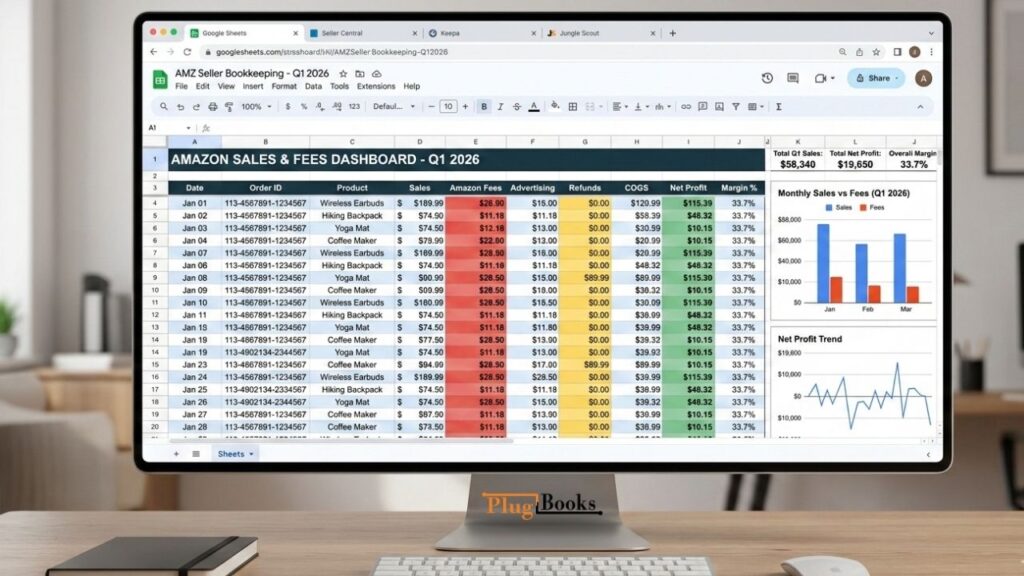
New sellers often start bookkeeping with Excel or Google Sheets.
Example spreadsheet format:
| Date | Order ID | Product | Sales | Amazon Fees | Ads Cost | Refunds | Net Profit |
| Jan 5 | 112-XXX | Fitness Bands | $35 | $10 | $3 | $0 | $22 |
| Jan 6 | 113-XXX | Lifting Belt | $50 | $14 | $5 | $0 | $31 |
This spreadsheet allows sellers to:
- track revenue daily
- monitor fees
- calculate profit per order
Best Accounting Software for Amazon Sellers
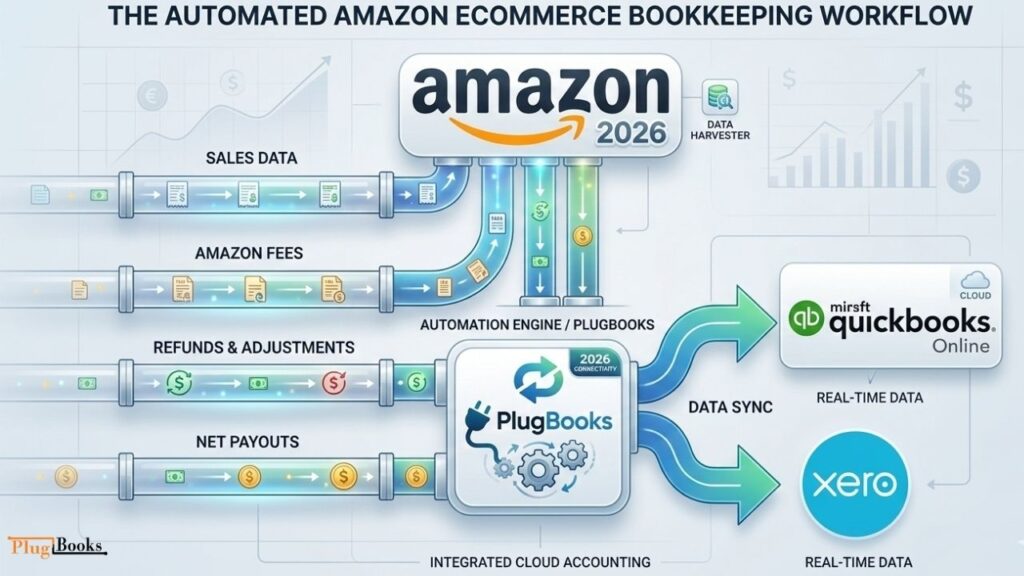
Manual spreadsheets become difficult once your business scales. Accounting tools automate data collection from Amazon and simplify bookkeeping.
Popular tools include:
QuickBooks
Industry-standard accounting software for small businesses.
Xero
Cloud-based accounting platform popular with ecommerce sellers.
PlugBooks
A specialized bookkeeping service for Amazon and eBay sellers that automates transaction tracking, fee calculations, and financial reporting, making accounting simple and accurate.
Common Amazon Seller Bookkeeping Mistakes
Many Amazon sellers make financial tracking mistakes that affect profitability.
Ignoring Amazon Fees
Some sellers record only payouts instead of full revenue and expenses.
Not Tracking Inventory Cost
Cost of goods sold (COGS) is essential for accurate profit calculations.
Missing Refund Records
Returns and reimbursements impact profit reports.
Excluding Advertising Costs
PPC campaigns are often a major expense.
Amazon Seller Taxes in 2026
Amazon sellers must manage several tax responsibilities depending on their location.
Important tax considerations include:
- Income tax on business profit
- Sales tax collection rules
- Marketplace facilitator laws
- VAT for international sellers
Accurate bookkeeping simplifies tax filing and reduces compliance risks.
Tools and Services for Amazon Seller Bookkeeping
Managing your Amazon finances can be simple with the right tools and support. Bookkeeping software for Amazon sellers like QuickBooks, Xero, or PlugBooks automates transaction tracking, fees, and profit reports.
For sellers who prefer professional help, the best bookkeeping services for Amazon sellers handle all accounting tasks, from recording sales to preparing reports. Combining software with expert services ensures accurate records and saves time. This approach helps sellers focus on growth while keeping finances organized and tax-ready.

When Amazon Sellers Need Professional Bookkeeping
As your Amazon business grows, bookkeeping becomes more complex.
Signs you may need professional support:
- Monthly revenue increases significantly
- Selling across multiple marketplaces
- Large inventory management
- Complicated tax reporting
Professional accounting services like PlugBooks help Amazon and eBay sellers organize financial data, manage bookkeeping, and generate accurate financial reports.

FAQs
What is Amazon seller bookkeeping?
Amazon seller bookkeeping is the process of recording sales, fees, expenses, and payouts to track the financial performance of an Amazon business.
Which Amazon report is best for bookkeeping?
The settlement report and transaction report are the most important for accounting.
Can I use spreadsheets for Amazon bookkeeping?
Yes. Many new sellers start with spreadsheets before switching to accounting software.
How often should Amazon sellers update bookkeeping?
Most experts recommend updating records weekly or after each settlement cycle.
Do Amazon sellers need bookkeeping services?
Growing businesses often benefit from professional bookkeeping to ensure accurate financial records.
Quick Recap
- Amazon bookkeeping tracks sales, fees, and profits
- Seller Central reports provide essential financial data
- Spreadsheets work for beginners
- Accounting tools automate financial tracking
- Accurate bookkeeping simplifies taxes
Conclusion
Amazon seller bookkeeping is one of the most important parts of running a profitable ecommerce business. By tracking sales, fees, inventory costs, and payouts accurately, sellers gain a clear picture of their true profit.
Whether you start with a simple spreadsheet or use automated accounting tools, maintaining organized financial records will help your Amazon business grow more efficiently in 2026 and beyond.