



Finding the right business accountant near me can feel overwhelming in 2026, especially with so many options and advanced accounting tools available today. Yet, connecting with a competent accountant can directly impact your business’s growth, compliance, and financial health.
Here’s what you’ll discover in this guide:
- How to search efficiently for a local business accountant.
- Ways to evaluate credentials and experience.
- Cost factors and service packages.
- Latest software tools accountants use in 2026.
- Security practices to safeguard your financial data.
By the end of this article, you’ll feel confident about choosing an accountant who can handle both day-to-day bookkeeping and long-term financial planning.
Understanding the Role of a Business Accountant in 2026
A business accountant is more than just a number cruncher. In 2026, accountants handle:
- Tax compliance – keeping your business updated with federal and state regulations.
- Bookkeeping automation – using AI-driven software to track transactions accurately.
- Financial planning – advising on budgets, forecasts, and cash flow.
- Audit preparation and reporting – ensuring smooth inspections from regulators.
It’s essential to know the difference between:
- Certified Public Accountants (CPAs) – licensed experts who can sign audits and handle complex taxes.
- Accountants – professionals managing daily bookkeeping and tax filings.
- Bookkeepers – focused on recording transactions and maintaining ledgers.
Understanding these distinctions helps you hire the right professional for your business needs.

Step-by-Step Guide to Find a Business Accountant Near Me 2026
1. Start with Online Local Searches
Begin by searching “business accountant near me” or “small business CPA [city]” on Google, Bing, or Apple Maps. Local directories like Yelp, LinkedIn, and specialized accounting platforms can also direct you to verified professionals nearby.
Pro Tip: Pay attention to search results with updated 2026 reviews and verified credentials.
2. Check Qualifications & Certifications
Ensure the accountant holds a CPA license or equivalent certifications recognized in 2026. Confirm that they actively pursue continuing education to stay updated on the latest tax laws and financial standards.
3. Read Reviews and Testimonials
Analyze online reviews and testimonials. Look for specific feedback from businesses similar in size or industry. You can also request references to understand how the accountant handles real-world scenarios.
4. Evaluate Services Offered
Check if the accountant provides:
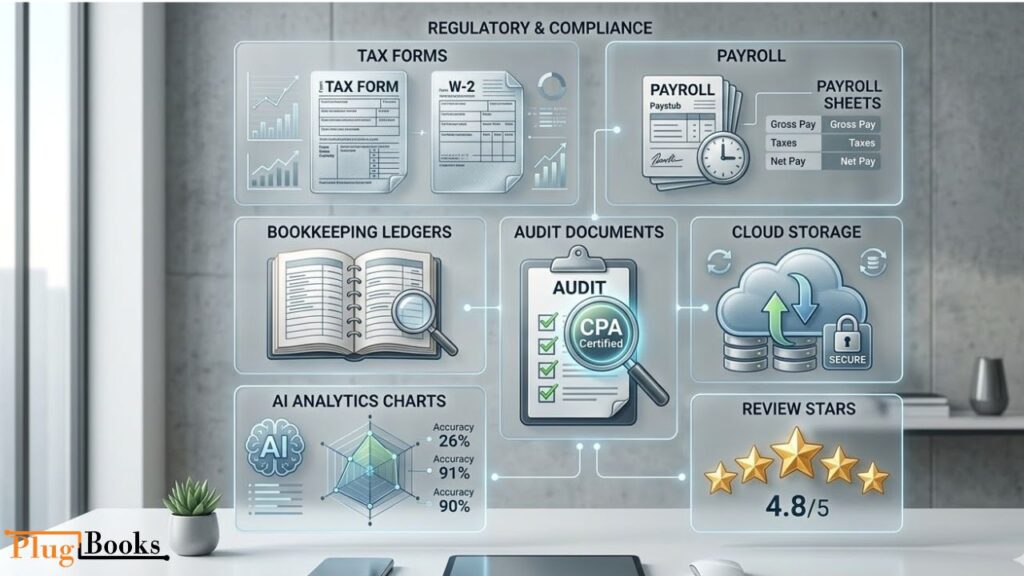
- Tax filing and strategy planning.
- Payroll management.
- Bookkeeping services.
- Audit support.
- Cloud-based reporting with AI analytics.
Choose a professional whose services align with your current and future business needs.
5. Compare Costs & Packages
Costs in 2026 vary depending on experience, service scope, and business size. Common models include:
- Hourly rates – suitable for occasional advisory.
- Monthly retainers – ideal for ongoing bookkeeping and planning.
- Project-based fees – for specific audits or financial reports.
Always clarify hidden fees and ensure transparency before hiring.
6. Schedule a Consultation
Arrange a meeting, either in-person or via video call. Ask about:
- Experience in your industry.
- Compatibility with accounting software like QuickBooks, Xero, or PlugBooks.
- Methods for real-time financial updates.
This interaction will help you gauge professionalism, communication style, and responsiveness.
7. Verify Security & Confidentiality Measures
Modern accountants use cloud software, making data protection essential. Confirm they:
- Use encrypted communication channels.
- Apply two-factor authentication.
- Regularly back up financial records.
- Comply with GDPR and CPA privacy regulations.
Common Issues When Finding an Accountant
Even with a structured approach, businesses may face challenges:
- Overpaying for unnecessary services.
- Hiring someone without industry-specific expertise.
- Misunderstanding the accountant’s scope (accounting vs. advisory).
- Poor communication or delayed reporting.
Being aware of these issues helps you avoid pitfalls and select the best professional.
Security & Best Practices for 2026
Security remains critical in 2026:
- Cloud accounting security: Ensure all data is encrypted and stored safely.
- Two-factor authentication: Protects sensitive files from unauthorized access.
- Data backup: Always maintain regular backups for disaster recovery.
- Performance review: Periodically assess your accountant’s compliance and service quality.
These steps not only safeguard your finances but also build trust with your accountant.
PlugBooks – Simplifying Accountant Collaboration
For small business owners, PlugBooks can transform the accountant-client experience. With integrations for Amazon, eBay, QuickBooks, and Xero, PlugBooks automates bookkeeping, generates real-time reports, and simplifies collaboration.
Working with a PlugBooks-connected accountant ensures accuracy, efficiency, and transparency in 2026.
FAQs
1. Can a business accountant help me choose the best accounting software?
Yes, accountants can recommend and set up modern cloud-based tools like QuickBooks, Xero, or PlugBooks to match your business needs.
2. How do I verify if an accountant has experience in my industry?
Request case studies, references, or examples of clients in similar sectors to ensure relevant expertise.
3. Can a business accountant optimize my tax savings legally?
Absolutely. A qualified accountant can identify deductions, credits, and strategic planning opportunities within legal frameworks.
4. How often should I receive financial reports in 2026?
Monthly or quarterly reports are standard, but businesses leveraging AI-driven cloud tools can access real-time reporting anytime.
5. Can an accountant assist with business expansion or funding?
Yes, accountants help create financial projections, manage cash flow, and prepare documentation for loans or investors.
6. How do accountants protect my sensitive financial data?
They implement encrypted cloud storage, two-factor authentication, and comply with GDPR or CPA privacy regulations to ensure security.
Quick Recap
To find a reliable business accountant near me in 2026:
- Search locally online.
- Verify credentials and licenses.
- Read reviews and request references.
- Evaluate services and compare costs.
- Consult and ensure data security.
Following these steps ensures you hire a competent professional who aligns with your business goals.
Conclusion
Finding the right business accountant near you in 2026 doesn’t have to be daunting. By following these steps, verifying credentials, and leveraging modern tools like PlugBooks, you can streamline your finances, save time, and focus on growing your business.
Take action today: search locally, evaluate thoroughly, and collaborate with a trusted accountant to secure your business’s financial future.
