




Does It Cost Money to Sell on eBay in 2026? Complete Beginner-to-Pro Guide
Does It Cost Money to Sell on eBay? Selling on eBay in 2026 remains one of the most accessible ways to start an online business, especially for individuals entering eCommerce without large upfront capital. However, while the platform allows easy entry, it is not entirely free to operate.
The biggest misunderstanding among beginners is assuming eBay is completely “free to sell on.” In reality, eBay follows a hybrid cost model — free to start, but fee-based once sales begin and transactions are completed.
This guide breaks down everything you need to know in simple but professional terms:
- What costs exist on eBay in 2026
- How listing and selling fees work
- Real profit breakdown after deductions
- Hidden charges most sellers overlook
- How experienced sellers manage profit tracking effectively
By the end, you will understand not just the cost structure — but also how to build a profitable and sustainable selling system on eBay.
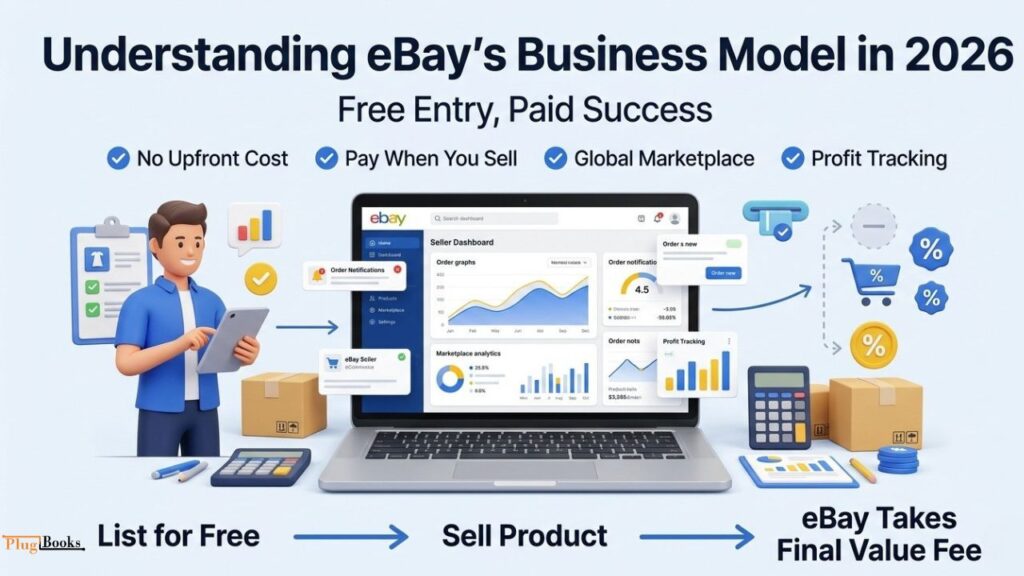
Understanding eBay’s Business Model in 2026
To understand whether eBay costs money, you first need to understand how the platform earns revenue.
eBay does not charge users to join. Instead, it follows a performance-based marketplace model, meaning:
You only pay when your item sells.
This structure benefits beginners because:
- There is no upfront investment required
- You can test products without financial risk
- You only share revenue after success
However, this model also means that fees are embedded into every successful transaction.
So the correct way to think about eBay is:
“Free entry, paid success.”
This distinction is important because it shapes how sellers calculate profit margins from day one.
Is Listing on eBay Free or Not?
One of the most attractive parts of eBay is its low barrier to entry. In most cases, sellers can list products without paying upfront fees.
2026 listing structure overview:
- Most sellers receive around 250 free listings per month
- Additional listings may include a small insertion fee
- Some categories have different limits or restrictions
This system is designed to encourage experimentation. Beginners can test different products, niches, or pricing strategies without financial pressure.
However, listing fees are only one side of the equation. The real cost appears when a product is successfully sold.
At that point, eBay applies its final value fee system, which is where most of the platform’s revenue is generated.
Does It Cost Money to Sell on eBay? Final Value Fees
The Final Value Fee (FVF) is the most important cost structure every seller must understand.
This fee is charged only when a transaction is completed successfully.
What eBay includes in the fee calculation:
- Item selling price
- Shipping cost charged to buyer
- Applicable taxes (region-dependent)
2026 typical fee structure:
- Average range: 10% – 15%
- Some categories: as low as ~2%
- Competitive or high-service categories: up to ~15%+
In addition, eBay may charge a small fixed per-order fee depending on region.
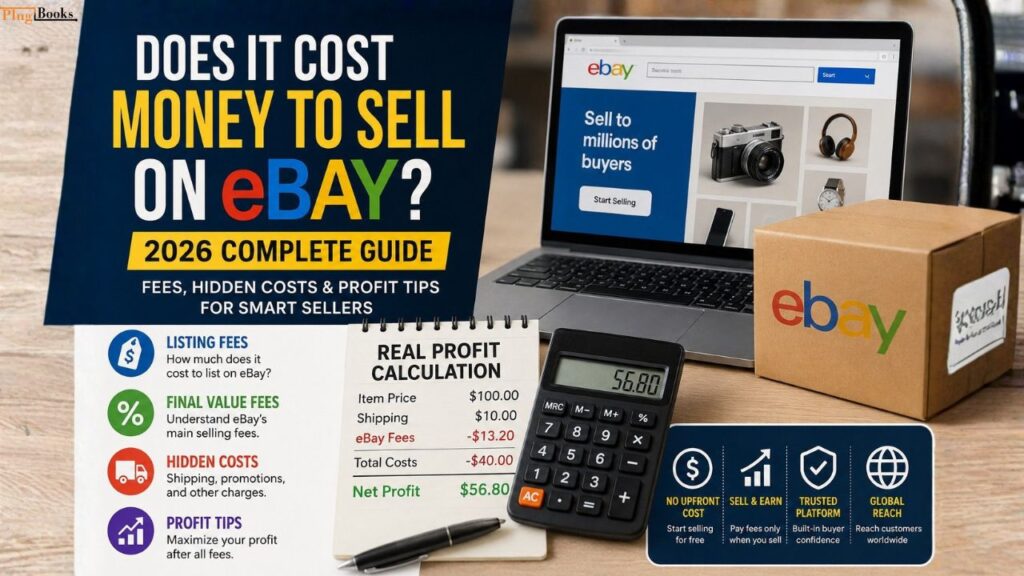
Real Example:
If you sell an item for $100:
- eBay fee (~12%) = $12
- Remaining amount = $88
- Then subtract product cost + shipping
This shows why many sellers underestimate profit loss.
Important Insight:
eBay fees are not random charges — they are structured based on category risk, demand, and marketplace value.
Understanding this structure is essential for pricing strategy.
Hidden Costs That Affect Real Profitability
Beyond visible fees, eBay sellers face several indirect costs that impact earnings.
These are often ignored by beginners but heavily influence real profit margins.
1. Shipping Cost Variability
Shipping is one of the biggest hidden profit reducers. Even small weight differences or regional changes can affect margins significantly.
Sellers often fail because they:
- Underestimate shipping costs
- Don’t include handling fees in pricing
- Ignore packaging expenses
2. Promotional Listing Fees
eBay allows sellers to boost visibility using paid promotion.
While this increases impressions, it also:
- Reduces net profit per sale
- Introduces variable advertising cost
- Works best only for competitive niches
3. Store Subscription Plans
For serious sellers, eBay offers store subscriptions that:
- Increase free listing limits
- Reduce per-item fees
- Improve long-term scalability
However, this only makes sense when sales volume is consistent.
4. International Transaction Adjustments
Cross-border selling introduces:
- Currency conversion costs
- Regional fee variations
- Additional marketplace adjustments
These are often overlooked but become significant at scale.;
How eBay Sellers Track Real Profit After Fees
One of the biggest challenges in eBay selling is not generating sales — but understanding true net profit.
As businesses scale, manual tracking becomes unreliable because:
- Fees vary by category
- Shipping costs fluctuate
- Promotions change per order
- Multi-channel sales complicate reporting
At this stage, sellers shift toward automation tools to centralize financial data.
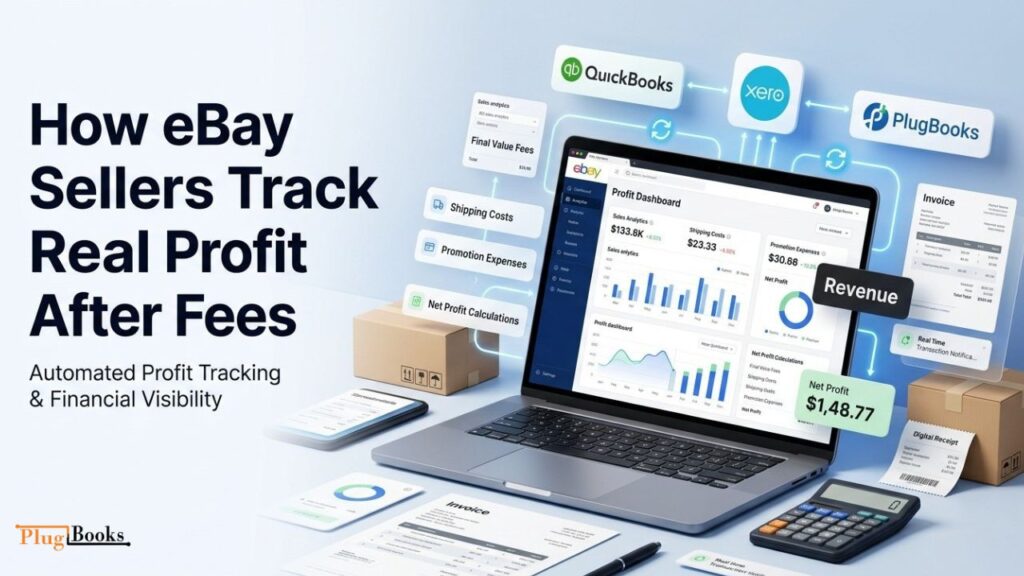
Many sellers use systems that connect marketplace transactions with accounting platforms like QuickBooks or Xero.
In such workflows, tools like PlugBooks are used to synchronize eBay sales data automatically, helping sellers:
- Track fees per transaction
- Monitor net profit accurately
- Reduce manual accounting errors
- Maintain clean financial reporting across channels
This is not about adding tools — it is about building financial visibility at scale.
Without proper tracking, sellers often miscalculate profit and scale unprofitable products.

Is Selling on eBay Still Worth It in 2026?
Despite fees and competition, eBay remains a powerful marketplace because of its global reach and trust-based system.
Key advantages:
- Instant access to global buyers
- No upfront selling cost
- High buyer trust conversion rates
- Fast product validation environment
Challenges:
- Profit margin compression due to fees
- High competition in popular categories
- Need for strong pricing strategy
- Dependence on accurate cost tracking
Strategic Reality:
eBay is no longer just a marketplace — it is a data-driven selling ecosystem where success depends on optimization, not just product listing.
Sellers who ignore fee structures often struggle, while those who calculate and optimize margins scale successfully.
FAQs
1. Why does eBay charge fees only after a sale?
Because eBay follows a performance-based revenue model where earnings are tied to completed transactions instead of listings.
2. Can you sell on eBay without paying anything?
You can list products for free within limits, but once a sale occurs, fees are automatically deducted.
3. Are eBay fees the same for all categories?
No, fees vary depending on product category, demand, and marketplace risk level.
4. What happens if my product doesn’t sell?
You typically don’t pay final value fees unless the product is sold successfully.
5. How do professional sellers manage eBay profit tracking?
They use automated financial systems that sync sales data and calculate real profit after fees and expenses.
6. Is eBay still good for beginners in 2026?
Yes, because it allows low-risk entry, but success depends on pricing strategy and cost awareness.
7. What is the biggest mistake new eBay sellers make?
They ignore hidden costs like shipping, promotions, and category-based fee differences.
Conclusion
Does It Cost Money to Sell on eBay? eBay in 2026 is not a free marketplace — it is a structured, fee-based ecosystem where profitability depends on knowledge and strategy.
While sellers can start with minimal investment, long-term growth is impossible without understanding eBay selling costs, Final Value Fees, and operational expenses.
The sellers who succeed are not simply the ones who sell more products — they are the ones who calculate profits accurately, track expenses smarter, and continuously optimize their selling systems.
In simple terms:
- Entry is free
- Selling is charged
- Profit depends on control
