




Selling on Amazon Business in 2026 is one of the most powerful ways to build a scalable online income stream. With access to millions of business buyers worldwide, this model allows you to tap into bulk purchasing, repeat customers, and high-value orders without needing a physical store.
As eCommerce continues to evolve, many entrepreneurs are shifting toward Amazon’s B2B marketplace to create stable and long-term revenue. Instead of relying on one-time retail customers, this approach focuses on building relationships with companies that order products regularly.
If you’re planning to launch your online store, understanding how this business model works—from setup to pricing and growth strategies—can give you a strong competitive advantage. In this guide, you’ll learn everything you need to successfully start and grow your Amazon-based business in 2026.
Key Highlights
- Step-by-step guide on how to start selling on Amazon Business
- Latest 2026 Amazon pricing and fees explained
- Product research strategies for beginners
- Listing optimization and SEO tips
- Fulfillment methods and scaling strategies
Understanding Amazon Business
Amazon Business is a dedicated B2B marketplace where businesses purchase products in bulk. Unlike regular Amazon customers, business buyers are focused on value, consistency, and long-term supply.
This creates a huge opportunity for sellers because:
- Orders are larger in size
- Customers often reorder
- Pricing flexibility increases profits
- Competition is lower in some niches
Selling on Amazon Business is not just about listing products—it’s about building a system that delivers value to repeat buyers.
Latest Amazon Selling Prices in 2026
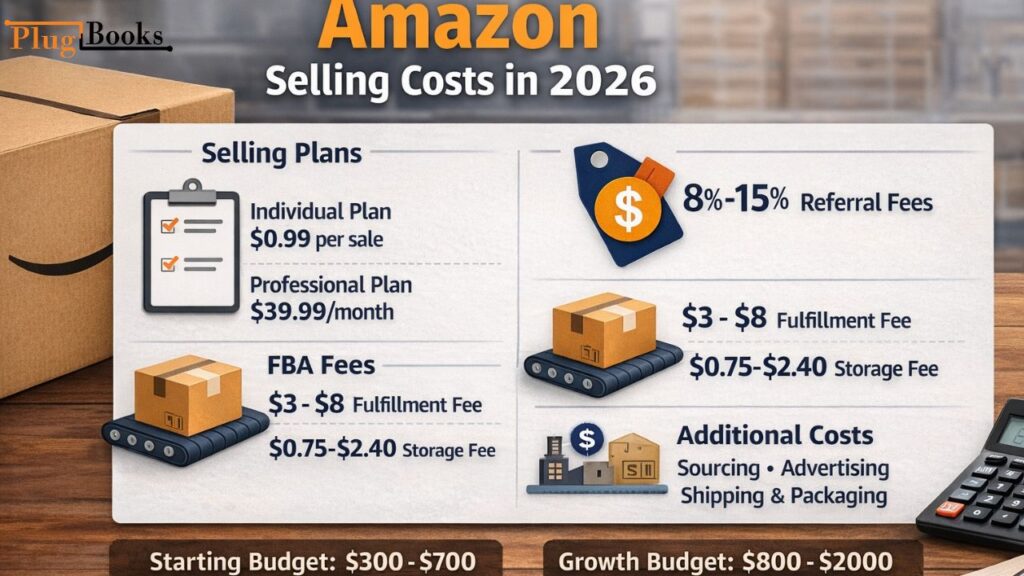
Understanding the cost structure is critical before you start selling on Amazon Business.
Selling Plans
Amazon offers two main plans:
- Individual Plan: $0.99 per item sold
- Professional Plan: $39.99 per month
The Individual plan is suitable for beginners, but if you plan to scale, the Professional plan is the better choice.
Referral Fees
Amazon takes a percentage from each sale:
- Average: 8% to 15%
- Varies by category
For example:
- Electronics: around 8%
- Home & Kitchen: around 15%
Fulfillment by Amazon (FBA) Fees
If you choose FBA, Amazon handles storage and shipping:
- Fulfillment fee: $3 to $8 per item
- Storage fee: $0.75 to $2.40 per cubic foot
FBA simplifies logistics but adds extra cost, so pricing must be planned carefully.
Additional Costs
- Product sourcing
- Shipping to Amazon warehouses
- Advertising budget
- Branding and packaging
👉 Estimated starting budget: $300–$700
👉 Recommended budget for growth: $800–$2000
Why Selling on Amazon Business is Growing in 2026
The demand for online bulk purchasing is increasing rapidly. Businesses prefer Amazon because of convenience, fast delivery, and trusted service.
Here’s why this model is booming:
Consistent Demand
Businesses require regular supplies, ensuring ongoing sales.
High Order Value
Bulk purchases mean more revenue per transaction.
Automation Opportunities
With FBA and tools, much of the process can be automated.
Global Expansion
You can easily expand into international markets.
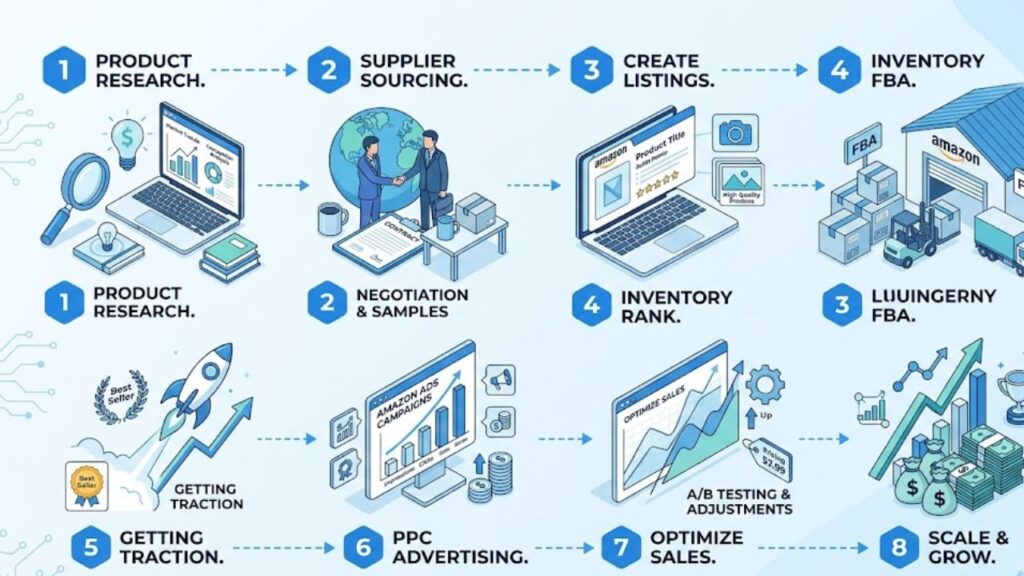
Step-by-Step Guide to Start Selling
Step 1: Create Your Seller Account
Sign up on Amazon Seller Central and choose your plan. Provide:
- Business details
- Bank account
- Tax information
Make sure all details are accurate to avoid delays.
Step 2: Enable Amazon Business Features
After registration:
- Activate business pricing
- Set quantity discounts
- Configure tax settings
This step helps you target business customers effectively.
Step 3: Product Research (Foundation of Success)
Your product determines your success when building an Amazon-based business.
Focus on:
- High demand products
- Low competition niches
- Items suitable for bulk purchase
Good examples include:
- Office supplies
- Cleaning products
- Industrial tools
- Packaging materials
Use data tools to validate demand before investing.
Step 4: Find Reliable Suppliers
You can source products from:
- Local wholesalers
- Manufacturers
- Global platforms
Always:
- Order samples
- Check quality
- Negotiate pricing
A good supplier can significantly impact your profit margins.
Step 5: Create High-Converting Listings
Your listing should be optimized for both search and conversions.
Key elements:
- Clear and keyword-rich title
- Benefit-focused bullet points
- Detailed product description
- High-quality images
SEO plays a major role in visibility, so include relevant keywords naturally.
Step 6: Choose Fulfillment Method
FBA (Recommended for Beginners)
- Handles shipping, returns, and support
- Saves time and effort
FBM (Advanced Option)
- Full control over logistics
- Lower fees but more responsibility
Step 7: Set Smart Pricing
Pricing plays a key role in success on Amazon’s marketplace.
Use:
- Competitive pricing
- Bulk discounts
- Tiered pricing models
This encourages larger orders and repeat purchases.
Step 8: Launch and Promote
Once your product is live:
- Run PPC ads
- Offer discounts
- Encourage reviews
- Optimize listings regularly
Marketing is essential to gain visibility in a competitive marketplace.
Common Challenges and How to Overcome Them
High Competition
Solution: Focus on niche products
Low Visibility
Solution: Improve SEO and run ads
Inventory Issues
Solution: Manage stock carefully
Pricing Pressure
Solution: Offer value through bundles or quality
Advanced Tips for Success
To succeed in 2026:
- Analyze competitors regularly
- Improve product quality
- Build a brand identity
- Focus on customer experience
- Use automation tools
Consistency and data-driven decisions are key.
Scaling Your Amazon Business
Once your business grows:
- Add more SKUs
- Expand into new categories
- Enter international markets
- Build private label products
Scaling transforms your store into a long-term business asset.
How PlugBooks Supports Amazon Sellers
Managing finances is one of the biggest challenges for Amazon sellers. PlugBooks simplifies this process by:
- Tracking income and expenses
- Automating bookkeeping
- Integrating with Amazon
- Providing financial insights
This allows you to focus on growth while keeping your finances organized.

Security Tips for Amazon Sellers
- Use strong passwords
- Enable two-factor authentication
- Monitor account activity
- Avoid suspicious third-party tools
Security ensures your business remains safe and stable.
Frequently Asked Questions
1. Can I sell without holding inventory?
Yes, you can use dropshipping or online arbitrage, but Amazon has strict policies, so follow guidelines carefully.
2. Which categories are best for Amazon Business?
Categories like office supplies, industrial equipment, and cleaning products perform well due to bulk demand.
3. Do I need a trademark to start?
No, but having a trademark helps if you plan to build a private label brand.
4. How do I handle returns in Amazon Business?
If you use FBA, Amazon manages returns. With FBM, you must handle them yourself.
5. Is advertising necessary in the beginning?
While not mandatory, ads significantly improve visibility and speed up initial sales.
6. Can I run this business part-time?
Yes, many sellers start part-time and scale it into a full-time income.
Quick Recap
- Selling on Amazon Business is a profitable opportunity in 2026
- Start with low investment and scale gradually
- Understand fees and pricing structure
- Focus on product research and listing optimization
- Use tools like PlugBooks for financial management
Conclusion
Selling on Amazon Business in 2026 offers a powerful pathway to financial independence. With the right strategy, consistent effort, and smart decision-making, you can build a scalable and profitable online business.
Focus on selecting the right products, optimizing your listings, and delivering value to customers. Combine this with proper financial management using tools like PlugBooks, and your chances of success increase significantly.