




Running an Amazon business looks simple on the surface—but behind the scenes, bookkeeping for Amazon sellers can quickly become overwhelming. Between payouts, refunds, FBA fees, and taxes, many sellers lose track of their real profits.
If you’re a new seller or scaling fast in 2026, clean bookkeeping isn’t optional—it’s essential.
In this guide, you’ll learn:
- What amazon bookkeeping really means
- How amazon FBA bookkeeping works
- The difference between bookkeeping and accounting
- Which bookkeeping software for Amazon sellers works best
- A simple “easy start” system you can follow today
What Is Amazon Bookkeeping?
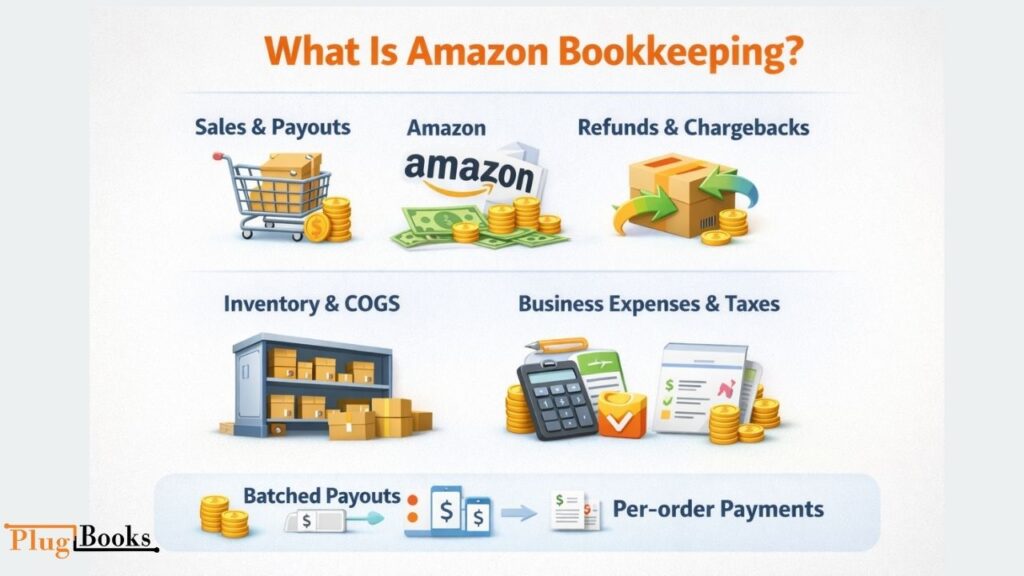
Amazon bookkeeping is the process of recording, organizing, and maintaining all financial transactions related to your Amazon store.
This includes:
- Sales and payouts
- Amazon fees and commissions
- Refunds and chargebacks
- Inventory and cost of goods sold (COGS)
- Business expenses and taxes
Unlike regular ecommerce stores, Amazon sellers don’t receive money per order. Instead, Amazon sends batched payouts, which makes amazon seller bookkeeping more complex.
What You Must Track
To keep your records accurate, amazon seller bookkeeping should always include:
1. Sales & Revenue
- Gross sales
- Promotions and discounts
- Marketplace adjustments
2. Amazon Fees
- Referral fees
- Closing fees
- Subscription fees
3. Refunds & Returns
- Customer refunds
- Returned inventory value
- Reimbursement discrepancies
4. Expenses
- Product sourcing
- Shipping and prep
- Software subscriptions
- Advertising costs
Missing even one category can lead to incorrect profit numbers and tax problems later.
Amazon FBA Bookkeeping Explained (Why It’s Tricky)
Amazon FBA bookkeeping is more complex because Amazon handles storage, packing, shipping, and returns for you.
Extra FBA costs include:
- Fulfillment fees
- Monthly storage fees
- Long-term storage fees
- Removal and disposal fees
These fees are deducted automatically, so if you don’t track them properly, your profit reports will be inaccurate. That’s why Amazon FBA bookkeeping requires detailed reconciliation—not guesswork.
Accounting for Amazon Sellers: What’s the Difference?
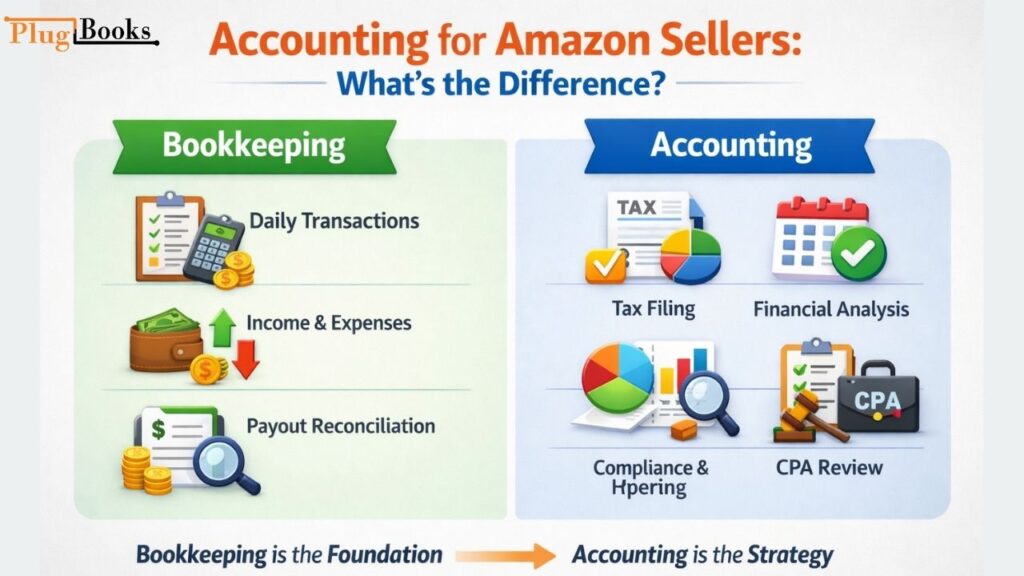
Many sellers confuse accounting for Amazon sellers with bookkeeping—but they’re not the same.
Bookkeeping
- Daily transaction recording
- Categorizing income and expenses
- Reconciliation of Amazon payouts
Accounting
- Tax filing
- Financial analysis
- Compliance and reporting
- CPA-level review
👉 Bookkeeping is the foundation. Accounting uses that data to make decisions.
Most sellers handle bookkeeping weekly or monthly, while accounting for Amazon sellers is usually done quarterly or annually with a CPA.
Best Bookkeeping Software for Amazon Sellers in 2026
Manual spreadsheets no longer work at scale. Modern bookkeeping software for Amazon sellers automates data imports and reduces errors.
What to Look For:
- Amazon Seller Central integration
- Automatic fee breakdowns
- Refund and reimbursement tracking
- Tax-ready reports
- Compatibility with QuickBooks or Xero
The right bookkeeping software for Amazon sellers saves hours every month and keeps your finances audit-ready.
Easy Start System: Step-by-Step Bookkeeping for Amazon Sellers
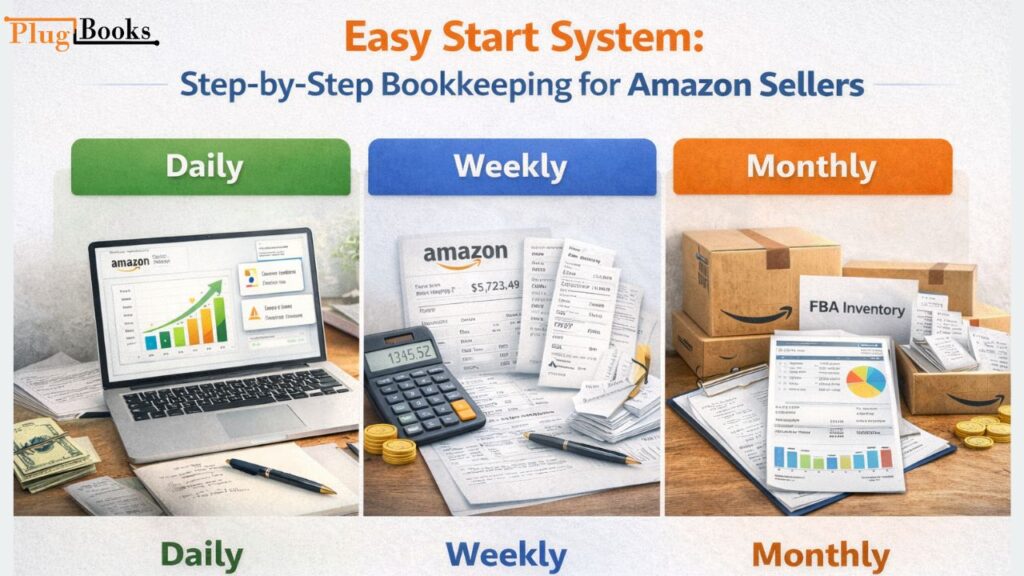
Here’s a simple system beginners can follow:
Daily (Optional)
- Monitor sales performance
- Check for unusual refunds
Weekly
- Review Amazon payouts
- Track major expenses
Monthly (Most Important)
- Reconcile Amazon reports
- Categorize all transactions
- Review FBA fees and refunds
- Generate profit & loss reports
This system keeps bookkeeping for Amazon sellers simple and stress-free.
Common Amazon Bookkeeping Mistakes (and How to Fix Them)
❌ Mixing Personal & Business Finances
✔️ Open a separate business bank account
❌ Ignoring Refunds and Returns
✔️ Track refunds weekly, not yearly
❌ Not Reconciling Amazon Payouts
✔️ Always match payouts with transaction-level data
❌ Waiting Until Tax Season
✔️ Do bookkeeping monthly to avoid panic
How PlugBooks Helps Amazon Sellers
PlugBooks is built specifically for ecommerce sellers who want clean, automated amazon bookkeeping without complexity.
Why Sellers Use PlugBooks:
- Automatically syncs Amazon transactions
- Accurately tracks FBA fees and refunds
- Converts Amazon data into tax-ready reports
- Integrates with QuickBooks and Xero
- Eliminates manual reconciliation errors
Whether you’re doing basic amazon seller bookkeeping or advanced amazon FBA bookkeeping, PlugBooks keeps your numbers accurate and organized.

FAQs:
1. How often should Amazon sellers update their books?
Most Amazon sellers should update bookkeeping at least monthly, but high-volume FBA sellers may benefit from weekly reviews to track payouts, refunds, and fees accurately.
2. Do I need special software for Amazon bookkeeping?
Yes. Manual spreadsheets are error-prone. Using automated bookkeeping software for Amazon sellers helps track sales, FBA fees, and reimbursements efficiently while keeping tax-ready records.
3. Can I do Amazon bookkeeping without an accountant?
Yes. Many sellers handle daily or weekly bookkeeping themselves. However, for tax filing and compliance, consulting a CPA is recommended.
4. What Amazon reports are essential for bookkeeping?
Key reports include settlement reports, transaction reports, and FBA fee reports. These are critical for reconciling payouts, tracking refunds, and calculating profits.
5. Is accounting for Amazon sellers legally required?
While bookkeeping alone isn’t enough for tax filing, accurate accounting and recordkeeping are legally required in most countries. Proper bookkeeping ensures you stay compliant and audit-ready.
6. How can I simplify Amazon FBA bookkeeping?
Automating the process with integrated software or tools like PlugBooks reduces errors, saves time, and ensures accurate tracking of all sales, fees, and refunds.

Quick Recap
- Amazon bookkeeping is more complex than regular ecommerce
- FBA fees must be tracked carefully
- Bookkeeping and accounting are different
- Automation saves time and prevents mistakes
- PlugBooks simplifies the entire process
Conclusion: Start Smart in 2026
Clean books mean clear profits. Whether you’re just starting or scaling fast, bookkeeping for Amazon sellers is the backbone of a successful business.
With the right system, smart software, and tools like PlugBooks, you can stop guessing—and start growing with confidence.
👉 Start your easy bookkeeping journey today and stay tax-ready all year long.