




The FIFO method — which stands for “First In, First Out” — is a key inventory valuation approach that eCommerce sellers rely on to manage stock efficiently. With the FIFO stock method of inventory valuation, sellers ensure that the oldest stock is sold first, helping to reduce overstock, prevent outdated products, and calculate profits more accurately.
But what is the FIFO method in practice? Simply put, it tracks the flow of goods so that the first items purchased or produced are the first sold. This approach allows online sellers to maintain accurate financial records, avoid stock-related losses, and make informed pricing and purchasing decisions in 2026.
Understanding the FIFO cost formula is essential for applying it correctly. By using this formula, eCommerce sellers can calculate the cost of goods sold (COGS) and end inventory precisely, ensuring profitability while staying compliant with accounting standards.
Key Benefits for eCommerce Sellers in 2026:
- Accurate COGS Calculation – FIFO ensures oldest inventory costs are recorded first.
- Reduced Overstock & Waste – Helps prevent stock from becoming obsolete.
- Clear Financial Reporting – Provides precise profit and inventory data.
- Simplified Inventory Management – Easier tracking for multiple batches.
- Smarter Pricing Decisions – Set prices based on actual cost trends.
How First In, First Out (FIFO) Works
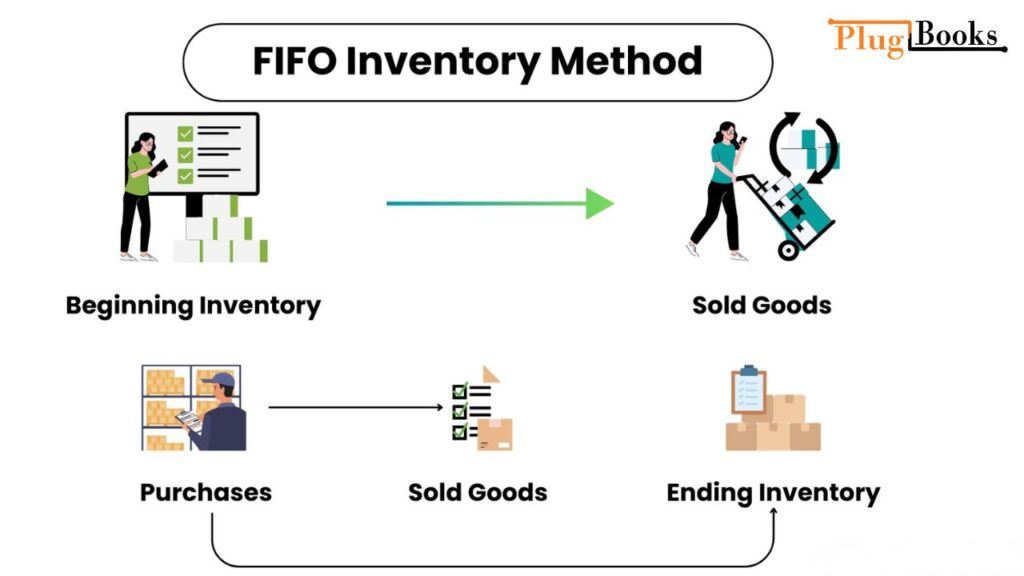
The First In, First Out (FIFO) method assumes that the oldest inventory is sold first, while the newest stock remains in inventory. For eCommerce sellers, this means that items purchased earlier are tracked and accounted for first, ensuring accurate Cost of Goods Sold (COGS) and ending inventory values.
By applying FIFO consistently, sellers can prevent obsolete stock, maintain correct pricing, and make smarter purchasing and restocking decisions. This approach mirrors the natural flow of goods in most retail and online businesses, especially for perishable or trend-sensitive products.

Advantages and Disadvantages of FIFO
| Advantages | Disadvantages |
| Accurate inventory valuation – reflects current stock value | Higher taxes during inflation due to higher profits |
| Logical flow – oldest stock sold first | COGS may not reflect current purchase costs |
| Profit reporting – higher profits in rising markets | Can overstate profit in inflationary periods |
| Compliance – accepted under IFRS & GAAP | Less useful in businesses where stock doesn’t flow chronologically |
FIFO Method Formula: Step-by-Step Guide for eCommerce Sellers
The FIFO cost formula helps calculate Cost of Goods Sold (COGS) and ending inventory:
COGS=Cost of Oldest Inventory Sold First\text{COGS} = \text{Cost of Oldest Inventory Sold First}COGS=Cost of Oldest Inventory Sold First Ending Inventory=Cost of Newest Inventory Remaining\text{Ending Inventory} = \text{Cost of Newest Inventory Remaining}Ending Inventory=Cost of Newest Inventory Remaining
Step 1: List Inventory Purchases by Date
| Date | Units Purchased | Cost per Unit |
| Jan 1, 2026 | 100 | $10 |
| Feb 1, 2026 | 100 | $12 |
| Mar 1, 2026 | 100 | $15 |
Step 2: Record Sales
Example: 180 units sold by Mar 15, 2026.
Step 3: Apply FIFO Procedure
- COGS: Sell the oldest inventory first:
- 100 units @ $10 = $1,000
- 80 units @ $12 = $960
Total COGS = $1,960
- 100 units @ $10 = $1,000
- Ending Inventory: Remaining newest stock:
- 20 units @ $12 = $240
- 100 units @ $15 = $1,500
Total Ending Inventory = $1,740
- 20 units @ $12 = $240
Step 4: Use Formula to Verify
COGS + Ending Inventory = Total Inventory Cost
$1,960 + $1,740 = $3,700 ✅
Common Issues with First In, First Out (FIFO) Accounting Method & Fixes
- Incorrect COGS Calculation – Follow FIFO cost formula strictly.
- Overstocking and Obsolete Inventory – Track oldest inventory first and monitor slow-moving products.
- Manual Tracking Errors – Automate FIFO with Shopify or Amazon inventory tools.
- Profit Miscalculations – Apply FIFO consistently to avoid inflated or understated profits.
- Confusing FIFO vs LIFO – Standardize FIFO processes across your eCommerce business.

Security Tips & Best Practices
- Use Secure Inventory Software – Avoid manual spreadsheets for large inventories.
- Regular Backups – Store inventory and sales data in the cloud and offline.
- Real-Time Tracking – Ensure FIFO updates reflect actual sales.
- Limit Access – Control permissions for staff and accountants.
- Audit Inventory Periodically – Reconcile ending inventory with sales reports.
- Automate Alerts – Set notifications for slow-moving or old stock.
Simplify FIFO Inventory Tracking with PlugBooks
Managing inventory using the FIFO cost tracking can get complicated, especially for multiple batches and sales channels. PlugBooks helps eCommerce sellers:
- Automate FIFO calculations for COGS and ending inventory
- Integrate multi-channel sales (Shopify, Amazon, etc.)
- Generate accurate financial reports in real-time
- Reduce manual errors and save time
PlugBooks ensures eCommerce sellers implement the FIFO method efficiently in 2026, improving profits and inventory management.

FAQs
1. How can the FIFO process prevent inventory losses?
Problem: Old stock can become obsolete.
Practical: FIFO sells oldest items first.
Actionable: Track batches to reduce losses.
2. Can the FIFO system improve cash flow?
Problem: Overstock ties up cash.
Practical: FIFO moves older stock faster.
Actionable: Free up cash for new purchases.
3. How is the FIFO process formula applied in multi-channel sales?
Problem: Selling on Shopify and Amazon simultaneously.
Practical: Apply FIFO per channel.
Actionable: Sync inventory across platforms for correct COGS.
4. Does the FIFO flow help with pricing decisions?
Problem: Using outdated cost data can mislead pricing.
Practical: FIFO tracks actual purchase costs.
Actionable: Adjust prices based on oldest inventory cost.
5. What common mistakes should eCommerce sellers avoid with the FIFO flow?
Problem: Mixing new and old stock or manual errors.
Practical: Follow FIFO method formula strictly.
Actionable: Automate with PlugBooks.
6. Can FIFO method assist in seasonal product planning?
Problem: Seasonal items risk unsold stock.
Practical: FIFO sells older seasonal inventory first.
Actionable: Plan purchases based on past inventory flow.

Quick Recap
- FIFO method = First In, First Out
- FIFO inventory calculation ensures oldest stock is sold first
- FIFO process formula calculates COGS and ending inventory
- Reduces overstock, prevents obsolete stock, and ensures accurate profits
- PlugBooks automates and simplifies FIFO for eCommerce sellers in 2026
Conclusion
For eCommerce sellers in 2026, mastering the FIFO process is essential to manage inventory efficiently, track costs accurately, and optimize profits. By applying the FIFO accounting formula and following best practices, sellers can prevent overstock, make smarter pricing decisions, and maintain reliable financial records.
Tools like PlugBooks make implementing FIFO seamless, automating calculations, integrating multiple sales channels, and generating accurate reports. Whether on Shopify, Amazon, or multi-channel stores, the FIFO method of inventory valuation is a powerful strategy for growth and efficiency in 2026.