




What is FIFO? In 2026, accurate inventory management is more important than ever. It is a method that ensures the oldest inventory is sold first. Using FIFO helps businesses calculate the cost of goods sold (COGS) accurately, maintain reliable financial statements, and prevent profit miscalculations.
Whether you run a retail store, an eCommerce brand, or a wholesale operation, FIFO remains one of the most trusted and widely used inventory valuation methods worldwide.
In this guide, you’ll learn:
- What is fifo and why it matters in 2026
- How fifo in accounting works step by step
- How to do fifo calculations
- What fifo require for accurate reporting
- Pros and cons of the first in first out accounting method
What Is FIFO in Accounting?
So, what is fifo in accounting?
FIFO stands for First In, First Out. It is an inventory valuation method that assumes the earliest purchased goods are sold first.
In accounting terms:
- The oldest inventory costs are recorded as COGS.
- The most recent purchases remain in the ending inventory.
This approach aligns with how many businesses naturally move physical stock—especially perishable or fast-moving goods.
In 2026, FIFO remains fully accepted under:
- GAAP (Generally Accepted Accounting Principles)
- IFRS (International Financial Reporting Standards)
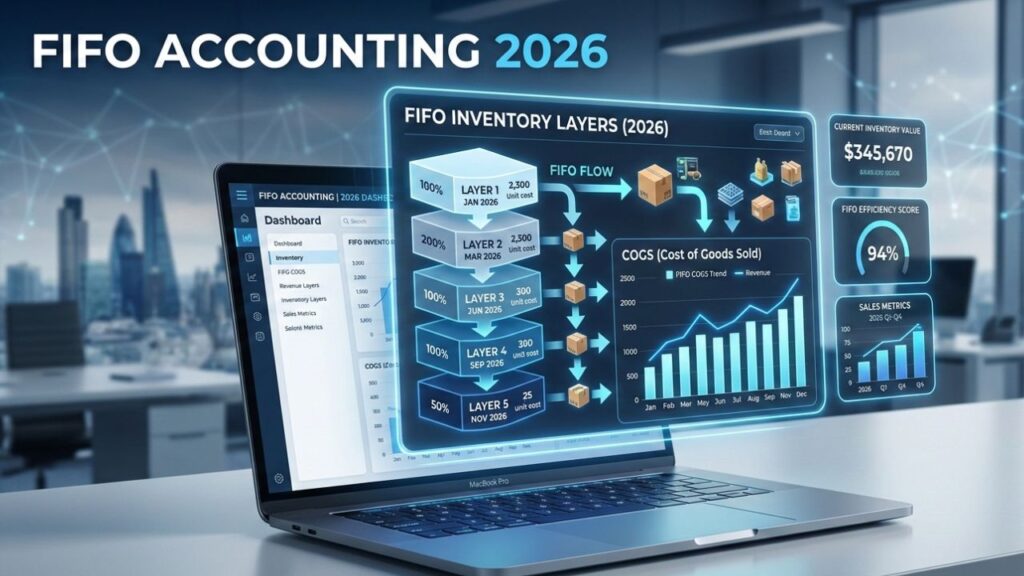
What Is FIFO Process?
For those asking simply what is fifo, it is a cost flow assumption. It does not necessarily track the physical movement of goods, but it assumes that inventory purchased first is sold first for accounting purposes.
Example:
If you purchase:
- 100 units in January at $20
- 100 units in March at $25
When you sell 100 units in April, FIFO assumes the January batch is sold first.
How FIFO in Accounting Impacts Financial Statements
Understanding fifo in accounting is important because it directly affects:
1. Cost of Goods Sold (COGS)
Older costs are applied first.
2. Gross Profit (What Is FIFO Impact)
During inflation, COGS is lower, so profit appears higher.
3. Taxes
Higher profits may lead to higher taxable income.
4. Ending Inventory Value
Inventory reflects recent purchase prices, making the balance sheet more realistic.
In 2026’s fluctuating cost environment, this impact becomes even more significant.
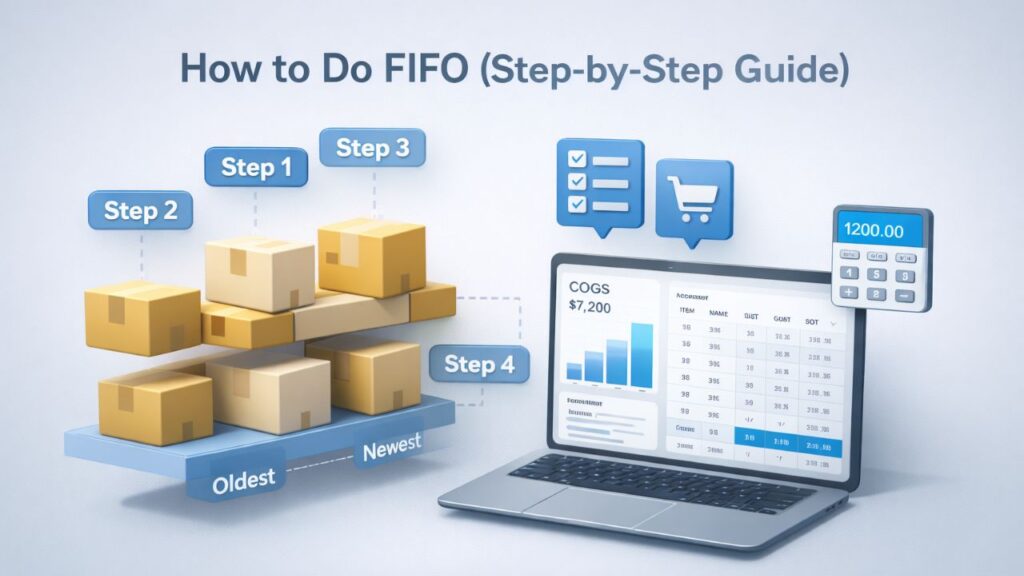
How to Do FIFO (Step-by-Step Guide)
If you’re wondering how to do fifo, follow this structured process:
Step 1: Record Each Purchase
Track:
- Date
- Quantity
- Unit cost
Each purchase creates a cost layer.
Step 2: Identify Oldest Inventory
When a sale occurs, select the earliest cost layer first.
Step 3: Calculate COGS
Multiply the sold quantity by the oldest cost.
Step 4: Update Remaining Inventory
Subtract sold units from the earliest layer. Keep newer costs in ending stock.
Most 2026 accounting software automates this once FIFO is selected.
FIFO Require – What Does FIFO Require?
Many business owners ask what fifo requires to function properly.
In modern accounting systems, FIFO requires:
- Accurate purchase records
- Real-time inventory tracking
- Proper cost documentation
- Organized bookkeeping
- Regular inventory reconciliation
Without reliable data, FIFO calculations may distort financial reporting.
What Is the First In First Out Accounting Method?
The first in first out accounting method is one of the most commonly used inventory valuation techniques globally.
It assumes chronological cost flow—meaning earlier purchases are expensed first.
This method is especially popular among:
- Ecommerce sellers
- Retail stores
- Manufacturing companies
- Food and consumer goods businesses
Because it mirrors natural inventory movement, it’s considered both logical and transparent.
Practical Example of FIFO in 2026
Let’s apply the method:
January: 100 units @ $30
March: 100 units @ $35
Units Sold: 120
Under FIFO:
First 100 units = 100 × $30 = $3,000
Next 20 units = 20 × $35 = $700
Total COGS = $3,700
Remaining Inventory = 80 units @ $35
This example shows how older costs are applied first, even if market prices rise.
Pros of FIFO in 2026
1. Accurate Ending Inventory
Inventory reflects recent costs, aligning with current market value.
2. Higher Reported Profits in Inflation
Older, lower costs reduce COGS.
3. Globally Accepted
Complies with GAAP and IFRS standards.
4. Logical and Easy to Audit
Simple structure improves financial transparency.
5. Ideal for Perishable Goods
Matches natural inventory flow in many industries.
Cons of FIFO in 2026
1. Higher Taxes During Inflation
Lower COGS means higher taxable income.
2. May Overstate Profit
Reported income may look stronger than actual purchasing power.
3. Sensitive to Recordkeeping Errors
Because fifo requires structured cost layers, poor tracking leads to inaccuracies.
4. Not Always Ideal in Deflation
If prices drop, FIFO may show lower profit compared to other methods.
FIFO vs Other Inventory Methods
While learning what is fifo in accounting, it’s useful to compare:
FIFO → Oldest inventory sold first
LIFO → Newest inventory sold first
Weighted Average → Average cost applied to all units
Each method affects profit, tax, and reporting differently.
For a deeper comparison of FIFO vs LIFO and Weighted Average and their impact on profit, taxes, and reporting, check out our detailed guide.
Is FIFO Still Relevant in 2026?
Yes—more than ever.
With global pricing volatility and advanced accounting automation, FIFO remains a preferred method because:
- It reflects realistic inventory value
- It is simple to implement
- It improves reporting clarity
- It aligns with international standards
For ecommerce businesses and retailers, FIFO continues to be a practical and strategic choice.
Streamline Your FIFO Accounting with PlugBooks
PlugBooks makes managing FIFO and inventory seamless for ecommerce and retail businesses. Automatically track purchases, calculate COGS, and generate accurate financial reports in real-time—helping you save time, reduce errors, and stay compliant in 2026.

FAQs
1. Can FIFO be used for digital or service-based businesses?
FIFO mainly applies to businesses that manage physical inventory. Service-based companies typically do not use FIFO unless they maintain stock for resale.
2. How does FIFO affect cash flow reporting?
FIFO does not directly impact cash flow, but higher reported profits during inflation may increase tax payments, which can affect actual cash availability.
3. Is FIFO suitable during periods of falling prices?
During deflation, FIFO may result in lower reported profits because older, higher costs are recorded first in COGS.
4. Do accounting software systems automatically apply FIFO?
Most modern accounting platforms in 2026 allow you to select FIFO as your default inventory method and automatically calculate cost layers.
5. Can a business switch from another method to FIFO?
Yes, but switching inventory methods usually requires regulatory compliance, financial disclosure, and sometimes tax authority approval.
6. Does FIFO improve financial transparency?
Many auditors prefer FIFO because it is easy to verify, logically structured, and aligns closely with actual inventory movement.

Quick Recap
- What is fifo in accounting → A cost flow assumption method
- FIFO assumes oldest inventory is sold first
- How to do fifo → Apply earliest cost layers to sales
- FIFO require → Accurate tracking and organized bookkeeping
- First in first out accounting method → Globally accepted and widely used
Conclusion
In 2026, understanding what is fifo in accounting helps businesses track inventory accurately, calculate COGS, and report profits reliably. While it has pros like clarity and realistic inventory values, it may increase taxes during inflation. For ecommerce, retail, and wholesale businesses, FIFO remains a practical and trusted method for effective inventory management.