



Amazon sent wrong item is not just a simple fulfillment mistake—it’s a critical moment that can define your reputation as a seller on Amazon. In today’s competitive eCommerce environment, customers expect accuracy, speed, and seamless service. When they receive the wrong product, their trust is immediately affected.
From a semantic perspective, this issue connects multiple layers of your business: logistics, customer experience, inventory systems, and financial tracking. A single wrong shipment can trigger refunds, negative reviews, account health risks, and even long-term revenue loss.
However, this situation is not entirely negative. When handled strategically, it becomes an opportunity to demonstrate professionalism, build trust, and improve operational systems.
Key Takeaways:
- Wrong item issues impact both customer trust and seller metrics
- Fast, structured responses reduce negative outcomes
- Smart refund strategies can minimize financial damage
- Policy compliance is essential for account safety
- Prevention systems are the foundation of long-term success
Understanding the Meaning of “Amazon Sent Wrong Item” for Sellers
Semantically, “amazon sent the wrong item” represents a mismatch between customer expectation and actual delivery outcome. For sellers, this mismatch can originate from different operational layers.
It is important to understand that customers do not differentiate between seller errors and platform errors. Whether the mistake happens at the warehouse or during listing, the seller is often held accountable in the customer’s perception.
This issue can arise due to:
- Incorrect SKU mapping
- Product variation confusion
- Barcode or labeling errors
- Fulfillment mistakes (FBA or FBM)
Thus, the phrase is not just a complaint—it is a signal pointing toward a breakdown in your fulfillment ecosystem.
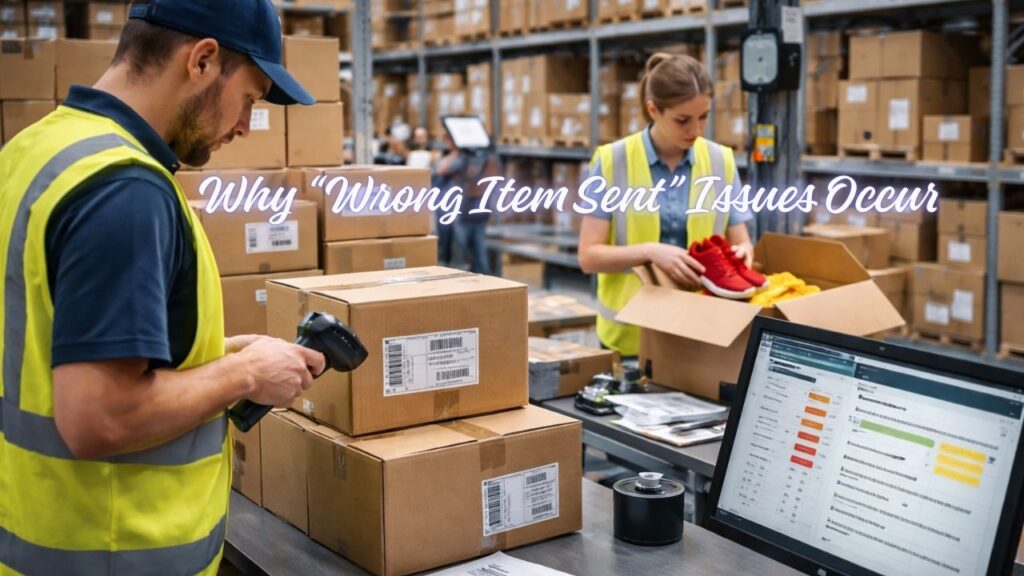
Why “Wrong Item Sent” Issues Occur
To solve the problem effectively, sellers must understand its root causes. These causes are interconnected and often systemic rather than isolated.
1. Fulfillment Errors (FBA Systems)
Fulfilled by Amazon (FBA), inventory is handled by Amazon warehouses. Errors may occur during picking, packing, or shipping. While Amazon manages logistics, sellers still need to monitor discrepancies.
2. Inventory Mislabeling
Incorrect barcodes or mislabeled products create confusion in automated systems. Even a small labeling mistake can result in sending the wrong item to multiple customers.
3. Listing & Variation Mismanagement
Improper variation setups (size, color, model) can cause customers to receive unintended versions of a product. This is one of the most overlooked causes.
4. Human Errors in FBM
For sellers handling their own shipping (FBM), manual picking mistakes are common—especially during high-volume periods.
5. Poor Inventory Tracking Systems
Lack of synchronization between stock and listings can result in outdated or incorrect product fulfillment.
Step-by-Step: What Sellers Should Do If Amazon Sent Wrong Item to Customer
When this issue occurs, your response should follow a structured and customer-centric approach.
1. Immediate Customer Response
Time is critical. A delayed response increases frustration and raises the risk of negative feedback or claims.
A prompt reply communicates:
- Accountability
- Professionalism
- Willingness to resolve
2. Verification of Order Details
Before taking action, verify:
- Order ID
- Product SKU and ASIN
- Shipment records
This ensures that your resolution is based on accurate information.
3. Professional Apology and Acknowledgment
An apology is not just a formality—it is a trust-building mechanism. Acknowledge the inconvenience clearly and avoid defensive language.
4. Offer Clear Resolution Options
Provide the customer with simple, direct choices:
- Full refund
- Replacement with the correct item
Clarity reduces confusion and speeds up resolution.
5. Strategic Return Handling
Not all returns are necessary.
- Low-value items → refund without return
- High-value items → request return
This decision should balance cost efficiency and customer satisfaction.
6. Policy Compliance
Following Amazon policies ensures:
- Protection from A-to-Z claims
- Reduced account risk
- Better dispute handling

Refund Without Return: A Strategic Approach
From a business intelligence perspective, “refund without return” is a cost-optimization strategy.
When It Makes Sense:
- Product value is lower than return shipping cost
- Item is damaged or unusable
- Logistics cost outweighs recovery value
Benefits:
- Faster resolution
- Higher customer satisfaction
- Reduced operational workload
However, overusing this strategy can increase losses, so it should be applied selectively.
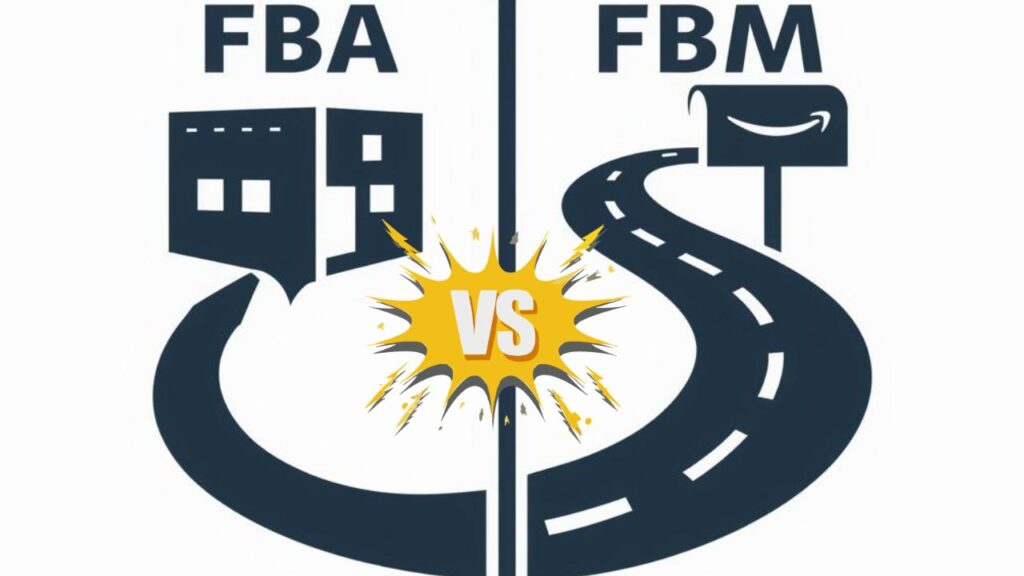
FBA vs FBM: Responsibility Breakdown
Understanding responsibility is essential for both resolution and prevention.
FBA (Fulfilled by Amazon)
- Amazon handles storage and shipping
- Errors may qualify for reimbursement
- Sellers must track and claim discrepancies
FBM (Fulfilled by Merchant)
- Seller controls the entire process
- Full responsibility lies with the seller
- Requires stronger quality control systems
Semantically, FBA shifts operational responsibility, while FBM retains full control but increases risk exposure.
Impact on Seller Account Health
The phrase “amazon sent the wrong item” is strongly linked with key performance metrics.
1. Negative Feedback
Customer dissatisfaction often leads to poor reviews, which directly impact conversions.
2. Order Defect Rate (ODR)
Frequent issues increase ODR, a critical metric for account health.
3. A-to-Z Claims
Unresolved complaints can escalate into claims, affecting seller credibility.
4. Account Suspension Risk
Repeated failures in fulfillment can lead to warnings or suspension.
Thus, each wrong item case is not isolated—it contributes to a cumulative risk profile.
Common Mistakes Sellers Must Avoid
Many sellers worsen the situation through poor handling strategies.
- Ignoring or delaying customer responses
- Providing unclear or complicated solutions
- Arguing with customers instead of resolving
- Failing to investigate the root cause
- Treating each case as isolated rather than systemic
Avoiding these mistakes is as important as solving the issue itself.
How to Prevent “Amazon Sent Wrong Item” Issues
Prevention is not a single action—it is a system of continuous improvement.
1. Accurate Inventory Labeling
Ensure every product is correctly labeled and scannable. Double verification reduces errors significantly.
2. Optimized Product Listings
Clear titles, images, and variations reduce confusion for both customers and fulfillment systems.
3. Regular Quality Checks
Routine inspections help identify issues before they reach customers.
4. Data Monitoring and Analysis
Track return reasons and identify patterns. Data-driven decisions prevent recurring problems.
5. Automation and Technology
Using advanced tools reduces human error and improves operational efficiency.
Tools That Help Reduce Wrong Item Errors
Technology plays a critical role in modern eCommerce operations.
Key Tool Categories:
- Inventory management systems
- Order tracking software
- Reconciliation and accounting tools
These tools create a connected ecosystem where errors are minimized and detected early.
How PlugBooks Helps Amazon Sellers
Handling financial impact from “amazon sent wrong item” cases manually can be complex and time-consuming.
PlugBooks provides a structured solution by:
- Tracking refunds and discrepancies automatically
- Reconciling incorrect orders with financial data
- Identifying profit leakage caused by fulfillment errors
- Simplifying bookkeeping for accurate reporting
This allows sellers to move from reactive problem-solving to proactive financial management.

FAQs
1. What should sellers do first when a wrong item is reported?
They should respond quickly, verify the issue, and offer a clear resolution.
2. Is the seller always responsible for wrong items?
Not always. In FBA, Amazon may be responsible, but sellers must still manage the customer experience.
3. Should every wrong item be returned?
No. For low-value items, refund without return is often more efficient.
4. Can this issue affect long-term sales?
Yes, negative reviews and poor ratings reduce customer trust and conversions.
5. How can sellers identify recurring issues?
By analyzing return data and customer complaints patterns.
6. Are automation tools necessary?
Yes, they significantly reduce errors and improve operational efficiency.
7. Amazon Sent Wrong Item Can I Keep It?
Yes, sometimes you can keep it if the seller issues a refund or replacement, especially for low-cost items.
8. What to Do If Amazon Sent a Wrong Item?
Contact the seller immediately and request a refund or replacement to resolve the issue quickly.
Quick Recap
- Respond quickly to customer complaints
- Verify and resolve issues professionally
- Use smart refund strategies
- Follow platform policies carefully
- Invest in prevention systems and tools
Conclusion
The issue of amazon sent wrong item is more than a logistical error—it is a reflection of how well your systems, processes, and customer service are aligned. Sellers who treat it as a learning opportunity rather than just a problem gain a competitive advantage.
By combining fast communication, strategic decision-making, and robust operational systems, you can not only resolve these issues effectively but also strengthen your brand reputation.
In 2026 and beyond, success on Amazon will depend on how efficiently sellers manage challenges like this—and how well they transform them into opportunities for growth.
