



Amazon tax exempt rules are crucial in 2026, as selling on Amazon is no longer just about listings and fulfillment—it’s also about compliance. Understanding tax-free purchases is essential for sellers operating across multiple states.
Moreover, incorrect handling of exemptions can result in reporting errors, buyer disputes, or even audits. Therefore, this guide explains amazon and tax exempt rules clearly, focusing on state-level differences, seller responsibilities, and compliance best practices.
Key Takeaways
- What tax exempt Amazon actually means
- Why rules differ from state to state
- Which sellers and buyers qualify
- When Amazon applies tax-free exemptions
- How sellers stay compliant in 2026
What Is Amazon Tax Exempt and Why It Matters in 2026
Tax exempt Amazon refers to purchases where eligible buyers are legally exempt from paying sales tax. Typically, these buyers include resellers, nonprofit organizations, and government entities.
However, not every exempt purchase works the same way. Because tax laws continue to evolve, Amazon regularly updates its systems. As a result, sellers must stay informed to avoid mismatches between collected tax and reported sales.
In short, understanding exemption logic protects both revenue and reputation.
Why Amazon Tax Relief Program Change by State
Sales tax in the US is governed at the state level. Consequently, Amazon tax waiver requirements differ significantly depending on where the order is shipped.
For example, some states require annual certificate renewals, while others accept permanent resale documents. Additionally, enforcement levels vary, which means sellers must adapt their reporting accordingly.
Therefore, assuming one universal rule can easily lead to compliance mistakes.

Which States Allow Amazon Tax Waiver Purchases
Most states recognize exemptions, yet the structure differs.
Common Examples
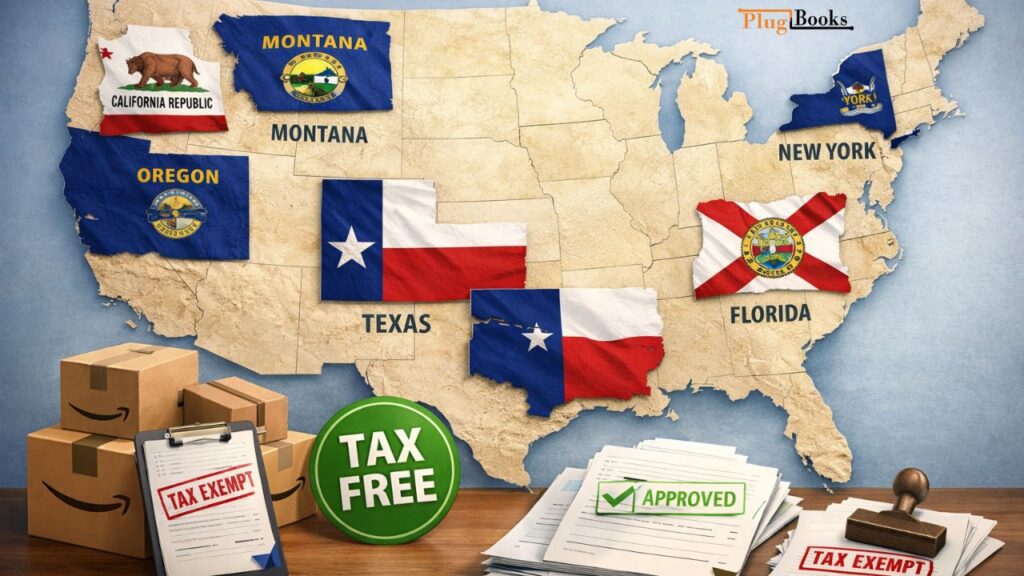
- California – Resale certificates required
- Texas – Frequent documentation reviews
- Florida – Annual renewals mandatory
- New York – Strict validation standards
- Oregon & Montana – No sales tax at all
Because of these variations, sellers operating nationwide must review state policies regularly.
Who Qualifies for Tax Exempt Amazon Status
Eligibility is buyer-based, not seller-based. Generally, the following qualify:
- Resellers purchasing inventory
- Nonprofit organizations
- Government agencies
Nevertheless, buyers must submit valid documents through Amazon Business. Until approval is granted, sales tax applies as normal.
Thus, sellers should never manually mark orders as exempt.
Does Amazon Automatically Apply Tax Exempt Orders
Yes—but only after approval. Amazon applies exemptions using the Amazon Tax Exemption Program (ATEP).
Once documents are verified:
- Exempt tax is applied at checkout
- Orders reflect zero sales tax
- Reports show exemption details
That said, Amazon handles calculation—not compliance reporting. Therefore, sellers must still maintain accurate records.
When Does Amazon Participate in Tax Free Weekend
A common question is: does Amazon participate in tax free weekends?
The answer is yes, but only in states that officially observe tax-free holidays.
However:
- Only specific product categories qualify
- Price limits differ by state
- Exemptions apply automatically
As a result, sellers should avoid altering prices manually during these periods.

Can Sellers Control Tax Exempt Amazon Transactions
Sellers cannot control exemption approval. Instead, Amazon determines exemption eligibility based on buyer-submitted documents.
That said, sellers can:
- Monitor exempt orders
- Separate taxable vs exempt sales
- Prepare accurate tax reports
Ultimately, control lies in reporting—not exemption approval.
What Steps Are Required to Remove Tax Exemption From Amazon Account
Sometimes, exemption status must be reversed. This may occur if documents expire or a business structure changes.
To remove exemption:
- Open Amazon Business settings
- Navigate to tax exemption preferences
- Delete existing certificates
- Confirm updates
After removal, standard tax applies immediately.
Which Mistakes Cause Amazon Tax Exempt Errors
Even experienced sellers make mistakes. Fortunately, most are avoidable.
Frequent Errors
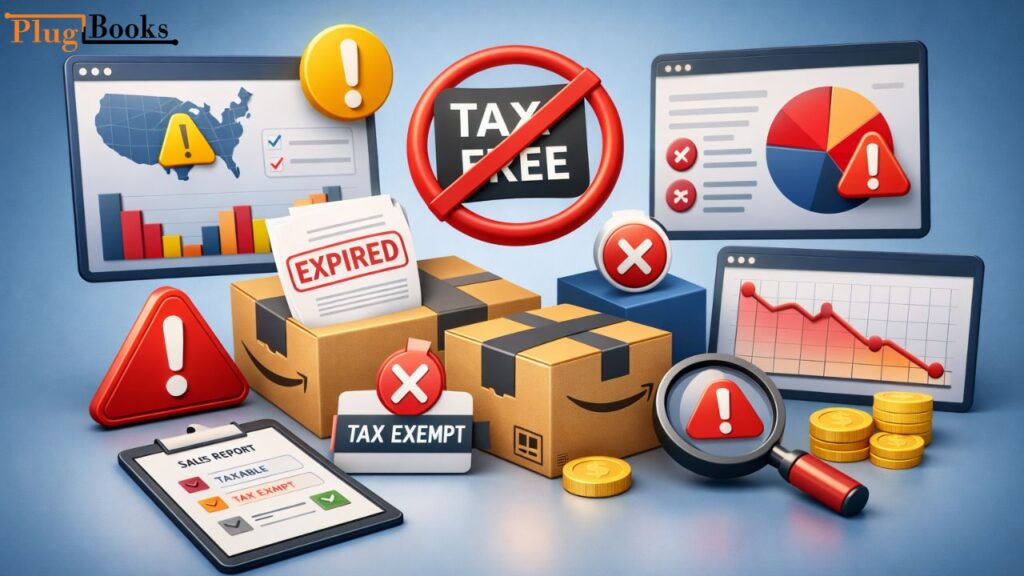
- Assuming all states follow the same rules
- Ignoring certificate expiration dates
- Mixing exempt and taxable sales
- Failing to review reports
Because these issues compound over time, regular monitoring is essential.
Why Compliance Matters for Exempt Purchase Sellers
Compliance protects sellers from audits, penalties, and buyer disputes. Additionally, clean records simplify accounting and year-end filing.
More importantly, accurate reporting builds long-term business stability. Therefore, treating exemptions seriously is a strategic decision—not just a legal one.
How PlugBooks Simplifies Exempt Purchase Reporting
Managing amazon tax exempt data manually becomes complex, especially across multiple states.
PlugBooks helps sellers by:
- Separating taxable and exempt transactions
- Creating state-wise tax summaries
- Syncing Amazon data with accounting tools
- Reducing reporting errors
As a result, sellers save time while staying compliant.

People Also Ask (FAQs)
What determines whether an Amazon order is tax exempt?
Eligibility depends on buyer status, approved documentation, and state law.
Why does sales tax sometimes appear after exemption approval?
Some states require destination-based validation or renewed certificates.
Can sellers lose tax exempt Amazon compliance benefits?
Yes, inaccurate reporting can trigger audits or penalties.
Does amazon and tax exempt apply to digital products?
It depends on state tax laws and product classification.
Are tax-free weekends handled differently from exemptions?
Yes, tax-free weekends follow separate state holiday rules.
Is tax exempt Amazon status permanent?
No, many states require renewals or periodic verification.
Quick Recap
- Tax-Free Orders varies by state
- Buyers control exemption approval
- Amazon automates tax application
- Sellers handle reporting accuracy
- PlugBooks reduces compliance workload
Final Conclusion
Understanding Amazon Tax Exempt by State 2026 rules is critical for sellers aiming to scale without risk. While Amazon automates exemptions, sellers remain responsible for compliance, documentation, and reporting accuracy.
By staying informed, tracking data carefully, and using tools like PlugBooks, sellers can confidently manage tax exempt Amazon transactions and grow their business without unnecessary tax stress.