



Accurate record keeping is essential for any small business. With best record keeping for small business, owners can stay organized, track expenses, report income, and prepare for taxes efficiently.
Proper financial records help businesses avoid mistakes, make informed decisions, and ensure smooth operations.
Important Points:
- Organize your money transactions in a way that works well
- Save time when you file your taxes
- Stay out of trouble with the law or your money
- Keep an accurate record of how well your firm is doing
- Help with making strategic decisions
Small business owners can lower their stress, work more efficiently, and keep their finances clear by adopting best practices.
Why Record Keeping Matters
Many entrepreneurs ask: why is financial information important?
Financial information allows businesses to:
- Monitor cash flow and profitability
- Identify areas to cut costs
- Provide proof during audits
- Maintain transparency with investors or lenders
Businesses can see their finances clearly when they keep good records. This makes it easier to plan for growth and avoid difficulties that come up out of the blue.
How Long Do I Need to Keep Records for Tax?
A common concern is how long do I need to keep records for tax purposes.
- Most small firms should keep tax papers and receipts for 3 to 7 years, depending on where they are located.
- You may need to keep payroll records, bank statements, and tax returns for longer.
- Keeping correct records ensures that you follow the rules and stay safe during audits.
Modern record keeping software makes this easy by securely storing documents for the required time.

Ways to Keep Records
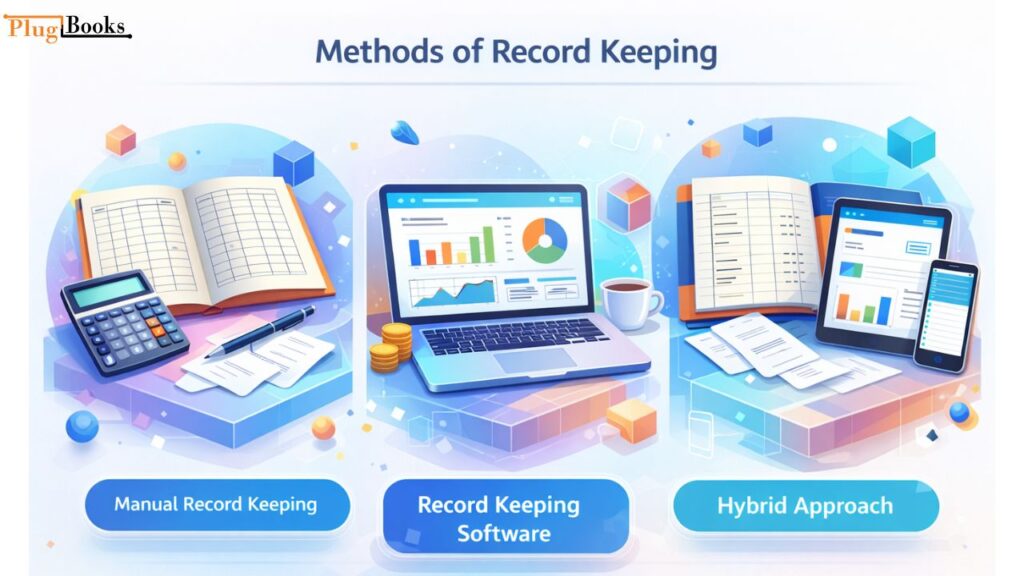
1. Keeping records by hand
- Using spreadsheets or paper ledgers
- Good for really tiny enterprises that don’t do a lot of business
- Cheap but likely to make mistakes and take a long time
2. Record Keeping Software
Software solutions make money matters easier:
- PlugBooks, QuickBooks, and Xero are examples of tools that do math for you.
- Keeps track of transactions and makes reports
- Makes it easier to file taxes and follow the rules
3. A mix of both
- Brings together paper and digital records
- Provides extra safety and backup
- Makes guarantee that data is still available even if the software breaks
Using the appropriate strategy makes sure that you get accurate, efficient, and improved financial information.
Describe the Key Features of a Financial Record Keeping System
A good way to keep track of your money should have:
- Automated transaction tracking cuts down on mistakes made by hand
- Real-time financial reporting lets you see your cash flow and profits right now.
- Categorizing expenses makes it easy to look at spending.
- Tax compliance technologies make tax paperwork automatically ready
- Platform integration: works with eBay, Amazon, or Shopify
These features help business owners expand by cutting down on mistakes, saving time, and letting them focus on growth.
Advice on how to keep the best records
To implement best record keeping for small business, follow these tips:
- Keep your business and personal money separate.
- Quickly write down all of your income, spending, and deductions.
- Check your bank statements often to be sure they are correct.
- Make receipts digital so you can get to them easily
Consistency ensures that records are correct, audits go well, and taxes are easy to file.
Problems that happen a lot and how to fix them
Small businesses often have trouble preserving records:
- Receipts that aren’t in order ⇒ Scan and upload them right away
- Missed entries? Use record-keeping software to automate them.
- If you have a complicated transaction, talk to a financial expert.
- Worried about data security? Use cloud-based technologies that are encrypted.
Taking care of these problems will make bookkeeping easier and cut down on mistakes.
Help for Small Businesses with PlugBooks
PlugBooks is the best software for small business owners to keep track of their records.
Features include:
- Recording transactions automatically
- Reporting and analytics in real time
- Reports that are easy to file taxes
- Works with Shopify, Amazon, and eBay
Small business owners can focus on expansion while PlugBooks keeps their financial records neat and in order.

Questions and Answers
Q1: What is the best way for a small firm to retain records?
A: The best way for small businesses to keep track of their money, be ready for taxes, and make fewer mistakes is to use digital tools and organized processes together.
Q2: How long do I need to preserve documents for tax reasons?
A: Most records need to be kept for 3 to 7 years, depending on the rules in your area.
Q3: Why is financial information important?
A: It helps keep track of performance, make smart choices, and make sure you follow the rules set by tax authorities.
Q4: What are the most important things that a financial record keeping system should have?
A: Automation, real-time reporting, categorizing expenses, tax tools, and connecting to other platforms.
Q5: Can I keep track of records by hand?
A: Yes, but keeping records by hand is more likely to be wrong than using software.
Q6: What are the five best ways for small businesses to retain records?
A: The best ways to keep records include via manual spreadsheets, traditional ledgers, cloud-based accounting software, hybrid systems that use both digital and paper, and automated bookkeeping routines that cut down on mistakes and make finances clearer.
Quick Summary
- Accurate best record keeping for small business saves time, money, and stress
- Cloud-based software makes it easier to keep track of things, report on them, and follow the rules.
- Key system features ensure that things run smoothly, that data is stored safely, and that everything is correct.
Final Thoughts
Implementing best record keeping for small business practices ensures financial clarity, smooth operations, and compliance with tax authorities. Small business owners can use software like PlugBooks to automate their bookkeeping, make reports that are ready for taxes, and focus on growth without worrying about making mistakes or missing deductions.