



ConnectBooks vs PlugBooks: Which eCommerce Bookkeeping Tool Is Better in 2026?
Running an ecommerce business today is not just about making sales—it’s about managing complex financial data accurately.
From Amazon payouts and platform fees to multi-channel sales and tax reporting, bookkeeping has become one of the most challenging parts of ecommerce operations.
That’s why tools like ConnectBooks and PlugBooks exist.
But here’s the real question:
👉 Do you need a simple data sync tool, or a complete bookkeeping automation system?
This comparison will help you decide which solution actually fits your business needs in 2026 and beyond.
Key Takeaways
- Automation reduces manual bookkeeping errors
- Clean financial data improves business decisions
- Multi-channel support is essential for scaling sellers
- Accurate reports simplify tax filing and compliance
- The right tool saves both time and operational costs
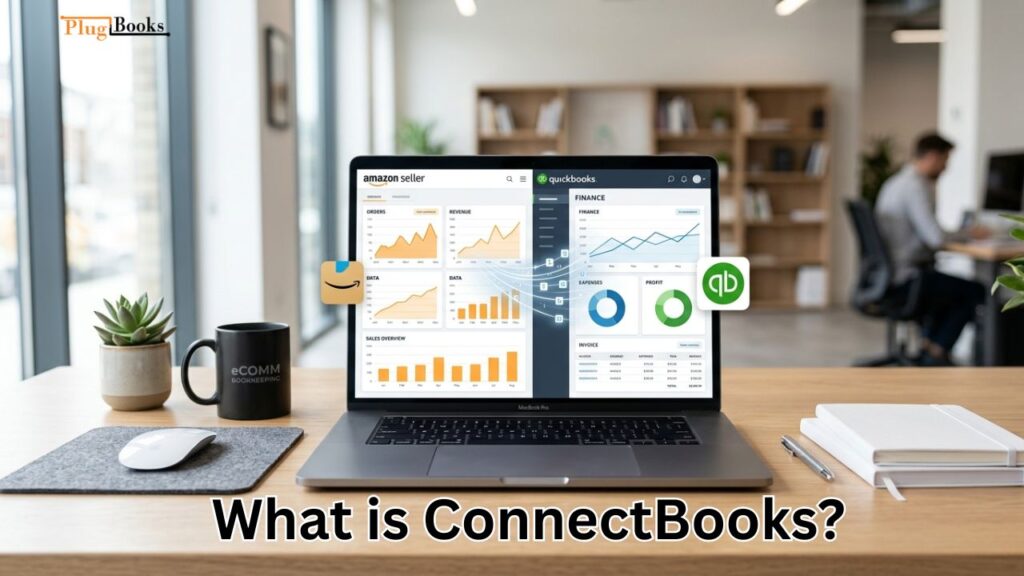
What is ConnectBooks?
ConnectBooks is a bookkeeping integration tool mainly designed for Amazon sellers. It connects your Amazon account with accounting software like QuickBooks.
Its core purpose is simple:
👉 Transfer Amazon transaction data into your accounting system.
Key features include:
- Automatic Amazon transaction import
- Syncing payouts to QuickBooks
- Reducing manual data entry
- Basic financial reporting
Best suited for:
- Amazon-only sellers
- Small ecommerce businesses
- Users needing basic automation only
Limitation:
ConnectBooks focuses on data syncing, not financial optimization. It does not clean or restructure your data deeply.
What is PlugBooks?
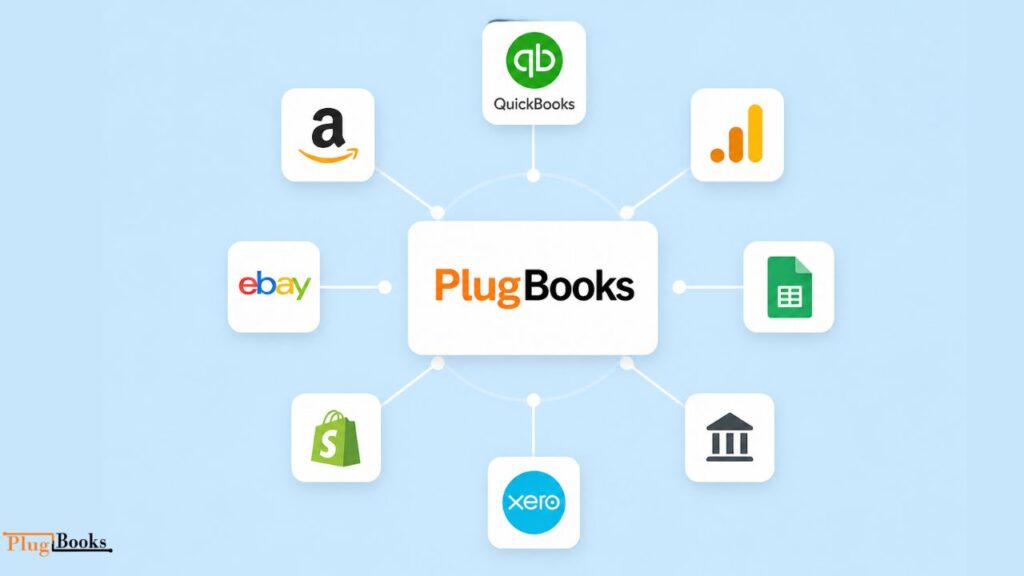
PlugBooks is a modern ecommerce bookkeeping automation system designed for growing and scaling online businesses.
Unlike basic sync tools, PlugBooks focuses on financial data intelligence.
It connects with:
- QuickBooks
- Xero
- Multi-channel ecommerce platforms
What PlugBooks actually does:
- Cleans messy transaction data automatically
- Categorizes fees and expenses accurately
- Structures financial records for clarity
- Generates decision-ready reports
Best suited for:
- Multi-channel sellers (Amazon, eBay, etc.)
- Scaling ecommerce brands
- Businesses needing financial clarity and automation
💡 Key difference:
PlugBooks does not replace accounting software—it enhances it.
ConnectBooks vs PlugBooks: Core Difference Explained
Before comparing features, understand this clearly:
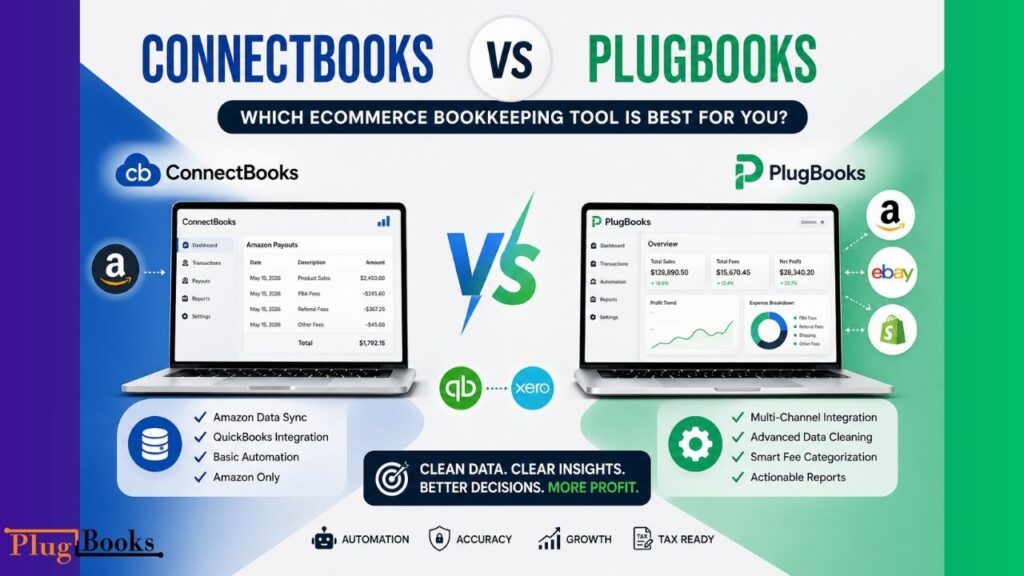
- ConnectBooks = Data Transfer Tool
- PlugBooks = Financial Automation System
Why this matters:
Raw data is not useful unless it is structured properly.
Poor data leads to poor financial decisions
Clean data leads to better business growth
Feature Comparison: ConnectBooks vs PlugBooks
| Feature | ConnectBooks | PlugBooks |
| Core Function | Amazon data syncing | Full bookkeeping automation |
| Platform Support | Amazon only | Multi-channel |
| QuickBooks Integration | Yes | Yes |
| Xero Integration | No | Yes |
| Data Cleaning | Limited | Advanced |
| Fee Categorization | Basic | Detailed & automated |
| Reporting | Standard reports | Business decision reports |
| Scalability | Medium | High |
Real-World Use Cases: Which Tool Fits Which Seller?
Understanding real business scenarios makes the decision easier.
1. Beginner Amazon Seller
Situation:
- Single Amazon store
- Low order volume
- Basic bookkeeping needs
👉 Best Choice: ConnectBooks
Simple setup
Basic automation
Enough for early-stage business
2. Growing Multi-Channel Seller
Situation:
- Amazon + eBay or Shopify
- Increasing transactions
- Needs better financial clarity
👉 Best Choice: PlugBooks
Multi-platform support
Cleaner financial reporting
Reduced manual errors
3. Scaling Ecommerce Brand
Situation:
- High order volume
- Multiple sales channels
- Requires accurate financial insights
👉 Best Choice: PlugBooks
Full automation
Advanced reporting
Scalable financial system
Real Workflow Comparison
Without Any Tool
- Manual report downloads
- Data cleaning in spreadsheets
- Manual entry into accounting software
- Frequent errors
👉 Result: Time-consuming and error-prone
With ConnectBooks
- Automated Amazon data syncing
- Reduced manual entry
- Still requires manual adjustments
👉 Result: Faster, but not fully optimized
With PlugBooks
- Multi-channel data integration
- Automatic data cleaning
- Structured reporting system
👉 Result:
- Minimal manual work
- Accurate financial insights
- Faster business decisions
Pricing vs Value: What Sellers Often Miss
Most sellers focus only on price—but smart sellers focus on ROI.
ConnectBooks:
- Lower cost
- Basic functionality
- Suitable for small operations
PlugBooks:
- Value-based pricing
- Built for scalability
- Reduces long-term financial errors
👉 Real question:
How much time and money are you losing due to poor financial data?

Pros and Cons Breakdown
ConnectBooks Pros
- Easy setup
- Amazon-focused
- QuickBooks integration
ConnectBooks Cons
- Limited to Amazon
- Basic reporting
- No advanced automation
PlugBooks Pros
- Multi-channel support
- Advanced automation
- Clean financial reporting
- Scalable system
PlugBooks Cons
- Slight learning curve
- More features to explore initially
Security & Data Reliability
Both tools use secure API-based integrations with platforms like QuickBooks and Xero.
This ensures:
- Secure data transfer
- No manual handling risks
- Accurate financial records
Reliable data is critical for:
- Tax compliance
- Financial forecasting
- Business growth planning
Why Modern Ecommerce Needs More Than Syncing
Ecommerce in 2026 is complex:
- Multiple sales channels
- International tax systems
- Platform fee structures
- Inventory and refunds
👉 Basic syncing tools are no longer enough.
Businesses now need:
- Automation
- Accuracy
- Financial clarity
This is where PlugBooks fits modern ecommerce workflows better.
PlugBooks for Serious Sellers
If your goal is only data syncing, basic tools may work.
But if you want:
- Better financial control
- Accurate reporting
- Scalable operations
- Smarter decision-making
👉 PlugBooks becomes a long-term business asset, not just a tool.

FAQs
1. What is the main difference between ConnectBooks and PlugBooks?
ConnectBooks syncs data, while PlugBooks cleans, structures, and optimizes financial data.
2. Does PlugBooks replace accounting software?
No, it works with tools like QuickBooks and Xero to enhance them.
3. Which tool is better for multi-channel sellers?
PlugBooks is better for multi-channel ecommerce businesses.
4. Is ConnectBooks enough for beginners?
Yes, for Amazon-only beginners, it is sufficient.
5. Do these tools help with taxes?
Yes, both improve financial organization and tax readiness.
Quick Recap
- ConnectBooks → Basic Amazon data sync tool
- PlugBooks → Advanced ecommerce bookkeeping automation system
- Best choice depends on business size and complexity
Final Verdict
Both tools solve bookkeeping problems—but at different levels.
👉 Choose ConnectBooks if you want simple Amazon syncing.
👉 Go with PlugBooks if you want:
- Automation
- Clean financial data
- Business scalability
- Better decision-making
Final Thought
In ecommerce, success is not just about increasing sales—it is about understanding your numbers clearly.
When your financial data is clean, your decisions become faster, smarter, and more profitable.
And that is exactly what separates growing businesses from scaling brands.