




Deferred payment is a financial arrangement that allows buyers to receive goods or services immediately but pay at a later agreed date. In 2026, deferred payment has become a vital tool for businesses and consumers alike, helping manage cash flow, plan purchases, and maintain financial flexibility.
From wholesale trade and online shopping to loans and buy-now-pay-later (BNPL) platforms, understanding deferred payment is essential for informed financial decisions.
This guide will explain the meaning of deferred payment, its types, advantages, disadvantages, real-world examples, and tips to manage it efficiently in your business or personal finance.
What is Deferred Payment?
Deferred payment refers to an agreement where the payment is postponed to a future date instead of being made immediately. It allows buyers to access goods or services now while giving them time to arrange the payment later.
Example:
- A retailer purchases inventory from a supplier today but pays after 60 days.
- A consumer buys a laptop using a BNPL service and pays in 3 months.
Key points:
- Payment is delayed but legally binding.
- Terms such as due date, interest, and penalties are agreed upon in advance.
- Common across business and consumer transactions.
Key Features of Deferred Payment
- Cash Flow Flexibility: Buyers can receive products without immediate cash outflow.
- Agreement-Based: Terms are documented in contracts or invoices.
- Interest or Penalty Clauses: Some agreements charge fees if payment is late.
- Accounting Recognition: Recorded as accounts payable for buyers and accounts receivable for sellers.
Types of Deferred Payment
1. Trade Credit
- Widely used in B2B transactions.
- Payment allowed after a fixed period, e.g., 30–90 days.
2. Installment Plans
- Payment divided into multiple smaller amounts over time.
- Common for electronics, furniture, or vehicles.
3. Bank Loans or Financing
- Repayment may start after a deferment period.
- Example: Student loans starting after graduation.
4. Buy Now, Pay Later (BNPL)
- Online services like Klarna or Afterpay allow deferred payment in short-term installments.
Advantages of Deferred Payment
For Buyers:
- Better cash flow management
- Ability to make larger purchases
- Flexible repayment timing
For Sellers:
- Attracts more customers
- Builds trust with buyers
- Enhances competitive advantage
Disadvantages of Deferred Payment
- Risk of default if buyers fail to pay on time
- Interest or late fees may apply
- Accounting complexity
- Possible cash flow impact for sellers
Accounting Treatment of Deferred Payment
- For Buyers: Recorded as Accounts Payable until payment is made.
- For Sellers: Recorded as Accounts Receivable until payment is received.
- Deferred payments do not immediately affect cash but impact financial planning and reporting.
Real-World Examples of Deferred Payment
- Wholesale Trade: Retailers pay suppliers 30–60 days after receiving inventory.
- Consumer Electronics: Purchases via BNPL services like Afterpay.
- Construction Industry: Materials bought on deferred terms, paid after project completion.
- Education Loans: Students repay loans after completing studies.
Simplify Deferred Payment Tracking with PlugBooks.io
Managing deferred payments can be complex, especially when juggling multiple clients, invoices, and due dates. PlugBooks.io streamlines this process by automatically syncing your sales, tracking accounts receivable and payable, and generating clear financial reports.
With PlugBooks.io, businesses can avoid missed payments, reduce manual bookkeeping errors, and maintain healthy cash flow—making deferred payment management effortless and efficient.

Tips for Using Deferred Payment Wisely
- Check Terms Carefully: Know the due date, interest, and penalties.
- Avoid Excessive Deferred Payments: Don’t accumulate multiple obligations simultaneously.
- Plan Cash Flow: Ensure funds are available when payment is due.
- Monitor Accounts Regularly: Track payments to prevent late fees.
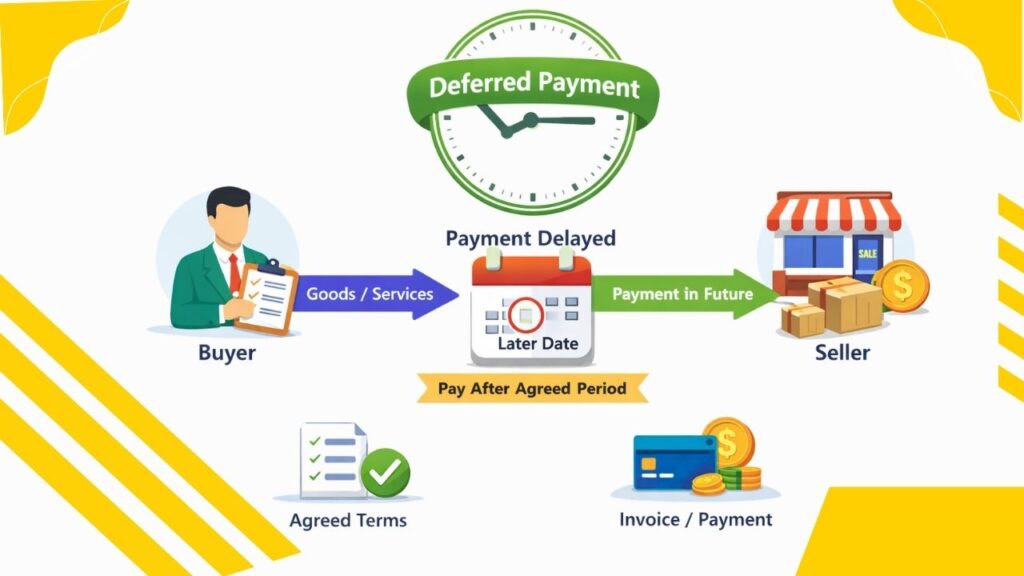
Visual Guide: Deferred Payment Flow
Infographic integration:
- Buyer receives goods/services immediately → Seller records accounts receivable → Buyer pays on agreed future date.
FAQs
Q1: What is deferred payment in simple terms?
A1: Deferred payment is an arrangement where you receive goods or services immediately but pay at a later agreed-upon date, helping manage cash flow.
Q2: How does deferred payment affect businesses?
A2: It allows businesses to buy inventory or services without immediate cash outlay, improving liquidity, supporting growth, and encouraging larger purchases.
Q3: Are there risks associated with deferred payment?
A3: Yes. Late payments, default, or added interest can affect cash flow. Sellers must track receivables carefully to reduce financial risk.
Q4: Can consumers use deferred payment options too?
A4: Absolutely. BNPL (Buy Now, Pay Later) services, credit cards, and installment plans allow consumers to make purchases now and pay later in installments.
Q5: How can I manage deferred payments effectively?
A5: Use tools like PlugBooks.io to track schedules, monitor due dates, and generate reports. Clear terms and regular monitoring help prevent missed payments.

Conclusion
Deferred payment is a powerful financial tool for buyers and sellers, providing flexibility, improved cash flow, and business growth opportunities. Understanding its mechanics, benefits, and risks allows you to make informed financial decisions.
With tools like PlugBooks.io, managing deferred payments becomes effortless, reducing errors, automating tracking, and maintaining healthy business finances. By using deferred payments responsibly, businesses and consumers alike can benefit from increased flexibility and strategic financial planning in 2026.