



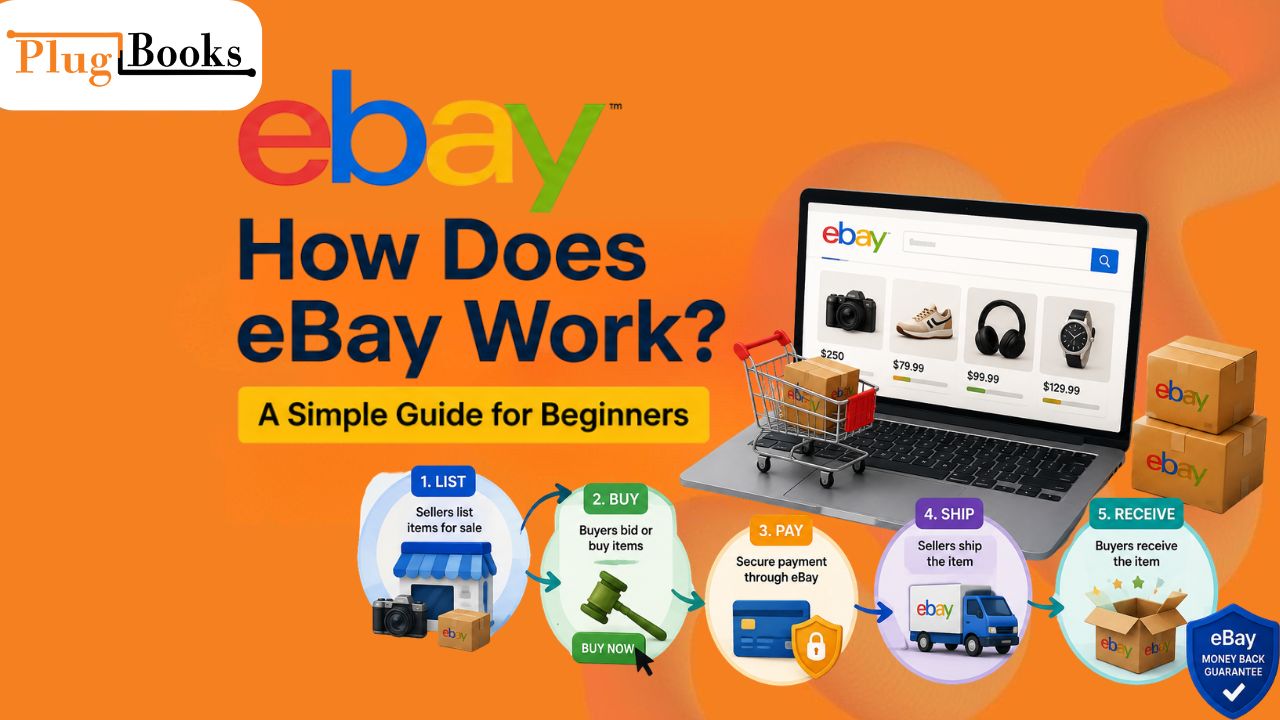
If you’ve ever wondered how does eBay work, you’re not alone. eBay is one of the best-known online marketplaces for buying and selling new, used, and collectible items, but its different listing formats, payments, shipping options, and seller payouts can feel confusing at first.
This guide explains the process from both sides of the marketplace. You’ll learn how buyers find and purchase items, how sellers create listings, what happens after a sale, and how sellers receive and manage their funds.
What Is eBay?
eBay is an online marketplace where individuals and businesses can buy and sell new or used items. Launched in 1995, it has grown into a global platform offering everything from electronics to vintage collectibles. Unlike traditional e-commerce sites, eBay operates using both auction-style and fixed-price listings.
How Does eBay Work?
At its core, eBay works by allowing sellers to create listings and buyers to search for and purchase those items. The buying experience can vary depending on whether the listing is an auction or a fixed-price sale.
Searching for Items
Buyers can search for products using keywords or browse through eBay’s categories. Filters can help narrow the results based on details such as price, item condition, location, and shipping preferences.
Before purchasing, buyers should review the listing carefully, including the description, photos, condition details, seller information, and delivery terms.
Buying Through an Auction
Auction listings give buyers an opportunity to place bids during a set listing period. When the auction ends, the highest eligible bidder wins the item.
eBay can then increase their bid when necessary without exceeding that maximum. If a bid needs to be withdrawn, eBay only allows bid retractions in certain situations.
Using Buy It Now
Buy It Now listings have a fixed price. Instead of waiting for an auction to end, a buyer can purchase the item immediately at the listed amount.
Some eligible fixed-price listings may also allow buyers to submit an offer, giving the seller the option to accept, decline, or counter the proposed price.
Completing the Purchase
Once a buyer purchases an item or wins an auction, eBay manages the payment process. After the order is confirmed, the seller can prepare the item for shipment.
The buyer can then follow the order through their eBay account and review available delivery and tracking updates.
How Does eBay Shipping Work?
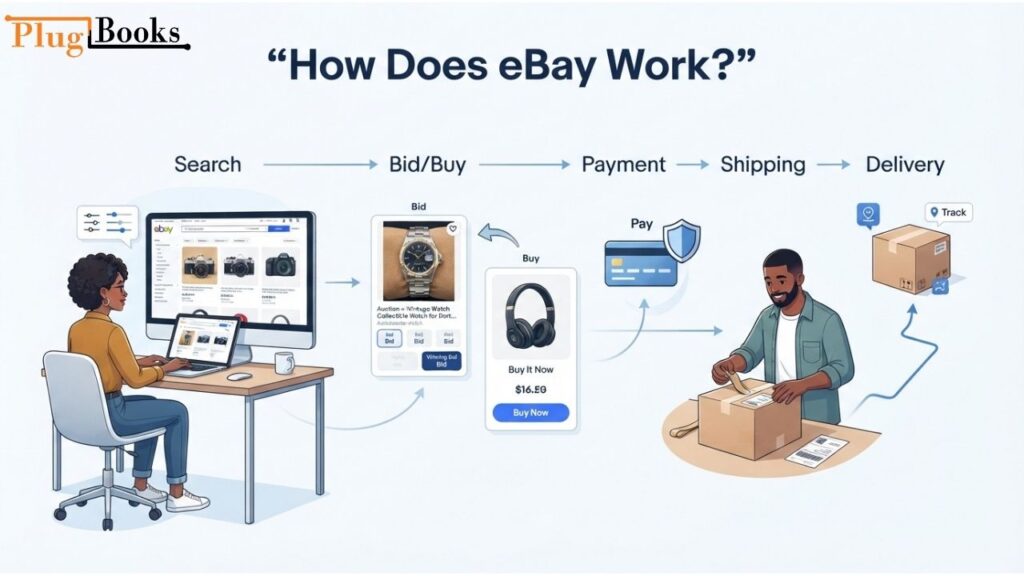
Many buyers also ask how does eBay shipping work. After a purchase is completed, the seller packages the item and ships it using the selected carrier. Buyers receive tracking information, estimated delivery dates, and shipping updates directly through their eBay account. Some sellers also offer free shipping or use eBay’s international shipping services.
How Does Selling on eBay Work?
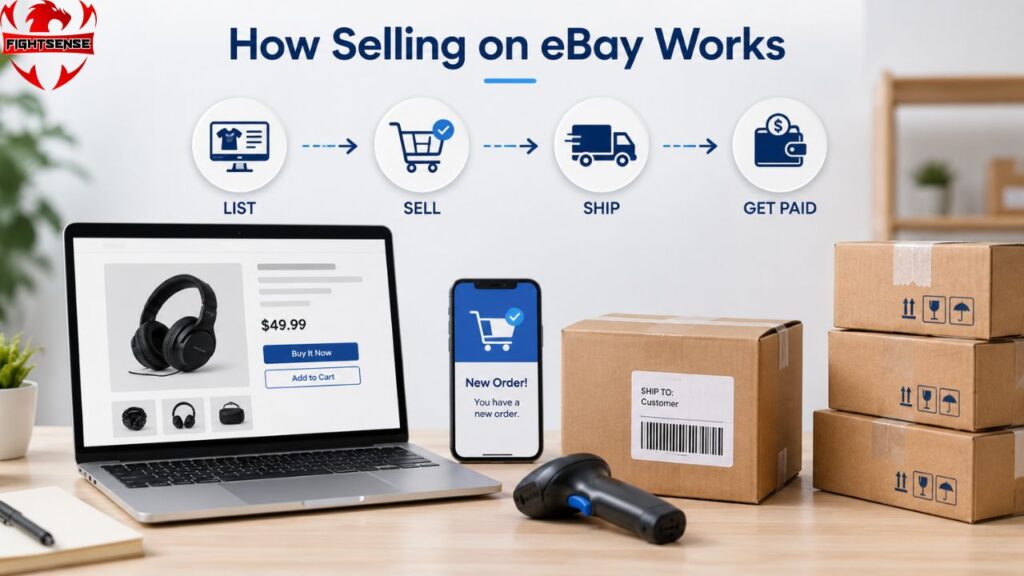
If you’re new to the platform, you may wonder how does selling on eBay work. The process starts by creating a listing with clear photos, a detailed description, and a price. Once a buyer places an order, you ship the item, and eBay releases your payout according to its payment schedule. Understanding this workflow helps new sellers avoid common mistakes and build positive feedback faster.
2. For Sellers
a. Listing Items: Sellers create listings by adding item details, photos, and pricing options (auction or fixed price). Clear descriptions and quality images can make a big difference. Understanding how does eBay work helps sellers optimize their listings.
b. Bidding or Buying: Buyers can either bid in auctions or use the “Buy It Now” option for instant purchases. Auctions let users place bids, with the highest bidder winning when the auction ends. With automatic bidding, buyers can set their maximum bid, and eBay automatically increases their bid as needed up to that amount. If you’ve ever wondered, how does eBay work, this is a key feature.
c. Payment and Shipping: Once a buyer wins an auction or purchases an item, they pay through eBay’s secure payment system. Sellers then ship the item to the buyer’s address.
What Happens After You Make an eBay Sale?
Making a sale is only the beginning of the transaction. After a buyer completes a purchase, several steps take place before the seller receives the final funds.
1. The Order Is Confirmed
Once the buyer completes the purchase and the order is confirmed, the seller receives the information needed to fulfill it.
2. The Seller Prepares the Item
The seller reviews the order, packages the item securely, and gets it ready for dispatch.
3. The Package Is Shipped
The order is handed over to the selected shipping carrier. When tracking is available, it can be added to the transaction so the delivery progress can be monitored.
4. The Buyer Receives the Order
After the package reaches its destination, the buyer receives the item. If there is a problem with the transaction, such as an item not arriving or not matching the listing, the buyer may have options available through eBay’s applicable protection and resolution processes.
5. Selling Costs Are Deducted
eBay automatically deducts applicable selling fees and other selling costs from the seller’s sales proceeds.
Depending on the transaction, these costs can include applicable eBay fees, shipping labels, advertising costs, refunds, or other charges connected with the seller’s activity.
6. Funds Become Available for Payout
After the buyer’s payment is confirmed, sales proceeds can move through eBay’s processing stages before becoming available for payout. Processing times can vary, particularly when funds are subject to a hold or review.
7. The Seller Receives the Payout
eBay sends the remaining available funds according to the seller’s selected payout schedule. The money is sent to the seller’s linked checking account or eligible debit card.
8. The Transaction Should Be Recorded
For sellers running a business, it is important to keep track of sales, fees, refunds, shipping expenses, and payouts. Looking at the full transaction instead of only the sale price provides a clearer picture of actual business performance.
PlugBooks: Simplify Ecommerce Bookkeeping
Making sales is only one part of managing an ecommerce business. As order volume increases, tracking marketplace fees, refunds, payouts, and other financial activity manually can become more difficult.
PlugBooks helps ecommerce sellers organize financial data from platforms such as eBay, Amazon, and Shopify. By bringing important transaction information together, sellers can spend less time manually sorting through sales activity and gain a clearer view of their business finances.
This can be especially useful when a seller needs to understand the difference between total sales, marketplace costs, and the money that ultimately reaches their accounts.

Key Tips for Success on eBay
Whether you’re buying or selling, understanding how the marketplace works can help you make better decisions and avoid common mistakes.
For Buyers
- Check Seller Feedback: Review seller ratings and feedback before making a purchase.
- Read the Entire Listing: Look closely at the description, photos, item condition, and delivery details.
- Compare Similar Listings: Checking comparable items can help you understand the current market price.
- Watch Auction End Times: If you’re bidding, pay attention to when the auction closes.
- Review Return Information: Before purchasing, check the listing and applicable policies so you understand your options if something goes wrong.
For Sellers
- Write Accurate Titles: Use clear words that describe the item and help interested buyers understand what you are selling.
- Use Quality Photos: Show the product clearly and accurately represent its condition.
- Describe Items Honestly: Accurate descriptions can help prevent misunderstandings and post-sale issues.
- Research Pricing: Compare similar listings before deciding on an auction starting price or fixed price.
- Ship Orders Promptly: Reliable fulfillment can create a better buying experience.
- Track Your Selling Costs: Monitor fees, refunds, shipping expenses, and payouts instead of focusing only on total sales.
- Use Promotion Carefully: If you choose paid promotional options, consider the additional cost when calculating your potential profit.
How to Sell Stuff on eBay Fast
If you’re trying to sell an item quickly, start by making the listing easy to understand. Use clear photos, an accurate title, a detailed description, and pricing that reflects the current market.
Fast responses to buyer questions and prompt order handling can also improve the buying experience. Depending on the item, accepting reasonable offers or choosing a competitive fixed price may help attract interested buyers.
How Does eBay Money Back Guarantee Work?
One of the biggest reasons people trust eBay is its buyer protection. If an item doesn’t arrive or is significantly different from its description, the eBay Money Back Guarantee may allow eligible buyers to receive a refund. Buyers usually need to open a request within the required time frame, and eBay reviews the case before making a decision.
Final Thoughts
eBay gives buyers and sellers several ways to participate in online commerce. Buyers can search, bid, purchase, and track orders, while sellers can list products, manage sales, ship items, and receive payouts. How does eBay work for both sides? The process is straightforward once you understand the key steps.
For sellers, understanding the full process is important. A successful transaction involves more than simply making a sale. Listing costs, marketplace fees, shipping expenses, refunds, and payouts can all affect the final financial result.
So, how does eBay work from listing to payout? Understanding each stage and keeping transaction records organized can help both new and experienced sellers use eBay with greater confidence.

FAQs
1. How does eBay work with auctions and Buy It Now?
An auction allows buyers to place competing bids until the listing ends. Buy It Now uses a fixed price, allowing a buyer to purchase the item immediately
2. How many free listings do eBay sellers get?
Eligible sellers can receive up to 250 zero-insertion-fee listings per month. Sellers with certain eBay Store subscriptions may receive additional listing allowances.
3. Does eBay charge a fee when you sell an item?
Yes. eBay charges selling fees, including insertion fees in applicable situations and final value fees when an item sells. The exact amount can vary depending on the category, sale price, listing setup, and other seller circumstances.
4. How do eBay sellers receive their money?
Sellers can receive payouts to a linked checking account or an eligible Visa or Mastercard debit card. Applicable fees and selling costs are generally deducted from sales proceeds before the remaining funds are paid out.
5. How long does it take to get paid after selling on eBay?
The timing depends on payment processing, whether funds are subject to a hold, and the seller’s selected payout schedule. eBay offers daily, weekly, biweekly, and monthly payout options.
6. Can you sell used items on eBay?
Yes. Many sellers use eBay to sell pre-owned products, collectibles, refurbished goods, and other items. The seller should accurately describe the item’s condition.
7. Can buyers make offers on eBay?
On eligible fixed-price listings, sellers may enable an offer option that allows buyers to submit a proposed price. The seller can accept, decline, or send a counteroffer.
8. What does the eBay Money Back Guarantee cover?
For eligible transactions, the eBay Money Back Guarantee can provide protection when an item does not arrive, is faulty or damaged, or does not match the listing.
2 thoughts on “How Does eBay Work? A Simple Guide for Beginners”