



Selling online in 2026 is easier than ever — but one tax mistake can trigger penalties, audits, or double taxation. The Marketplace Facilitator Act 2026 changes who collects sales tax, but it does not eliminate your responsibility as a seller.
If you sell on platforms like Amazon, Walmart, eBay, or operate your own store using Shopify, understanding how this law works is critical in 2026.
Key Notes
- Marketplace platforms collect and remit sales tax in most states
- Economic nexus thresholds still apply
- Direct website sales remain your responsibility
- Multi-state compliance rules vary
- Proper recordkeeping is essential for audits
What Is the Marketplace Facilitator Act 2026?
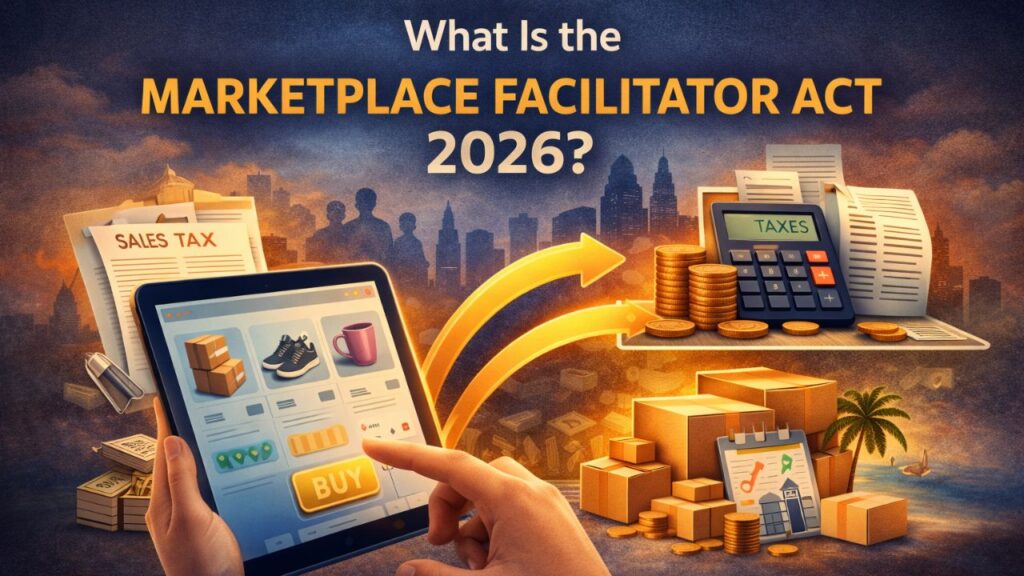
The Marketplace Facilitator Act 2026 requires online marketplaces to collect and remit sales tax on behalf of third-party sellers.
In simple terms:
If you sell through a major marketplace, that platform usually handles tax collection and remittance.
However, this only applies to marketplace transactions — not your independent website sales.
That distinction is where most sellers make mistakes.
Step-by-Step Compliance Guide for 2026
Step 1: Understand Where You Have Economic Nexus
Every state sets revenue or transaction thresholds that trigger tax obligations.
Common thresholds include:
- $100,000 in sales
- 200 transactions annually
If you exceed these limits in a state, you likely have an economic nexus.
State-by-State Marketplace Facilitator Thresholds (2026)
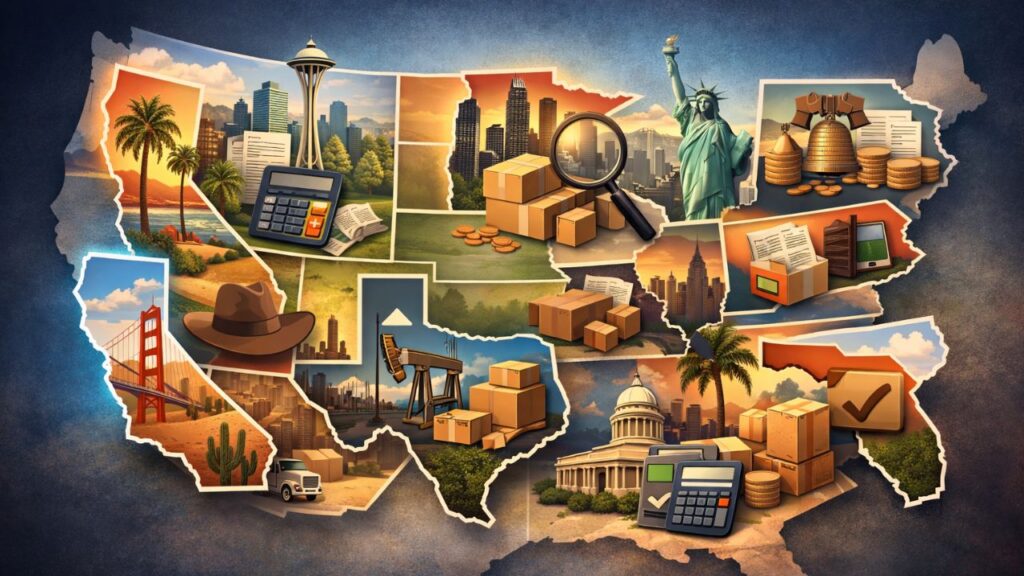
Understanding the Ecommerce Tax Administrator Act 2026 requires knowing that thresholds vary by state. While most states follow similar rules, small differences impact compliance.
California Ecommerce Sales Tax Platform Rules 2026
- Threshold: $500,000 in annual sales
- Marketplace Collection: Required
Texas Marketplace Tax Management Rules 2026
- Threshold: $500,000 in annual sales
- Marketplace Collection: Required
Florida Marketplace Sales Tax 2026
- Threshold: $100,000 in annual sales
- Marketplace Collection: Required
New York Online Seller Tax Compliance 2026
- Threshold: $500,000 AND 100 transactions
- Marketplace Collection: Required
Illinois Digital Marketplace Tax Guide 2026
- Threshold: $100,000 OR 200 transactions
- Marketplace Collection: Required
Pennsylvania Marketplace Tax Act 2026
- Threshold: $100,000 in annual sales
- Marketplace Collection: Required
Washington Sales Tax Collection Laws 2026
- Threshold: $100,000 in annual sales
- Marketplace Collection: Required
Georgia Marketplace Tax Act 2026
- Threshold: $100,000 OR 200 transactions
- Marketplace Collection: Required
Arizona Seller Tax Responsibilities 2026
- Threshold: $100,000 in annual sales
- Marketplace Collection: Required
Important 2026 Notes
- Many states removed the 200-transaction rule
- Thresholds are usually calculated annually
- Some states still require informational returns
- Marketplace collection does not remove your recordkeeping responsibility
Now that you understand state variations, the next step is confirming that your marketplace is correctly collecting tax on your behalf.
Step 2: Confirm Marketplace Collection
Log into your seller dashboard and verify:
- Sales tax is being collected
- Tax reports are accessible
- Remittance confirmations are documented
Major marketplaces collect and remit sales tax per the 2026 act, yet verification by sellers is essential.
Step 3: Register for Sales Tax Permits (If Required)
You still need permits if:
- You sell through your own website
- You exceed nexus thresholds
- You operate in states requiring separate filings
Always register before collecting tax directly.
Step 4: Separate Marketplace and Direct Sales
Maintain clean accounting separation between:
- Marketplace sales (tax collected by facilitator)
- Direct website sales (tax collected by you)
This prevents double taxation and audit confusion.
Step 5: Automate Your Reporting
Manual tracking increases risk.
Use integrations and accounting tools to:
- Monitor state-by-state thresholds
- Track taxable vs non-taxable revenue
- Generate audit-ready reports
Automation significantly reduces compliance errors.

Common Issues Sellers Face in 2026
Even with facilitator laws, compliance challenges remain.
1. Confusion Over Direct Shopify Sales
Many sellers assume Shopify handles everything. It does not unless the sale occurs through a connected marketplace.
2. Double Tax Collection
Some sellers accidentally enable tax collection on marketplace orders.
Solution: Disable internal tax collection for facilitator transactions.
3. Multi-State Filing Confusion
Certain states require informational or zero-dollar returns even when marketplaces collect tax.
4. Audit Documentation Gaps
You must keep:
- Transaction reports
- Nexus calculations
- Filed return confirmations
Missing documentation increases audit risk.
Security & Compliance Best Practices
Tax compliance is about protection, not just payment.
Follow these best practices:
- Store digital copies of marketplace tax reports
- Back up financial records monthly
- Restrict dashboard access
- Review nexus thresholds quarterly
- Use secure accounting integrations
Strong documentation protects your business during audits.
How PlugBooks Helps Marketplace Sellers
If you sell on Amazon, eBay, Walmart, or Shopify, separating facilitator and direct sales manually becomes overwhelming.
PlugBooks helps ecommerce sellers:
- Sync marketplace data with QuickBooks and Xero
- Automatically separate facilitator vs direct revenue
- Generate clean financial statements
- Prepare documentation for audits
- Track multi-state sales performance
Clean accounting separation under the Marketplace Facilitator Act 2026 is critical — and this is where most sellers make costly mistakes.
Instead of spreadsheets, you get structured, automated, audit-ready reporting.

Frequently Asked Questions
Does the Marketplace Facilitator Act 2026 remove all tax responsibility?
No. It applies only to marketplace sales. Direct website sales remain your responsibility.
Do I need to file returns if the marketplace collects tax?
In some states, yes. Informational or zero returns may still be required.
What is the economic nexus in 2026?
Economic nexus is triggered when you exceed a state’s sales or transaction threshold.
Is Shopify classified as a marketplace tax collector?
No. Shopify is a commerce platform. If you sell directly, you are responsible for tax compliance.
What happens if a marketplace makes a tax mistake?
Generally, liability falls on the marketplace, but you must maintain proper records.
Are online marketplace tax rules identical in every state?
No. Thresholds and reporting rules vary by state.
Quick Recap
- The Marketplace Facilitator Act 2026 shifts tax collection to marketplaces
- Economic nexus thresholds still apply
- Direct website sales remain seller responsibility
- State rules vary
- Proper documentation prevents penalties
Final Thoughts
The Marketplace Facilitator Act 2026 simplifies marketplace tax collection — but it does not eliminate compliance responsibilities.
Sellers who understand nexus rules, separate revenue streams correctly, and automate reporting will avoid penalties and audits in 2026.
The sellers who understand facilitator laws today will avoid costly compliance mistakes tomorrow — and build scalable, audit-ready ecommerce businesses.
One thought on “Marketplace Facilitator Act 2026 Guide: Sales Tax Rules”