



Selling on Amazon in 2026 is no longer just about listing a product and waiting for sales. It’s a structured business model that requires strategy, compliance, and smart execution.
The good news?
If you follow the right process, you can still build a profitable Amazon business—even as a beginner.
Quick Key Points
- Amazon now focuses heavily on seller trust & product authenticity
- New policies emphasize fast shipping & customer satisfaction
- Beginners can start with low investment models
- Compliance (documents + verification) is stricter in 2026
- Automation tools can simplify your entire workflow
What Does “Selling on Amazon” Actually Mean?
Selling on Amazon means listing your products on the Amazon marketplace and fulfilling customer orders using one of these methods:
- Fulfill orders yourself
- Use Amazon’s warehouse system
- Source products from suppliers
Amazon handles:
- Payments
- Customer trust
- Traffic
You handle:
- Product selection
- Pricing
- Inventory
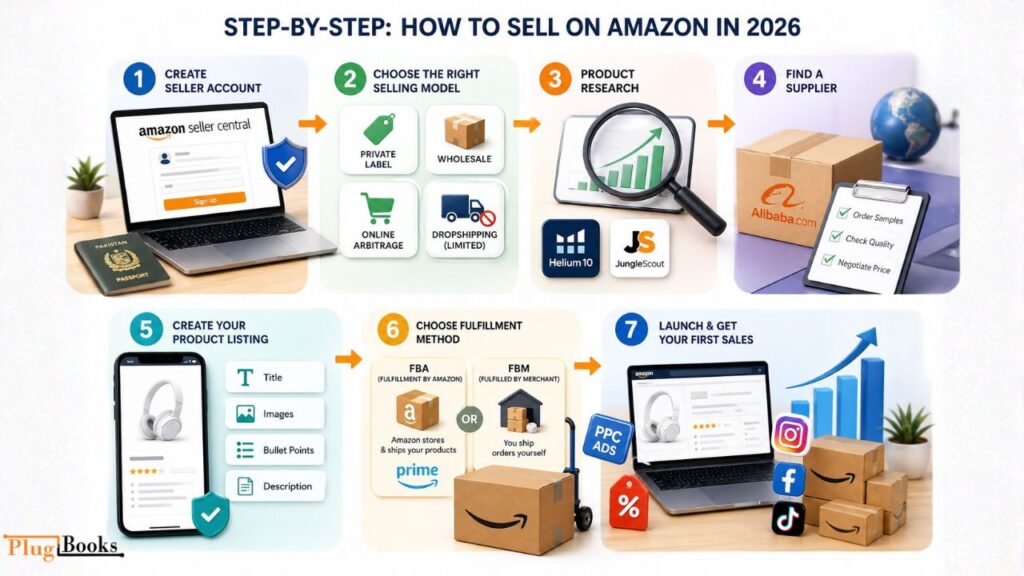
Step-by-Step: How to Sell on Amazon in 2026
1. Create an Amazon Seller Account
Go to Amazon Seller Central and sign up.
You’ll need:
- CNIC / Passport
- Bank account
- Phone number
- Billing address
2026 Update:
Amazon now uses AI-based identity verification, so your documents must match exactly.
2. Choose the Right Selling Model
This is where most beginners get confused. Here are the main methods:
Private Label
- Create your own brand
- Manufacture products
- Highest profit potential
Wholesale
- Buy branded products in bulk
- Sell at retail price
Online Arbitrage
- Buy from online stores → sell on Amazon
Dropshipping (Limited in 2026)
Amazon has tightened dropshipping rules:
- You must be the seller of record
- No third-party branding allowed
3. Product Research (Most Important Step)
Winning on Amazon starts with choosing the right product.
What to look for:
- Low competition
- High demand
- Lightweight
- Non-seasonal
Popular tools:
- Helium 10
- Jungle Scout
4. Find a Supplier
Most sellers source from:
- Alibaba
- Local manufacturers
Pro Tip:
Always:
- Order samples
- Check quality
- Negotiate price
5. Create Your Product Listing
Your listing is your “sales page.”
Must include:
- SEO-friendly title
- High-quality images
- Bullet points
- Description
2026 Policy Update:
Amazon now penalizes:
- Keyword stuffing
- Misleading claims
- Fake reviews
6. Choose Fulfillment Method
FBA (Fulfillment by Amazon)
- Amazon stores & ships your products
- Prime badge increases sales
FBM (Fulfilled by Merchant)
- You ship orders yourself
👉 In 2026, Amazon prefers FBA sellers due to faster delivery expectations.
7. Launch & Get Your First Sales
You need traction to rank your product.
Strategies:
- PPC ads (Amazon Advertising)
- Discounts & coupons
- Social media traffic
Amazon Fees in 2026 (Important)
Amazon charges:
- Referral Fee (8–15%)
- FBA Fees
- Storage Fees
- Advertising Cost
👉 New in 2026:
- Higher storage fees for slow-moving inventory
- Penalties for excess stock
Amazon Policies You MUST Follow (2026)
Amazon is stricter than ever.
Avoid:
- Fake reviews
- Multiple accounts
- Trademark violations
- Selling restricted products
Focus on:
- Authentic products
- Fast shipping
- Customer satisfaction
Violation can lead to account suspension instantly.
Can You Sell on Amazon from Pakistan?
Yes, absolutely.
Pakistani sellers can:
- Register using local documents
- Receive payments via Payoneer
- Sell in USA, UK, UAE markets
Amazon has expanded global access, making it easier than ever.
How to Scale Your Amazon Business
Once you start getting sales:
- Launch more products
- Build a brand
- Optimize ads
- Improve listings
Scaling is where real profit begins.
Common Beginner Mistakes
Avoid these:
- Choosing high-competition products
- Ignoring Amazon policies
- Poor product images
- No marketing strategy
Security & Account Safety Tips
- Use strong passwords
- Avoid logging in from multiple IPs
- Keep documents updated
- Respond to customer messages quickly
Smart Sellers Use Automation
Managing Amazon manually is tough.
That’s why many sellers rely on smart tools and services like:
Inventory tracking
Profit calculation
Accounting automation
PlugBooks provides bookkeeping services and also connects directly with popular accounting tools like Xero and QuickBooks, making financial management fully automated and hassle-free.
This helps avoid costly errors, saves time, and allows sellers to focus on growing their business instead of managing spreadsheets.

FAQs
Q1: How much money do I need to start?
You can start with $200–$500 (low budget model) or go higher for a private label.
Q2: Is Amazon still profitable in 2026?
Yes—but only if you follow strategy and policies.
Q3: Which model is best for beginners?
Online arbitrage or wholesale is easiest to start.
Q4: How long does it take to get sales?
Usually 2–6 weeks with proper launch strategy.
Q5: Do I need a company to sell?
Not mandatory, but recommended for scaling.
Quick Recap
- Create seller account
- Choose selling model
- Research product
- Find supplier
- List product
- Launch & market
- Follow policies
Final Thoughts
Learning how to sell on Amazon in 2026 is about working smart—not just hard.
The platform is competitive, but still full of opportunity for those who:
- Follow the rules
- Choose the right products
- Focus on customer experience
Start simple, stay consistent, and treat it like a real business—not a shortcut.
4 thoughts on “How to Sell on Amazon in 2026 (Step-by-Step Beginner Guide)”