




Retail arbitrage Amazon is a strategy that allows sellers to purchase products at a lower price from retail stores or online marketplaces and resell them on Amazon for profit. It is popular among both beginners and experienced sellers because it requires minimal upfront investment and can be scaled effectively using Amazon FBA (Fulfillment by Amazon).
Key Points:
- Retail arbitrage Amazon is ideal for beginners exploring e-commerce.
- Amazon FBA simplifies storage, shipping, and customer service.
- UK and US sellers must comply with local guidelines, and UK sellers can find profitable opportunities through retail arbitrage Amazon UK.
- Profitable products require research, trend analysis, and tracking retail arbitrage leads.
- Following Amazon policies ensures long-term success and a sustainable FBA business.
What Is Retail Arbitrage Amazon?
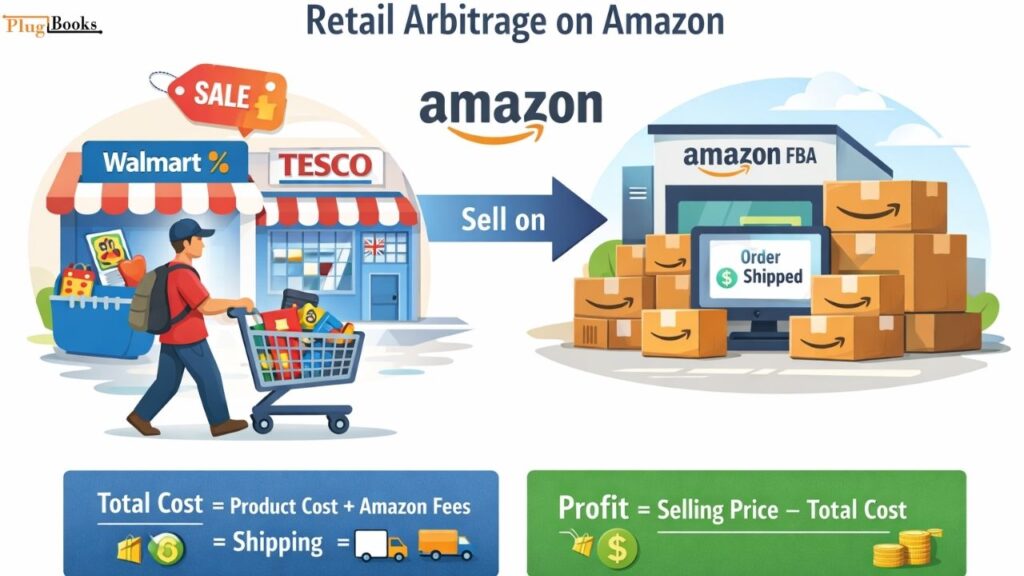
It refers to the process of purchasing products from retail outlets or online stores and reselling them on Amazon. For example, a seller might buy discounted toys from Walmart in the US or clearance items from Tesco in the UK and list them on Amazon FBA.
Profit Calculation:
- Total Cost = Product Cost + Amazon Fees + Shipping
- Profit = Selling Price – Total Cost
How Amazon Retail Arbitrage Works Step by Step
Step 1: Find Products
Look for clearance, discounted, or trending products. In the US, stores like Walmart, Target, and Best Buy are popular choices. In the UK, Tesco, Sainsbury’s, and Argos are commonly used. Tracking trends also helps generate retail arbitrage leads, so you know which products have high sales potential.
Step 2: Check Prices with Amazon Seller App
Use the Seller App or Keepa to analyze profitability, considering competition and demand. Retail arbitrage leads can be captured here by spotting items with consistent resale value.
Step 3: Calculate Profit
Include Amazon FBA fees and shipping costs to ensure your margin is acceptable. Set a minimum profit before purchasing inventory.
Step 4: Listing & Shipping
Create FBA listings and send your products to Amazon warehouses for storage and fulfillment.
Retail sourcing for Amazon FBA Explained
Amazon FBA handles storage, packing, and shipping, allowing sellers to focus on sourcing and scaling. Benefits include:
- Hassle-free shipping and faster delivery with Prime eligibility
- Amazon-managed customer service and returns
- Scalability for larger inventory without logistics worries
- Using retail arbitrage leads ensures a consistent pipeline of profitable products
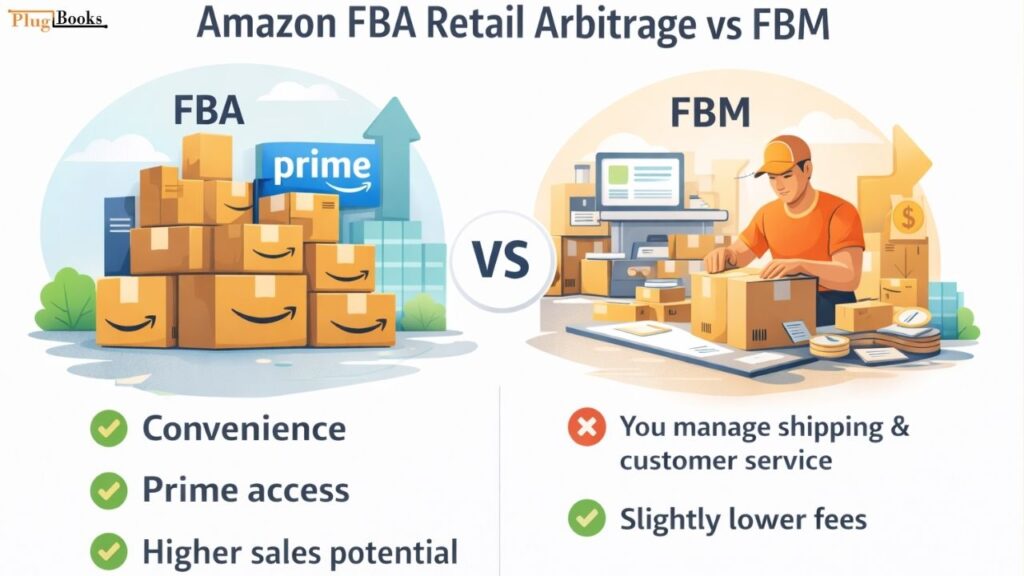
Amazon FBA Retail Arbitrage vs FBM
- FBA Pros: Convenience, access to Prime customers, higher sales potential
- FBA Cons: Slightly higher fees
- FBM (Fulfilled by Merchant): You manage shipping and customer service
For beginners, FBA is recommended for smoother scaling and better buyer trust.
Is Retail Arbitrage Allowed on Amazon?
Amazon permits retail arbitrage if sellers maintain receipts or invoices and avoid restricted or gated categories. Violating these rules can lead to account suspension. Always check brand restrictions and category approval requirements.
FBA retail flipping UK – Rules & Reality
UK sellers must consider VAT registration if their sales exceed thresholds. Popular retail sources include Tesco, Sainsbury’s, Argos, and John Lewis. Online marketplaces are also profitable options. Tracking local trends helps maximize returns and identify potential retail arbitrage leads.
US Experience with Retail Arbitrage
In the US, retail arbitrage remains highly profitable, especially with seasonal products. For example, a seller buying discounted electronics from Walmart in Florida was able to generate a 35% profit margin using FBA during Black Friday. By tracking clearance events and analyzing top-selling items, they identified multiple retail arbitrage leads, which helped increase revenue.
This demonstrates how US sellers can combine data-driven sourcing with Amazon FBA to scale effectively.
Best Products for FBA retail flipping
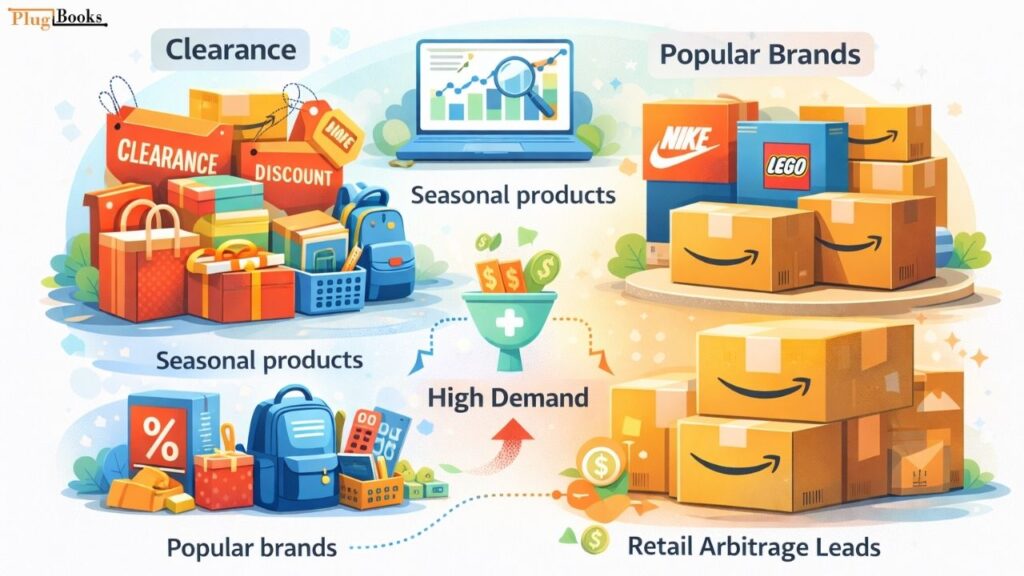
- Clearance and discounted items
- Seasonal products (holidays, back-to-school)
- Popular brands in ungated categories
- Avoid low-demand or oversaturated products
- Monitoring trends regularly creates a steady flow of retail arbitrage leads
Common Mistakes in Amazon Retail Arbitrage
- Ignoring restricted brands or gated categories
- Failing to account for fees, shipping, and taxes
- Neglecting market research and price competition
Tools for Amazon Profit Reselling
- Amazon Seller App: Check prices and estimate profits
- Keepa: Track price history and trends
- Profit Calculators: Accurately calculate net profit
- Retail arbitrage lead tracking: Helps identify consistent product opportunities
How PlugBooks.io Can Help Amazon Sellers
Simplify Accounting & Tax Management with PlugBooks.io
PlugBooks.io offers seamless integration for Amazon sellers, helping you track sales, expenses, and taxes automatically. Whether you sell through retail arbitrage Amazon FBA in the US or UK, PlugBooks.io ensures accurate bookkeeping and compliance.
By connecting with Amazon and popular accounting platforms like QuickBooks and Xero, it reduces errors, saves time, and provides actionable insights for growing your business.

FAQs
Q1: Is retail arbitrage Amazon FBA profitable in 2026?
A: Yes. Strategic sourcing, trend analysis, and FBA support can generate significant profits.
Q2: Can beginners start Amazon retail arbitrage?
A: Absolutely. FBA simplifies shipping, storage, and customer support, making it beginner-friendly.
Q3: Is retail arbitrage allowed on Amazon without invoices?
A: No. Maintaining receipts and invoices is essential to comply with Amazon policies.
Q4: Does retail arbitrage work in the UK?
A: Yes. Clearance and seasonal products are profitable, but UK VAT and store policies must be followed.
Q5: How do I find profitable products for Amazon product resale?
A: Use tools like the Amazon Seller App, Keepa, and profit calculators. Look for clearance items, seasonal trends, and ungated categories.
Q6: Can US sellers succeed with Amazon product resale in 2026?
A: Yes. US sellers can profit from discounted electronics, toys, and seasonal items. Combining data-driven sourcing with FBA maximizes efficiency.
Quick Recap
- Retail arbitrage Amazon = buy low, sell high
- FBA simplifies logistics and builds trust with customers
- UK and US sellers must follow tax and store policies
- Retail arbitrage leads help maintain a steady product pipeline
- Always check restricted brands and categories for compliance
Conclusion
Retail reselling on Amazon in 2026 continues to offer high potential for beginners and experienced sellers in both the US and UK. By sourcing smartly, using FBA, tracking profitable product opportunities, and following compliance rules, sellers can scale efficiently.
UK sellers can especially benefit by understanding local regulations and identifying retail arbitrage Amazon UK opportunities. Using tools like PlugBooks.io for bookkeeping and sales tracking enhances efficiency and ensures smooth growth for Amazon product resale businesses.
