



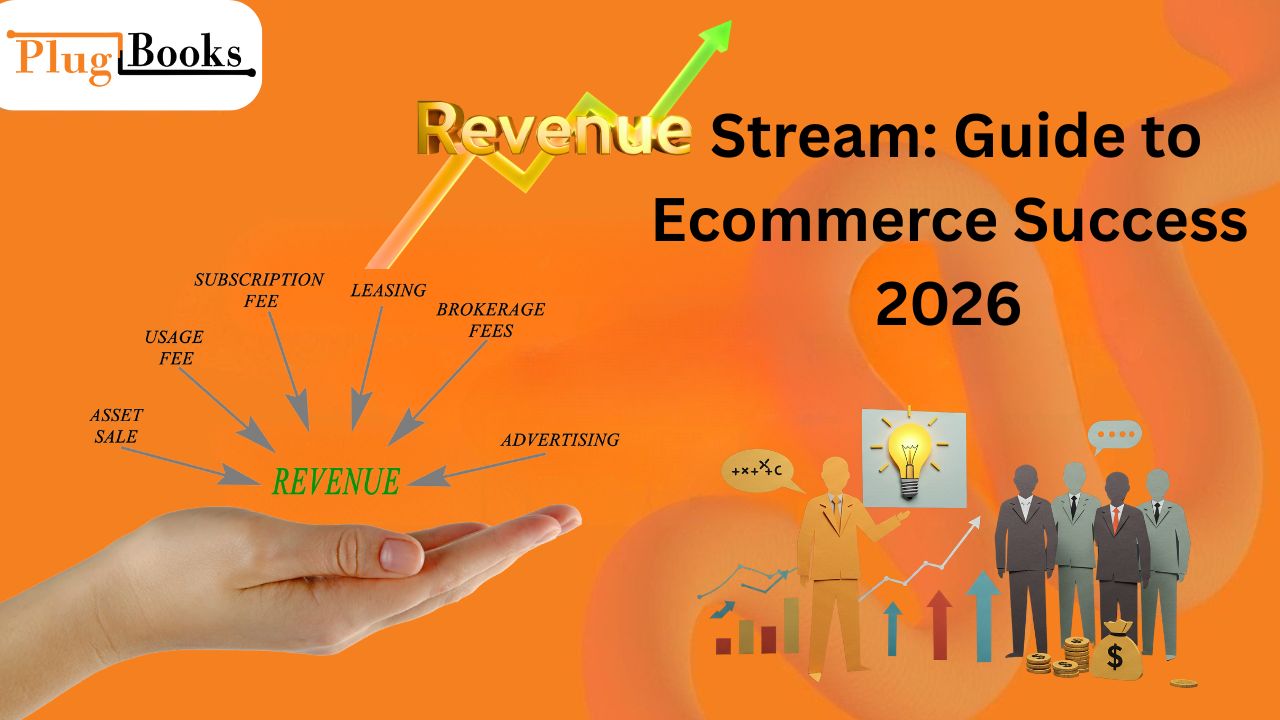
Revenue stream is the backbone of any profitable ecommerce business in 2026. Understanding how your online store generates income is critical for pricing, planning, and long-term growth. Modern sellers often juggle multiple e-commerce earnings channels, including product sales, subscriptions, ads, and affiliate income.
With the right knowledge of types of ecommerce, ecommerce business models, and the business model of e commerce companies, you can optimize your operations, track profits accurately, and make informed financial decisions. This blog will guide you through all these aspects while showing how PlugBooks helps automate and streamline your accounting.

1. What Are Revenue Stream in Ecommerce?
An earnings channel is the source of income that your ecommerce store generates. It’s important to identify and manage each stream separately to understand profitability and plan for taxes and reinvestment.
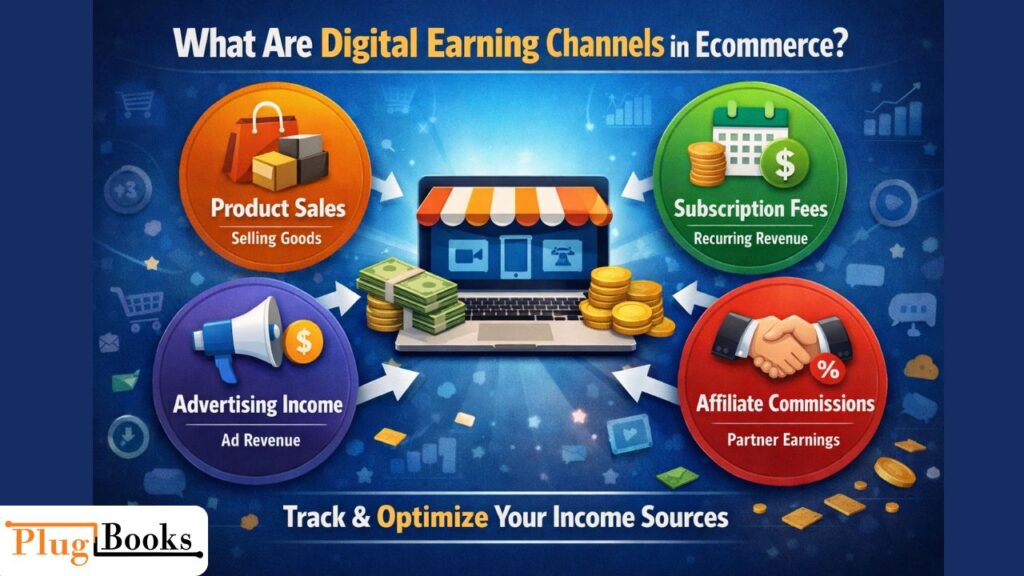
Common e commerce revenue streams include:
- Product Sales: Direct sale of goods to customers.
- Subscription Fees: Recurring revenue from memberships or services.
- Advertising Income: Selling ad space or sponsorships on your platform.
- Affiliate Commissions: Earning through promoting other brands or products.
By categorizing income into clear streams, sellers can track which areas are most profitable and which need improvement.
PlugBooks Benefit: PlugBooks automatically tracks multiple profit sources, links them to accounting software like QuickBooks, and generates accurate reports.
2. Types of Ecommerce
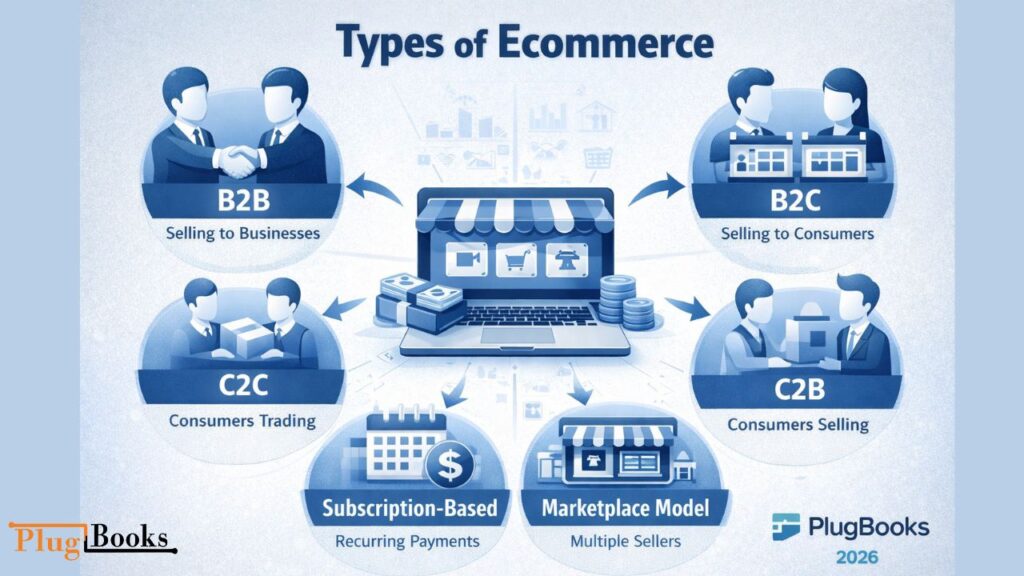
Understanding the types of ecommerce is crucial because different models have different revenue streams and accounting needs:
- B2B (Business to Business): Selling products or services to other businesses.
- B2C (Business to Consumer): Selling directly to individual customers.
- C2C (Consumer to Consumer): Buyers and sellers interact directly, like on eBay.
- C2B (Consumer to Business): Consumers sell products/services to companies.
- Subscription-Based: Recurring payments for digital or physical goods.
- Marketplace Model: Aggregates multiple sellers on one platform, like Amazon.
Each type has unique challenges in tracking e commerce revenue streams. For example, a B2B store may have bulk orders and longer payment cycles, while a subscription-based model requires recurring billing tracking.
PlugBooks can handle all types of ecommerce, simplifying accounting no matter your model.
3. Ecommerce Business Models
Knowing ecommerce business models helps identify revenue sources and plan growth strategies. Common models include:
- Dropshipping: Products shipped directly from suppliers to customers. Revenue comes from the price difference.
- Wholesale: Selling large quantities at a lower price per unit to retailers.
- Subscription Model: Customers pay recurring fees for access to products or services.
- Marketplace Model: Platform owners earn commissions from third-party sellers.
Each business model of e commerce companies defines how revenue is generated, tracked, and optimized.
PlugBooks Insight: By integrating with multiple sales channels, PlugBooks automatically allocates income according to the business model, saving time and reducing errors.
4. How Revenue Stream Impact Profitability
Understanding income sources isn’t just bookkeeping—it’s a strategic tool:
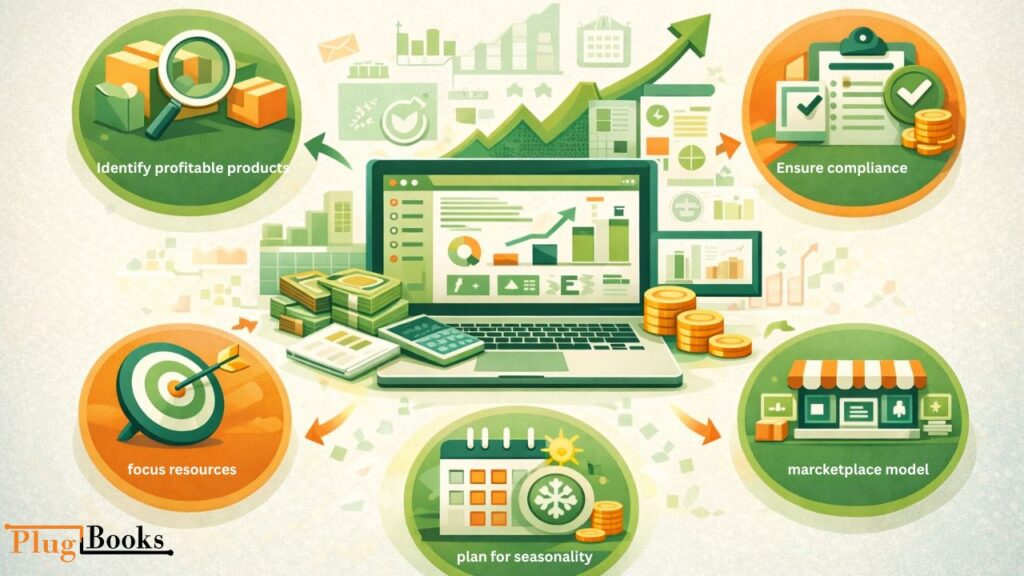
- Identify which products or services are most profitable.
- Allocate resources to high-performing channels.
- Plan for seasonal fluctuations.
- Ensure accurate tax reporting and compliance.
For example, a store with both product sales and affiliate income can analyze which stream drives growth and which has higher profit margins.
PlugBooks helps by categorizing income automatically, giving sellers real-time insights into all income sources.
5. Optimizing E commerce Revenue Streams with PlugBooks
PlugBooks provides:
- Automated transaction syncing with marketplaces like Amazon, eBay, and Shopify.
- Categorized revenue tracking for multiple streams.
- QuickBooks integration to streamline bookkeeping.
- Financial reporting and compliance so you can focus on growth.
By understanding your types of ecommerce, ecommerce business models, and the business model of e commerce companies, PlugBooks ensures that you always know where your money is coming from and how to optimize profits.

6. Key Takeaways
- A clear earning source structure is essential for ecommerce success.
- Track e-commerce sales revenue sources separately for profitability insights.
- Knowing types of ecommerce helps plan your accounting needs.
- Understanding ecommerce business models allows better strategy and growth.
- PlugBooks simplifies tracking, reporting, and automates your accounting workflows.
FAQs
Q1: What is a revenue stream in ecommerce?
Business cash inflows are the source of income for your online store, such as product sales, subscriptions, or affiliate earnings.
Q2: What are the main types of ecommerce?
The main types include B2B, B2C, C2C, C2B, subscription-based, and marketplace models.
Q3: How do ecommerce business models affect revenue?
Different business models define how products are sold and revenue is generated, affecting profit tracking and strategy.
Q4: How does PlugBooks help with recurring income sources?
PlugBooks automatically tracks multiple recurring income sources, syncs with marketplaces, integrates with QuickBooks, and generates reports for informed decisions.
Q 5: What are the main types of ecommerce?
The main types of ecommerce include B2C (business to consumer), B2B (business to business), C2C (consumer to consumer), and D2C (direct to consumer). Each type serves a different selling and buying purpose online.
Q6: What is the business model of e-commerce companies?
The business model of e-commerce companies is based on selling products or services online through platforms, subscriptions, marketplaces, or direct brand websites while managing digital payments and logistics.
Conclusion
A clear understanding of revenue streams, types of ecommerce, and ecommerce business models is crucial for any online seller in 2026. With PlugBooks, managing business models of e-commerce companies and all revenue sources becomes simple, accurate, and time-efficient—letting you focus on growth and profitability.