



Ecommerce Bookkeeping is the backbone of any successful online business. For sellers managing multiple marketplaces like Amazon, eBay, or Shopify, keeping accurate financial records can feel overwhelming. From tracking sales to reconciling payments, errors can quickly pile up. That’s where smart strategies and the right tools come in.
With PlugBooks, sellers can simplify their bookkeeping for ecommerce, automate their financial workflows, and ensure accuracy across all platforms. In this guide, we’ll cover the best Online seller bookkeeping practices, highlight essential Ecommerce bookkeeping software, and provide actionable tips to keep your finances organized.
Key Takeaways:
- Streamline bookkeeping for multiple marketplaces.
- Reduce errors and stay tax-ready.
- Automate sales, fees, and expenses with Ecommerce bookkeeping software.
- Improve visibility on cash flow and profits.
- Focus on growth while financial management runs smoothly.
1. What Is Ecommerce Bookkeeping and Accounting?
Ecommerce bookkeeping is the ongoing process of recording all financial transactions for an online business. Accounting goes a step further, analyzing those records to make informed business decisions. Together, they give sellers clarity on profits, cash flow, and tax obligations.
Modern Ecommerce financial management can handle daily sales, marketplace fees, and even refunds automatically. This is especially helpful for sellers who want to scale without drowning in spreadsheets. Using proper bookkeeping for ecommerce, sellers can avoid mistakes and save hours of manual work every week.

2. Why Bookkeeping Matters for Online Sellers
Accurate Ecommerce financial management is crucial because online sellers deal with:
- Multiple sales channels.
- Various currencies and payment methods.
- Frequent returns and refunds.
- Marketplace fees that can eat into profits if untracked.
By implementing proper bookkeeping for ecommerce, sellers gain a clear picture of their profits and losses. It also ensures they are ready for tax season and reduces the risk of compliance issues. Investing time in Ecommerce accounting software pays off in efficiency and peace of mind.
3. Common Ecommerce Bookkeeping Mistakes
Even experienced sellers make errors. Common pitfalls include:
- Mixing personal and business accounts.
- Ignoring fees, refunds, or shipping costs.
- Not reconciling accounts regularly.
- Using spreadsheets instead of automated Ecommerce accounting solutions.
Avoiding these mistakes is essential to maintain accurate records and prevent headaches during tax season. Proper bookkeeping for ecommerce keeps your financial health in check.
4. Best Ecommerce Bookkeeping Practices
Here are actionable steps to keep your online business financially organized:
- Record Transactions Daily:
Update sales, fees, and refunds every day to prevent errors. - Categorize Expenses:
Separate inventory, shipping, marketing, and operational costs to understand profit margins. - Use Ecommerce accounting solutions software:
Automated tools like PlugBooks can sync your Amazon, eBay, and Shopify data, reducing manual entry. - Reconcile Accounts Regularly:
Ensure that bank statements and marketplace records match to spot discrepancies. - Monitor Cash Flow:
Track income vs. expenses to forecast growth and avoid surprises.
By following these practices, sellers ensure their Digital business accounting is accurate, scalable, and ready for accounting analysis.
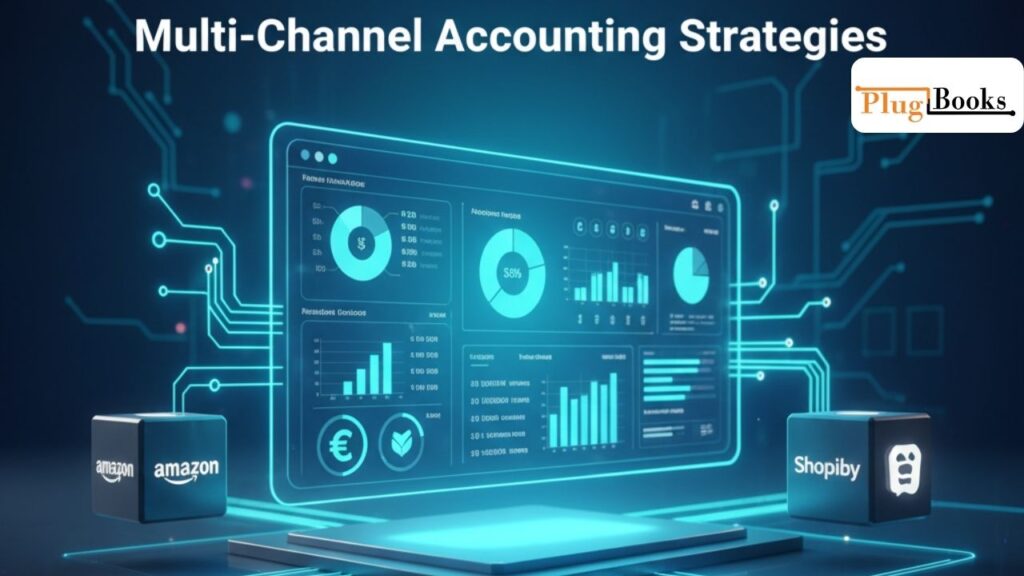
5. Accounting Strategies for Multi-Channel Sellers
Online sellers need more than bookkeeping—they need actionable accounting strategies:
- Integrate Bookkeeping with Accounting: Connect daily transactions to accounting software for insights.
- Track Multi-Currency Sales: Manage cross-border transactions efficiently.
- Set Up an Organized Chart of Accounts: Categorize income and expenses clearly.
- Automate Reconciliations: Reduce errors with Ecommerce bookkeeping software.
PlugBooks helps sellers implement these strategies seamlessly, offering both Digital business accounting and accounting automation.
6. How PlugBooks Simplifies Online Business Financial Management
PlugBooks is designed to make life easier for online sellers:
- Connects Amazon, eBay, and Shopify accounts.
- Automates data syncing to QuickBooks and Xero.
- Generates real-time reports and financial summaries.
- Ensures accurate bookkeeping for ecommerce without manual errors.
With PlugBooks as your Digital business accounting software, sellers can focus on growth instead of tedious number-crunching.

7. Common Challenges Ecommerce Sellers Face
- Managing multiple marketplaces and currencies.
- Handling returns, chargebacks, and refunds.
- Keeping up with sales tax requirements.
- Consolidating reports into one unified view.
A reliable Professional ecommerce accounting services software like PlugBooks addresses all these pain points, allowing sellers to automate repetitive tasks and focus on their business.
8. Practical Tips for Staying Organized
- Set a weekly schedule to review financials.
- Store receipts and invoices digitally.
- Automate repetitive tasks through PlugBooks.
- Maintain backups of financial data.
Following these tips ensures smooth Ecommerce financial tracking services and strengthens your overall financial health.
9. PlugBooks for Sellers
Automate Your Ecommerce Financial Tracking with PlugBooks
PlugBooks provides online sellers with an all-in-one Digital store bookkeeping services software that reduces errors, saves time, and improves visibility.
“Start automating your bookkeeping today with PlugBooks — the smarter way to manage your ecommerce finances and focus on growing your business.”

10. FAQs
Q1: What is the difference between Digital store bookkeeping and accounting?
A: Bookkeeping records transactions, while accounting interprets and analyzes them to provide insights for business decisions.
Q2: Can PlugBooks handle multiple sales channels at once?
A: Yes, it seamlessly integrates Amazon, eBay, and Shopify, automating data syncing and reports.
Q3: How does Ecommerce bookkeeping software save time?
A: Automation reduces manual entry, reconciles accounts in real-time, and minimizes errors across platforms.
Q4: Is bookkeeping for ecommerce different from traditional business bookkeeping?
A: Yes, it requires tracking marketplace fees, multi-channel sales, refunds, and shipping costs, which traditional bookkeeping may not cover.
Q5: How often should online sellers update their books?
A: Daily or weekly updates are ideal to maintain accuracy and avoid end-of-month chaos.
Q6: Can PlugBooks help with tax preparation?
A: Absolutely. By keeping all transactions organized and synced, it simplifies tax reporting and ensures compliance.
11. Quick Recap
- Digital store bookkeeping is essential for online sellers to track sales, expenses, and profits.
- Avoid common mistakes by using Online business financial management software and following best practices.
- PlugBooks automates data syncing across Amazon, eBay, and Shopify.
- Regular reconciliation and monitoring keep your finances accurate and tax-ready.
- Automation lets sellers focus on business growth rather than tedious accounting tasks.
12. Conclusion
Accurate Ecommerce bookkeeping and accounting are crucial for any online seller’s success. By following best practices and leveraging the right tools like PlugBooks, sellers can save time, reduce errors, and make informed business decisions. Automate your workflows, stay compliant, and watch your online business thrive.
“PlugBooks makes Ecommerce bookkeeping and accounting effortless—so you can focus on growing your online sales.”