



Selling on Amazon in 2026 is more competitive than ever. One wrong pricing decision can erase profits, hurt rankings, and cost you the Buy Box. That’s why having a strong Amazon seller pricing strategy isn’t optional — it’s essential.
In this complete 2026 guide, you’ll learn:
- How Amazon seller pricing really works
- The difference between FBA and FBM pricing
- Tools that automate and optimize pricing
- How pricing impacts Buy Box wins
- Smart ways to reduce costs and increase margins
What Is Amazon Seller Pricing in 2026?
Amazon seller pricing refers to the total strategy sellers use to set product prices while accounting for:
- Referral fees
- FBA fulfillment fees
- Storage costs
- Shipping expenses
- Advertising spend
- Return rates
In 2026, pricing is no longer just “set it and forget it.” Amazon’s algorithm constantly evaluates price competitiveness, fulfillment speed, and seller performance.
Smart sellers treat pricing as a dynamic system — not just a number.
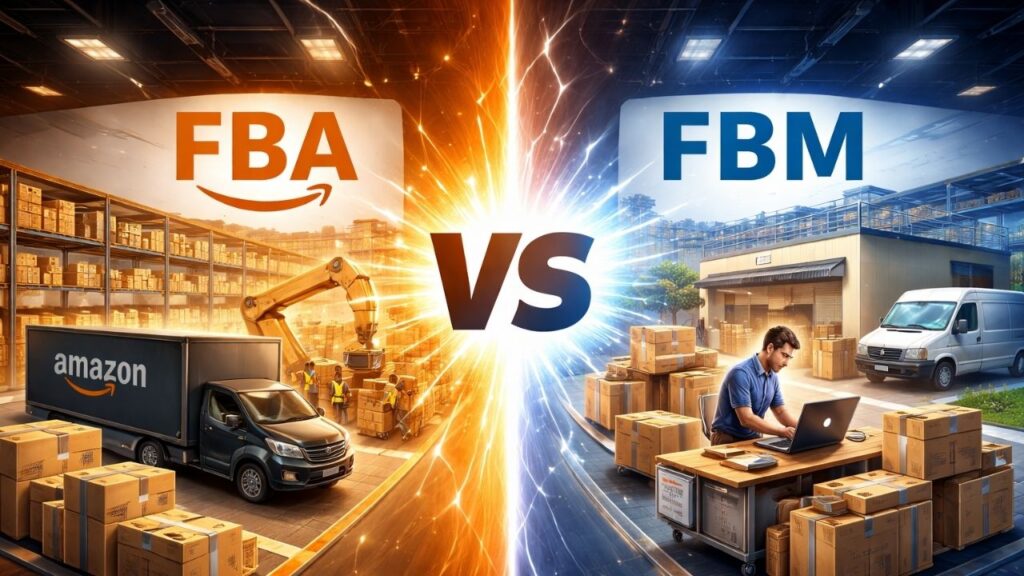
Are Listing Prices Different for FBA vs FBM Sellers?
FBA (Fulfillment by Amazon)
With Fulfillment by Amazon, Amazon handles storage, packing, shipping, and customer service.
Costs include:
- Fulfillment fees (based on size & weight)
- Monthly storage
- Long-term inventory fees
FBA products often win the Buy Box more easily, but margins can shrink if pricing isn’t optimized.
FBM (Fulfillment by Merchant)
With Fulfillment by Merchant, you manage storage and shipping yourself.
Advantages:
- Lower fulfillment fees in some cases
- More control over shipping costs
Many sellers now use a hybrid model (FBA + FBM) to balance cost and control.
Can Your Product Pricing Strategy Affect Buy Box Wins?
Absolutely. Pricing is one of the biggest Buy Box factors. Amazon evaluates:
- Landed price (item + shipping)
- Fulfillment method (FBA often favored)
- Seller rating
- Delivery speed
- Stock availability
Winning the Buy Box requires staying within competitive price ranges while maintaining strong seller metrics.
What Is the Best Amazon Seller Pricing Strategy?
Top strategies in 2026 combine multiple approaches:
- Competitive Pricing – Match or slightly undercut competitors while protecting margin.
- Value-Based Pricing – Charge more when your listing offers superior branding or bundles.
- Dynamic Repricing – Use automation to adjust prices in real time.
- Psychological Pricing – Use $19.97 instead of $20 for better conversions.
- Margin-First Pricing – Calculate profit first, then set minimum viable price.
The best strategy blends automation with data-driven decision making.
What Tools Can Optimize Your Listing Prices?
Manual pricing is risky. Use tools for:
- Automated repricing
- Profit margin calculation
- Fee estimation
- Competitor tracking
Benefits include:
- Avoid pricing below break-even
- Maintain Buy Box eligibility
- React instantly to market changes
Automation is essential in 2026 for scaling efficiently.
How to Lower Costs with Smart Amazon Seller Pricing?
Smart pricing is about optimizing costs, not just lowering prices.
- Reduce FBA Fees – Use smaller packaging to lower size-tier costs.
- Improve Inventory Turnover – Avoid long-term storage fees.
- Optimize Ad Spend – Reduce wasted PPC campaigns.
- Negotiate Supplier Costs – Lower sourcing cost gives more pricing flexibility.
- Bundle Products – Increase order value without competing solely on price.
How Often to Review and Revise Your Pricing Decisions
Pricing should be monitored daily and adjusted strategically:
- High-competition niches → Daily or automated
- Seasonal products → Weekly review
- Low competition → Bi-weekly or monthly
Avoid constant manual price wars. Use minimum thresholds and rules-based automation.
A Real US-Based Seller Experience in 2026
A Texas-based private label seller in the home & kitchen category faced declining margins despite steady sales. They used FBA but hadn’t adjusted prices after Amazon increased oversized item fees.
Challenges:
- Storage fees increased due to slow-moving SKUs
- PPC costs rose by 18%
- Competitors began aggressive repricing
Results of poor pricing: Profit dropped 55%, Buy Box percentage fell.
After implementing a strategic pricing plan and automation:
- Profit margin increased 27%
- Buy Box wins improved
- Inventory turnover accelerated
Lesson: Pricing isn’t reactive; it’s planned.
How PlugBooks.io Helps Amazon Sellers with Bookkeeping
For serious sellers, accurate bookkeeping is the foundation of a healthy business. PlugBooks.io helps Amazon sellers streamline their financial management by offering:
- Automatic Amazon sales data syncing – All orders and transactions are imported seamlessly.
- Real-time profit & expense tracking – See exactly where your money is going and your net profit at any time.
- FBA vs FBM expense analysis – Understand costs for each fulfillment method to manage cash flow.
- Fee monitoring & alerts – Stay updated on referral, storage, and fulfillment fees.
- Accurate financial reports – Generate statements for taxes, accounting, and scaling decisions.
With PlugBooks.io, sellers save time, reduce bookkeeping errors, and gain full visibility into their financial health — making smarter business decisions easier in 2026.

FAQs:
1. How can I calculate the true profit for my Amazon products?
Include all costs (sourcing, FBA/FBM fees, storage, shipping, returns, ads) and subtract from selling price. Tools like PlugBooks.io automate this.
2. Can dynamic pricing hurt my Amazon seller reputation?
Frequent extreme price changes can confuse customers and affect Buy Box eligibility. Use rule-based automation to avoid issues.
3. Are there pricing differences for seasonal products?
Yes. Seasonal products may need temporary price adjustments. Use historical data and market trends to maintain profit.
4. How do fees like referral and fulfillment affect my pricing strategy?
Amazon fees reduce net profit. Referral is a % of sale, FBA fees vary by size/weight. Pricing without accounting for fees can be unprofitable.
5. What is the role of competitor analysis in pricing?
Competitor analysis keeps you within optimal Buy Box ranges. Combined with margin-based pricing, it ensures sustainable profitability.
Quick Recap
- Amazon seller pricing is dynamic — consider FBA vs FBM, fees, and competition.
- Smart tools and automation are essential in 2026.
- Optimizing Buy Box eligibility, bundling, and cost reduction improves profit.
- Strategic planning beats reactive discounting.
- PlugBooks.io simplifies tracking, analysis, and real-time decision making.
Conclusion
Mastering Amazon seller pricing strategy in 2026 separates successful sellers from struggling ones. Focus on:
- Understanding all fees & cost structures
- Leveraging smart automation and tools
- Protecting margins while remaining competitive
- Using PlugBooks.io for clear financial insights
Pricing isn’t about being the cheapest — it’s about maximizing profit, winning the Buy Box, and building a sustainable Amazon business in 2026.

Boost Your Amazon Sales With This Free Guide, Follow The Link.