




Starting an online business today often begins with one big question: eBay vs Amazon — which platform should you choose in 2026?
With millions of sellers entering eCommerce, the debate around selling on amazon vs ebay has become more important than ever. Both platforms offer massive opportunities, but they work in completely different ways.
If you’re confused about where to start, don’t worry—this guide will break down everything from fees to profits, plus the latest rule updates shaping ebay and amazon sales in 2026.
Key Points
- Clear difference between both platforms
- Cost and profit comparison
- Beginner vs advanced selling strategies
- Latest 2026 rules explained
- Final decision guide for smart sellers
Understanding the Basics of eBay vs Amazon
At a basic level, ebay vs amazon comes down to how each platform operates.
- eBay is an open marketplace where you control listings, pricing, and communication.
- Amazon is a structured platform where multiple sellers compete under one product listing.
This fundamental difference defines the entire experience of selling on ebay and amazon.

Selling on Amazon vs eBay: Step-by-Step Process
Let’s simplify how selling on amazon vs ebay works in real life.
1. Account Setup
- eBay: Fast and simple
- Amazon: Requires identity and business verification
2. Product Listing
- eBay: Create unique listings
- Amazon: Add to existing listings or create new ones
3. Order Fulfillment
- eBay: Self-managed shipping
- Amazon: FBA (Fulfillment by Amazon) available
4. Customer Management
- eBay: Direct interaction
- Amazon: Controlled communication
👉This clearly shows how the Amazon eBay comparison highlights control vs automation differences.
Compare eBay and Amazon For Selling Fees in 2026
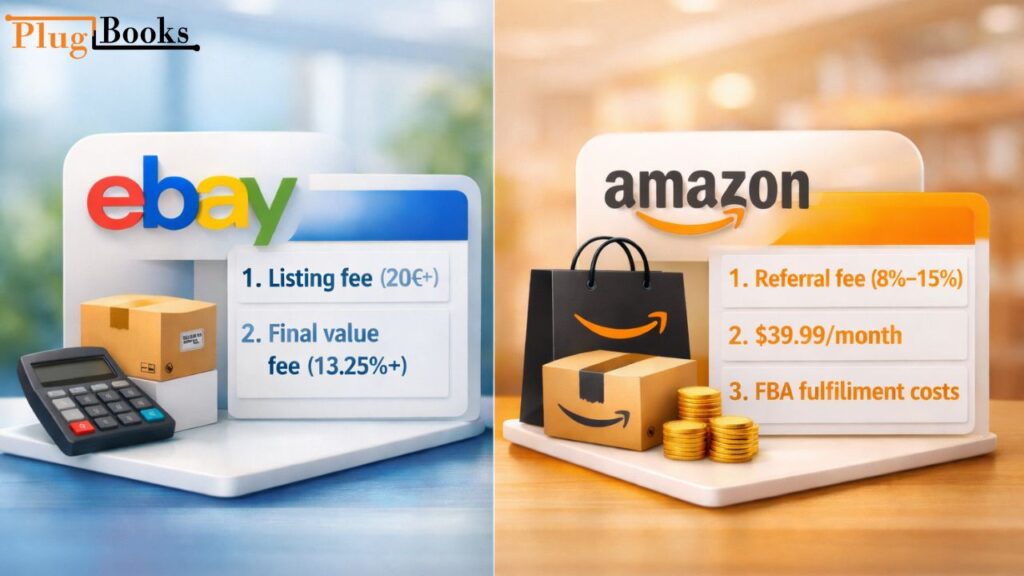
Fees are a major factor in ebay and amazon selling decisions.
eBay Fees
- Listing fees (limited free listings)
- Final value fee per sale
Amazon Fees
- Referral fee (8%–15%)
- Monthly subscription
- FBA fulfillment costs
Hidden Costs
- Advertising
- Returns
- Storage fees
👉 In the Amazon vs eBay selling comparison, eBay is cheaper to start, while Amazon requires investment but offers scalability.
eBay and Amazon Comparison: Latest 2026 Seller Rules You Must Know
If you’re looking at eCommerce profit comparison, staying updated with new rules is essential for long-term success.
Amazon Updates (2026)
- Shorter FBA claim window → Around 60 days to report lost inventory
- Prep responsibility shifted to sellers → Products must be fully labeled
- Stricter policy enforcement → Higher risk of suspension
- Category restrictions → Approval required in many niches
👉 These changes impact how sellers approach selling on amazon vs ebay.
eBay Updates (2026)
- Retail dropshipping restricted
- Supplier verification required
- Strict shipping performance tracking
- AI monitoring system introduced
This makes compliance more important in a multi-platform selling strategy 2026.
Profit Potential: eBay or Amazon Which is Better for Beginners
Profitability in selling on ebay vs amazon depends on your approach.
- eBay: Better for niche, used, or unique products
- Amazon: Ideal for high-volume selling
👉 Beginners often succeed faster with a hybrid selling strategy Amazon eBay, using eBay due to lower risk.
Traffic & Sales Opportunities
Traffic plays a huge role when comparing Amazon vs eBay selling.
- Amazon: Massive built-in audience
- eBay: Targeted bargain-focused buyers
👉 If you want consistent sales, ebay vs amazon selling often favors Amazon.

Common Issues Sellers Face
Many beginners struggle with ebay vs amazon because of:
- Choosing the wrong platform
- Ignoring fees
- Poor product selection
- Not understanding competition
👉Avoiding these mistakes improves your success in selling on Amazon and eBay..
Security & Policy Compliance Tips
To succeed in the Amazon vs eBay selling comparison, follow these:
- Always follow platform rules
- Track inventory and orders
- Maintain good customer service
- Avoid policy violations
👉 Security and compliance are now critical in selling on ebay and amazon.

How PlugBooks Helps eCommerce Sellers
Managing finances across platforms can get confusing—but this is where PlugBooks makes a difference.
Why Sellers Choose PlugBooks
- Automated profit tracking
- Integration with eBay & Amazon
- Clear financial reports
- Time-saving accounting system
Whether you’re focused on ebay and amazon selling, PlugBooks helps you stay profitable and organized.

FAQs
1. Which platform is easier to start with in 2026?
eBay is easier for beginners due to simple setup and fewer restrictions.
2. Do I need a large investment to sell on Amazon?
Yes, Amazon usually requires upfront investment for inventory, fees, and ads.
3. Can I run a side business using both platforms?
Yes, many sellers successfully manage both platforms as a side hustle.
4. Which platform gives faster sales for new products?
Amazon generally provides faster sales due to higher traffic and visibility.
5. Is it possible to switch from eBay to Amazon later?
Yes, many sellers start on eBay and move to Amazon as they scale.
6. Which platform requires more daily management?
eBay requires more manual work, while Amazon offers automation through FBA.
Quick Recap
- eBay = Low cost, flexible
- Amazon = High traffic, scalable
- Beginners → eBay
- Growth → Amazon
- Best strategy → Use both
Conclusion
When comparing eBay vs Amazon, the right choice depends on your goals, budget, and experience level.
If you want a low-risk start, eBay is the better option. But if your goal is long-term growth and automation, Amazon stands out.
👉 In 2026, the smartest sellers don’t limit themselves—they build a strategy that combines both platforms for maximum success.