



Building an online income stream has never been more accessible than it is today. With the rapid growth of digital platforms, starting an ecommerce business has become a practical option for beginners, freelancers, and even traditional shop owners looking to expand online.
However, while the opportunity is huge, success is not automatic. Many people launch stores but struggle due to poor planning, wrong product choices, or lack of strategy. This guide is designed to give you a complete roadmap—from understanding the fundamentals to comparing models and scaling effectively.
Whether your goal is side income or a full-time venture, this article will help you make informed decisions and avoid common mistakes.
Key Highlights:
- Low barrier to entry compared to physical retail
- Ability to sell locally and globally
- Multiple business models to choose from
- Flexible and scalable growth potential
- Data-driven decision-making improves results
What Is an Ecommerce Business?
An ecommerce business is the process of selling products or services through digital platforms such as websites, online marketplaces, or social media channels. Instead of relying on a physical storefront, everything—from product display to payment and delivery—is handled online.
This model allows entrepreneurs to operate from anywhere while reaching a much larger audience than traditional retail.
Understanding the Ecommerce Ecosystem
To build a sustainable online store, it’s important to understand how the ecosystem works:
- Frontend (Storefront): Website or marketplace listing
- Backend (Operations): Inventory, order processing, logistics
- Payment Systems: Secure checkout and transaction handling
- Marketing Channels: Ads, search engines, and social media
A successful E-commerce Store connects all these components efficiently.
Types of Ecommerce Models (With Comparison)
Choosing the right model is one of the most important decisions. Below is a clear comparison:
| Model | Investment | Risk Level | Profit Margin | Best For |
| Dropshipping | Low | Low | Medium | Beginners |
| Wholesale | Medium | Medium | High | Scaling sellers |
| Private Label | High | Medium | Very High | Brand builders |
| Print on Demand | Low | Low | Medium | Creative sellers |
Key Insight:
- Dropshipping is easy to start but harder to scale
- Private label offers long-term stability
- Wholesale provides consistent margins
Platform Comparison (Shopify vs Amazon vs Daraz)
Choosing the right platform can directly impact your results.
| Feature | Shopify | Amazon | Daraz |
| Control | Full | Limited | Limited |
| Traffic | You generate | Built-in | Built-in |
| Fees | Monthly | Commission | Commission |
| Branding | Strong | Weak | Moderate |
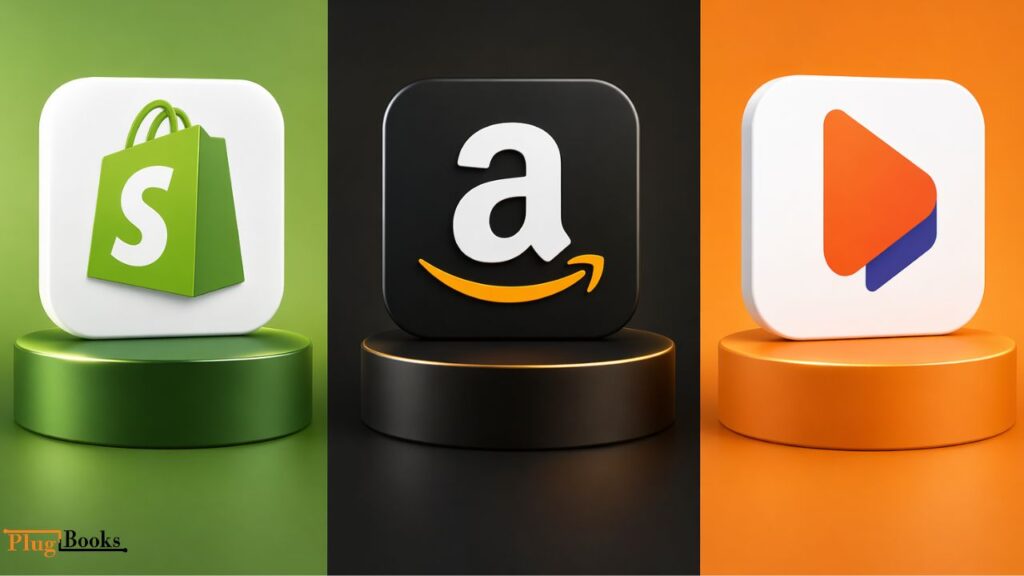
Which One Should You Choose?
- Shopify: Best for building your own brand
- Amazon: Best for quick sales with existing traffic
- Daraz: Ideal for local market entry
Smart strategy: Start with one, then expand to others.
How to Start an Ecommerce Business (Step-by-Step Guide)
Step 1: Niche Selection
Focus on solving a specific problem. Avoid overly saturated categories unless you have a unique angle.
Step 2: Product Research
Use real data from marketplaces, reviews, and trends to validate demand.
Step 3: Platform Setup
Create a professional store or seller account with optimized product pages.
Step 4: Supplier Sourcing
Reliable suppliers ensure quality, timely delivery, and fewer returns.
Step 5: Store Optimization
Use high-quality images, persuasive descriptions, and fast-loading pages.
Step 6: Marketing Launch
Drive traffic through paid ads, SEO, and organic content strategies.
Cost Breakdown (Realistic 2026 Estimate)
Starting an ecommerce business does not require massive capital, but planning your budget is essential.
- Domain & hosting: $20–50
- Store subscription: $29/month
- Initial inventory or testing: $50–200
- Ads & marketing: $100–300
👉 Estimated total: $200–$500
Real-World Scenario (Experience-Based Insight)
A beginner launched a small online store in a fitness niche with limited funds. The first few weeks were slow, with minimal orders. Instead of quitting, they tested different product angles, improved visuals, and adjusted pricing.
Within three months, consistent sales started coming in. The biggest lesson? Success comes from testing and adapting, not guessing.
Common Mistakes to Avoid
- Choosing products without demand
- Ignoring product quality
- Running ads without testing
- Overpricing or underpricing products
- Not tracking actual profit
Avoiding these mistakes can significantly improve your Online Selling Business performance.
Advanced Growth Strategies
Once your store gains traction, focus on scaling:
1. Upselling & Bundling
Increase average order value with smart offers.
2. Retargeting Campaigns
Bring back visitors who didn’t purchase.
3. Email Marketing
Build long-term customer relationships.
4. Brand Positioning
Move from “product selling” to “brand building.”
Security and Trust Factors
Trust is critical in online selling. Make sure to:
- Use secure payment gateways
- Display clear return policies
- Protect customer data
- Monitor fraudulent activity
A trustworthy store improves conversion rates and long-term growth.
PlugBooks for Sellers
Running an ecommerce business without tracking finances properly can lead to hidden losses. Many sellers focus only on revenue, ignoring expenses like ads, fees, and returns.
PlugBooks helps you:
- Track real profit automatically
- Integrate with Amazon and eBay
- Sync with accounting tools
- Get clear financial insights
👉 It ensures you’re making money—not just generating sales.
FAQs
Is an ecommerce business still profitable in 2026?
Yes, with the right strategy, it remains one of the most scalable online models.
How long does it take to succeed?
Most sellers see results within 3–6 months with consistent effort.
Can beginners start with a low budget?
Yes, starting small and scaling gradually is a common approach.
Which model is best for beginners?
Dropshipping or print-on-demand are easier to start.
Do I need technical skills?
No, most platforms are beginner-friendly.
Quick Recap
- Online selling offers global reach
- Multiple models suit different goals
- Startup costs are relatively low
- Marketing and testing are essential
- Scaling requires strategy and consistency
Conclusion
An ecommerce business offers one of the most flexible and scalable ways to generate income in today’s digital economy. While competition is increasing, so are the opportunities for those who approach it strategically.
If you focus on solving real problems, choosing the right model, and continuously optimizing your approach, long-term success is achievable.
Start small, stay consistent, and build with a long-term vision.
