



Inventory Control Software QuickBooks 2026 Guide
inventory control software QuickBooks is becoming a powerful solution for modern businesses that need faster, smarter, and more accurate stock management in 2026. As online selling and multi-channel operations continue to grow, relying on manual spreadsheets or outdated tracking methods is no longer effective.
A modern QuickBooks inventory system helps businesses connect inventory with accounting in real time, reducing errors and improving decision-making. With an advanced QuickBooks stock control tool, companies can easily monitor stock levels, track product movement, and avoid costly overselling or stockouts.
Today’s businesses demand automation, and a reliable QuickBooks inventory manager ensures smooth synchronization across all sales channels like Amazon, Shopify, and retail stores. This makes inventory handling more efficient, scalable, and profitable.
Overall, a smart QuickBooks stock management app is no longer just an option—it has become a necessary tool for businesses aiming to grow in a competitive digital marketplace.
1. Understanding Inventory Control Software QuickBooks in 2026
Inventory management has changed dramatically over the past few years. Businesses have shifted from spreadsheets and manual records to fully automated cloud systems.
The biggest challenge in 2026 is managing inventory across multiple platforms without errors. QuickBooks stock monitoring software solves this by centralizing all inventory data in one system. It ensures that stock levels are updated instantly across all sales channels, preventing overselling and stock mismatches.
With AI-driven automation and real-time syncing, QuickBooks inventory platform helps businesses forecast demand and maintain optimal stock levels with minimal effort.
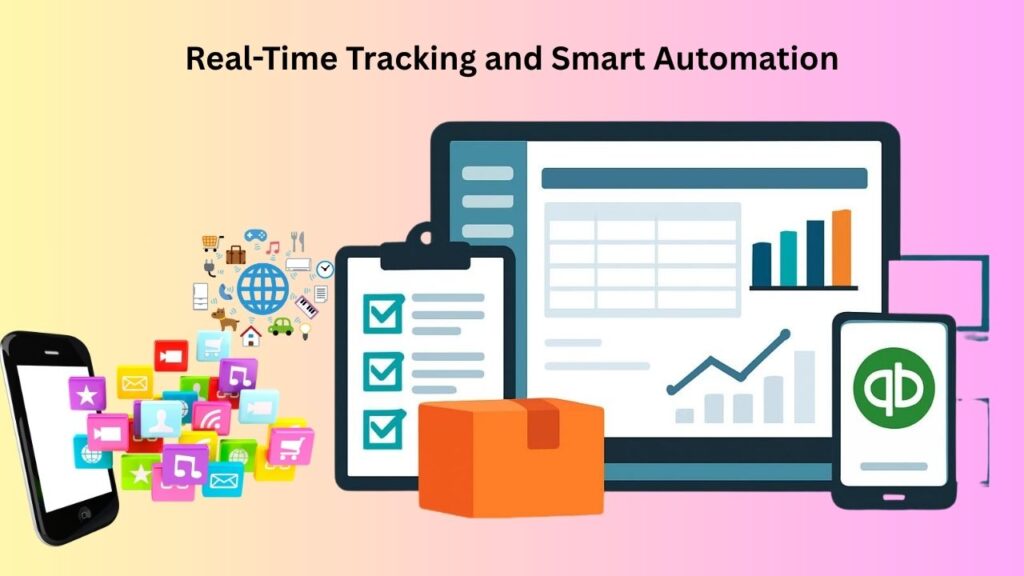
2. Real-Time Tracking and Smart Automation
Real-time tracking is now a necessity for modern businesses. Delayed updates can lead to lost sales and customer dissatisfaction.
QuickBooks stock software provides instant inventory updates whenever a product is sold, returned, or restocked. This ensures complete accuracy across all operations.
In 2026, automation features will become more advanced. QuickBooks inventory solution now helps businesses automatically set reorder points, track inventory trends, and reduce manual workload through intelligent systems.
3. Multi-Channel Selling Integration
Most businesses today sell on multiple platforms such as Amazon, Shopify, eBay, and physical stores. Managing inventory separately for each platform is inefficient and risky.
Inventory control software QuickBooks integrates all sales channels into a single dashboard, allowing businesses to manage everything from one place. It ensures that inventory updates are reflected everywhere in real time.
This integration prevents overselling, reduces confusion, and improves operational efficiency across all platforms.
4. Financial Accuracy and Accounting Integration
Inventory is directly linked to financial performance. Every stock movement affects revenue, expenses, and profit margins.
Inventory control software QuickBooks connects inventory data with accounting records automatically. This ensures that every sale, purchase, and refund is reflected in financial reports without manual entry.
By using QuickBooks stock tracking system, businesses gain better financial clarity and eliminate errors caused by manual reconciliation.
5. Error Reduction and Data Accuracy
Human error is one of the biggest challenges in inventory management. Even small mistakes can lead to significant financial losses.
Inventory control software QuickBooks reduces these risks by automating inventory updates and minimizing manual input. This improves data accuracy and ensures consistency across all business operations.
With QuickBooks inventory system, businesses can rely on accurate data for decision-making and planning.
6. Demand Forecasting and Smart Analytics
In 2026, data-driven decision-making is essential for growth. Businesses need insights to understand customer demand and market trends.
QuickBooks stock control tools provide detailed analytics that help businesses identify fast-moving and slow-moving products. It also assists in forecasting future demand based on historical data.
Using QuickBooks inventory manager, companies can optimize purchasing decisions and reduce unnecessary stock holding costs.
7. Scalability for Growing Businesses
As businesses grow, inventory complexity increases significantly. Systems that work for small operations often fail at scale.
QuickBooks stock software is designed to grow with businesses. Whether managing hundreds or thousands of products, it maintains performance and accuracy.
This scalability makes QuickBooks inventory tracker suitable for startups, SMEs, and large enterprises alike.
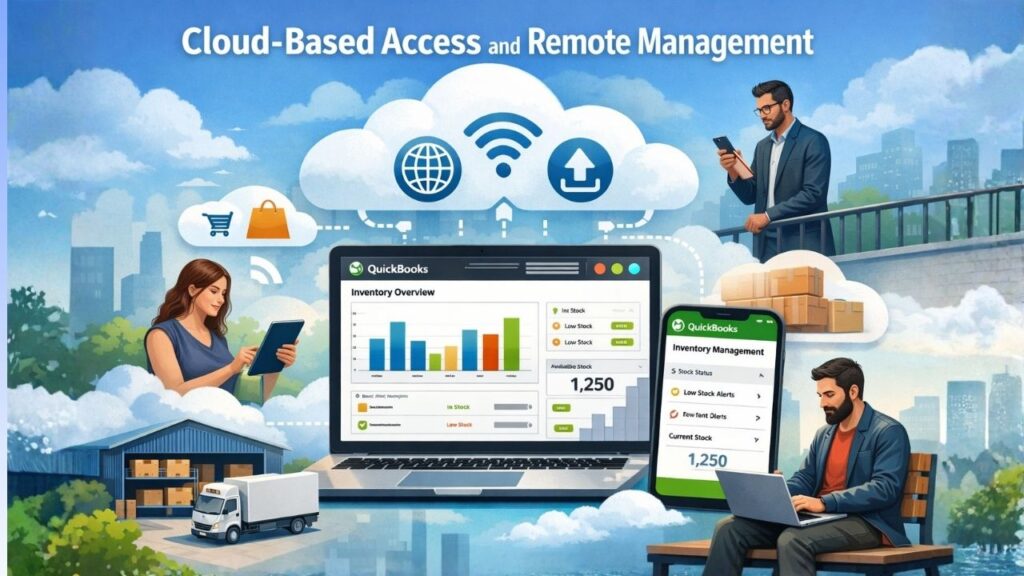
8. Cloud-Based Access and Remote Management
Cloud technology has transformed business operations by allowing remote access to critical data.
QuickBooks stock system enables business owners to monitor inventory from anywhere using laptops, tablets, or smartphones. This flexibility is crucial for online sellers and global businesses.
With QuickBooks inventory tool, users can stay updated in real time without being physically present in warehouses or offices.
9. Cost Optimization and Profit Improvement
Efficient inventory management directly impacts profitability. Poor stock control can lead to overstocking or missed sales opportunities.
QuickBooks stock control software helps businesses optimize inventory levels, reduce unnecessary purchases, and improve cash flow management. This leads to higher profit margins and better financial control.
By implementing QuickBooks inventory platform businesses can operate more efficiently while maximizing return on investment.
PlugBooks Inventory Solutions for Sellers
Smart Inventory Management for Modern eCommerce
PlugBooks provides advanced solutions for sellers who want to simplify inventory and accounting operations. It helps integrate inventory systems with sales platforms like Amazon and Shopify for real-time synchronization.
PlugBooks automatically connects with Xero and QuickBooks, making accounting and inventory management seamless for users. With PlugBooks, businesses can reduce manual errors and improve stock accuracy across multiple channels. The platform supports growing sellers by offering scalable tools for inventory and financial control.
PlugBooks ensures smoother operations, better reporting, and improved profitability for online businesses.

FAQs
1. What makes QuickBooks inventory solution different in 2026?
In 2026, it uses AI automation and real-time syncing to improve accuracy and reduce manual work.
2. Can small businesses use QuickBooks inventory system software?
Yes, it is suitable for both small and large businesses with scalable features.
3. Does it support multiple selling platforms?
Yes, it integrates with Amazon, Shopify, eBay, and other major platforms.
4. Is inventory updated automatically?
Yes, all stock changes are updated in real time across the system.
5. How does it improve profitability?
It reduces errors, prevents stock issues, and helps optimize inventory planning.
Conclusion
In 2026, businesses need automation, accuracy, and integration to stay competitive in a fast-moving digital world. Manual systems are no longer efficient or reliable for modern operations.
QuickBooks inventory management tool provides a complete solution for inventory tracking, financial management, automation, and analytics. It helps businesses reduce errors, improve efficiency, and scale confidently.
For modern sellers and growing enterprises, QuickBooks stock control app is not just a tool—it is a strategic necessity for long-term success.

One thought on “Inventory Control Software QuickBooks 2026 Guide”