



Record keeping for small business is essential in today’s competitive business environment. Accurate financial record keeping helps small business owners stay compliant, make informed decisions, and protect their operations from financial and legal risks.
Using the right tools, such as PlugBooks, simplifies record retention while keeping financial documents secure, organized, and easily accessible. Proper record keeping also reduces stress during audits, tax season, and loan applications—giving business owners greater confidence, control, and financial clarity.
What is Financial Record Keeping?
Financial record keeping involves organizing and storing all business transactions, including invoices, receipts, bank statements, payroll, and tax documents. A reliable system ensures accuracy, compliance, and easy retrieval.
Key Features of a Financial Record Keeping System
A strong financial record keeping system should offer:
- Digital storage for secure, easy access
- Automated categorization of transactions
- Backup and security features to prevent data loss
- Integration with accounting tools for streamlined management

How Long Do You Have to Keep Bank Statements?
For small businesses, retaining bank statements is crucial for audits, tax filing, and dispute resolution.
- Most businesses should keep statements for 3–7 years, depending on local tax laws.
- PlugBooks simplifies tracking and archiving, so statements are always accessible.
Financial Record Keeping: Best Practices
Effective financial record keeping ensures your business stays organized and compliant.
Tips for Small Businesses
- Maintain consistent filing schedules
- Separate personal and business finances
- Use PlugBooks for automated backups and notifications
- Reconcile accounts regularly
How Long Should You Keep Financial Records?
Knowing how long to retain financial records is vital for audits and legal compliance.
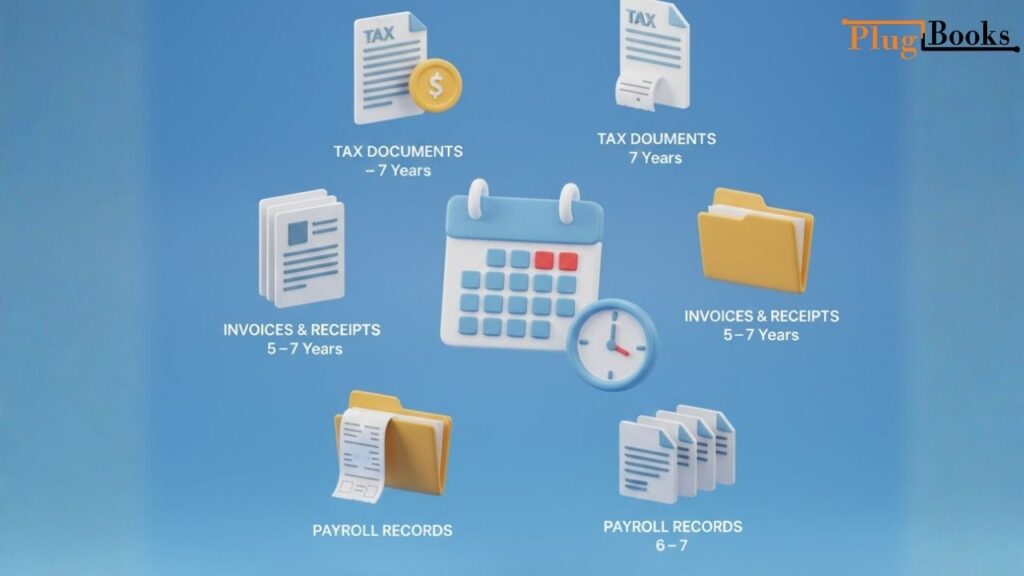
- Tax documents: Typically 7 years
- Invoices and receipts: 5–7 years
- Payroll records: 6–7 years
- Use PlugBooks to track document age and retention periods automatically.
How Long Should I Keep Financial Documents?
Retention of financial documents ensures legal compliance and protects your business during audits.
- Digital storage via PlugBooks allows safe, accessible archiving
- Review your documents annually to ensure nothing is missing
- Keep sensitive documents encrypted to prevent unauthorized access
How Long Do You Have to Keep Company Records?
Company records like incorporation papers, board minutes, and contracts must be retained according to legal requirements.
- Most jurisdictions recommend 7 years for company-related documents
- PlugBooks can track document types and flag those needing review or deletion
- Helps maintain compliance and peace of mind
How Long Do I Keep Financial Records?
This broader question encompasses all types of records: bank statements, invoices, payroll, and contracts.
- Recommended retention is 3–7 years depending on record type
- Digital record keeping reduces clutter and ensures easy retrieval
- PlugBooks provides a single platform for secure, long-term storage

Tools & Software for Record Keeping
Why Use PlugBooks?
PlugBooks is a modern tool that streamlines financial record keeping for small businesses:
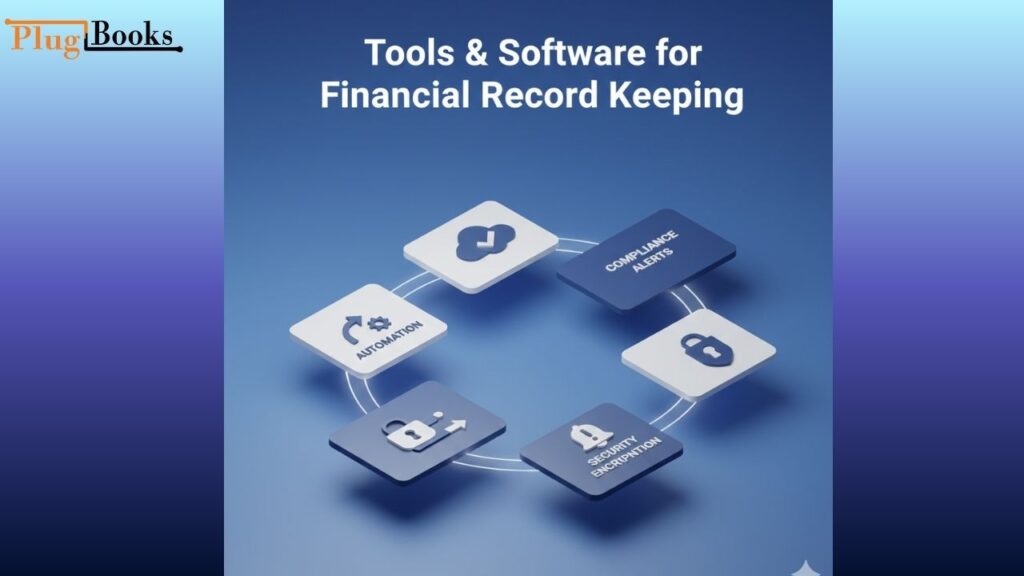
- Automated tracking and retention
- Cloud-based storage for access anywhere
- Compliance alerts for audits and tax filing
- Secure and encrypted storage for sensitive data
Other Features
- User-friendly dashboards for quick insights
- Customizable categories for easy organization
- Export options for accountants or auditors
Using PlugBooks ensures your records are secure, compliant, and easy to manage.
Common Mistakes in Financial Record Keeping
Even with good intentions, small businesses often make mistakes:
- Mixing personal and business finances
- Failing to track retention periods
- Not backing up digital files
- Ignoring software updates or security measures
Using PlugBooks mitigates these risks with automation, alerts, and secure storage.
FAQs
Q1: How long do I have to keep bank statements?
A1: Keep them 3–7 years for audits and tax purposes. PlugBooks tracks and stores them automatically.
Q2: How long should I keep financial documents?
A2: Most documents should be retained for 5–7 years; PlugBooks helps manage this efficiently.
Q3: What are the key features of a financial record keeping system?
A3: Secure storage, easy retrieval, categorization, automated backups, and integration with accounting software.
Q4: How long do you have to keep company records?
A4: Typically 7 years or more depending on legal requirements; PlugBooks can help track these.
Q5: How long do I keep financial records?
A5: 3–7 years depending on the record type. Use PlugBooks for simplified retention management.
Q6: Can you describe the key features of a financial record keeping system?
A6: A good system offers digital storage, automated transaction categorization, backup & security, and integration with accounting tools for easy management.
Quick Recap
- Accurate financial record keeping is vital for compliance and business growth.
- Use PlugBooks to track retention periods, store documents securely, and stay audit-ready.
- Follow retention rules: 3–7 years for financial documents, 7 years for company records.

Conclusion
Efficient record keeping is the backbone of every successful small business. Leveraging tools like PlugBooks ensures compliance, reduces stress during audits, and allows owners to focus on growth.
Start using PlugBooks today to manage, track, and protect your financial records in 2026 and beyond.