




Understanding what are selling fees on Amazon is more important than ever in 2026. With changes in fee structures, new fulfillment options, and growing competition, knowing exactly how much it costs to sell on Amazon helps you price smarter, increase profit margins, and scale your business confidently.
This guide breaks down all key fees, explains how they affect your bottom line, and shares practical strategies to keep costs under control.
Key Points
- Selling fees impact your pricing strategy, profit, and product competitiveness.
- New fee changes in 2026 affect FBA storage, long-term storage, and fulfillment costs.
- Referral, fulfillment, storage, subscription & service fees are major cost drivers.
- Being strategic with FBA, pricing, and storage can significantly reduce fees.
- Tools like Plugbooks give real‑time visibility into your Amazon costs.
What Are Amazon’s Selling Fees?
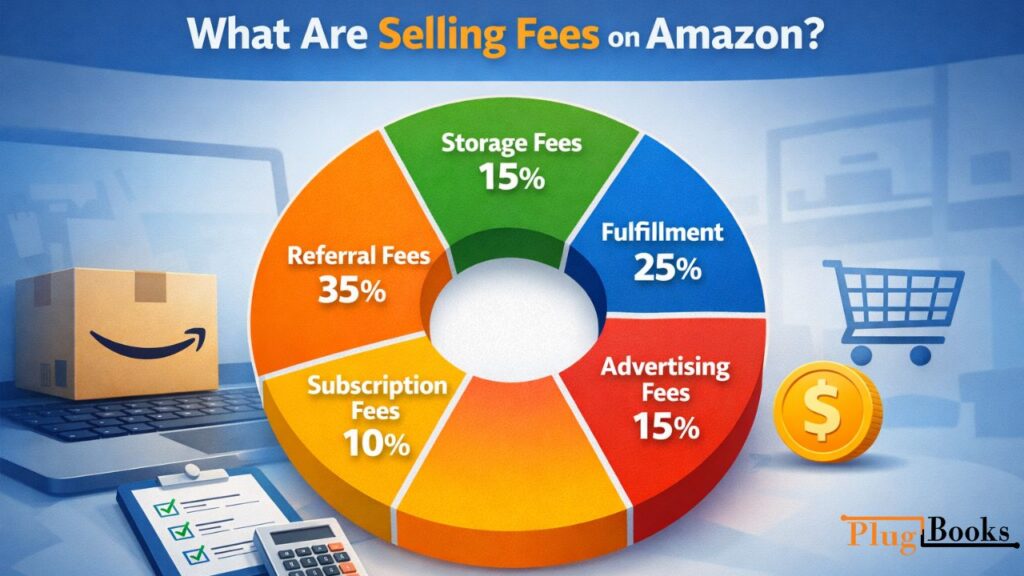
Amazon charges several types of fees when you sell on its platform. The main categories include:
Referral Fees
This is a percentage of the total sale price Amazon takes for each item sold. The exact rate depends on the product category. Some categories now have tiered referral rates based on price brackets (e.g., higher percentage on low‑price items and lower percentage on higher‑priced ones).
Fulfillment Fees
If you use Fulfillment by Amazon (FBA), additional charges apply for storage, handling, packing, and shipping. In 2026, Amazon has updated FBA fees for:
- Long‑term storage fees — higher for items stored over 365 days.
- Dimensional weight charges — based on size, not just actual weight.
- Seasonal demand fluctuations can also influence fulfillment pricing.
🪪 Subscription & Service Fees
- Professional Seller Plan: $39.99 per month.
- Individual Seller Plan: $0.99 per item sold.
- Optional services like Brand Registry, A+ Content, and Advertising campaigns carry additional costs.
New 2026 Fee Considerations
- Advertising & PPC Cost Trends: Sponsored ads now factor more heavily into selling costs as competition grows.
- Returns Processing Fees: Increasingly relevant for apparel, electronics, and large items.
- Data & Analytics Fees: Some sellers now opt into premium insights for a fee, impacting total costs.
How Do Amazon Selling Fees Vary by Seller Plan?
Individual Plan
- No monthly subscription.
- $0.99 per item sold + referral & other fees.
- Ideal for occasional or low‑volume sellers.
Professional Plan
- $39.99 monthly, regardless of sales volume.
- Lower referral fees and more selling tools.
- Access to advanced features like bulk listings, promotions, and API integrations.
Amazon Selling Fees: How to Calculate Them
To estimate your total selling fees, consider:
- Referral Fee: Percentage of total item price.
- Fulfillment Fee: Based on size, weight, and packaging method.
- Subscription Fee: Monthly fee for professional sellers.
- Long‑Term & Storage Fees: Especially if inventory stays in FBA warehouses.
- Advertising Costs: Sponsored ads often significantly impact net profit.
Example Calculation:
If you sell an item for $50 with FBA and professional plan:
- Referral Fee: 15% → $7.50
- Fulfillment Fee (FBA): $4.00
- Subscription Fee (monthly portion): $1.33
- Advertising Cost (approx): $3.50
Total Fees ≈ $16.33 → Net revenue ≈ $33.67

Tips to Reduce Amazon Selling Fees in 2026
1. Price Strategically
Include all applicable fees when setting your prices to protect your profit margins.
2. Smart Inventory Management
Avoid long‑term storage fees by forecasting demand and reducing excess stock.
3. Leverage FBA Select & Promotions
Using programs like FBA Select or lightning deals can reduce storage expenses and boost sales velocity.
4. Optimize Advertising ROI
Track your cost‑per‑click (CPC) and conversion rates to avoid overspending on ads.

Plugbooks: Simplify Amazon Selling Fee Management
Tracking fees manually can be overwhelming. Plugbooks.io connects directly to your Amazon seller account and provides:
- Real‑time tracking of sales, fees, and expenses
- Clear visibility into referral, fulfillment, storage, and advertising fees
- Simplified tax reporting and profit tracking
- Insights to help optimize pricing and reduce costs
Plugbooks gives you a complete picture of your Amazon finances, so you never guess what are selling fees on Amazon and how they affect your profits.

Conclusion
Understanding what selling fees are on Amazon 2026 is essential for every seller looking to maximize profitability. By knowing referral, fulfillment, storage, subscription, and ad costs — and calculating them accurately — you can set better prices and make informed business decisions.
Using strategic pricing, FBA optimization, and tools like Plugbooks helps you manage costs effectively and grow your Amazon business.
FAQs
1. What are selling fees on Amazon for Individual Sellers?
Individual sellers pay $0.99 per item plus referral and any additional fees.
2. What do Professional Sellers pay?
Professional sellers pay $39.99 per month, plus referral, fulfillment, and other applicable fees.
3. Does Amazon charge more for FBA items?
Yes — in addition to referral fees, FBA sellers pay fulfillment, storage, and potential long‑term storage fees.
4. How do advertising fees affect overall selling costs?
Sponsored ads and PPC campaigns can significantly increase your total costs but also drive more sales if optimized properly.
5. How can I reduce long‑term storage fees?
By forecasting demand accurately and avoiding overstock, you can minimize storage costs and protect profits.
2 thoughts on “What Are Selling Fees on Amazon 2026 Overview”