



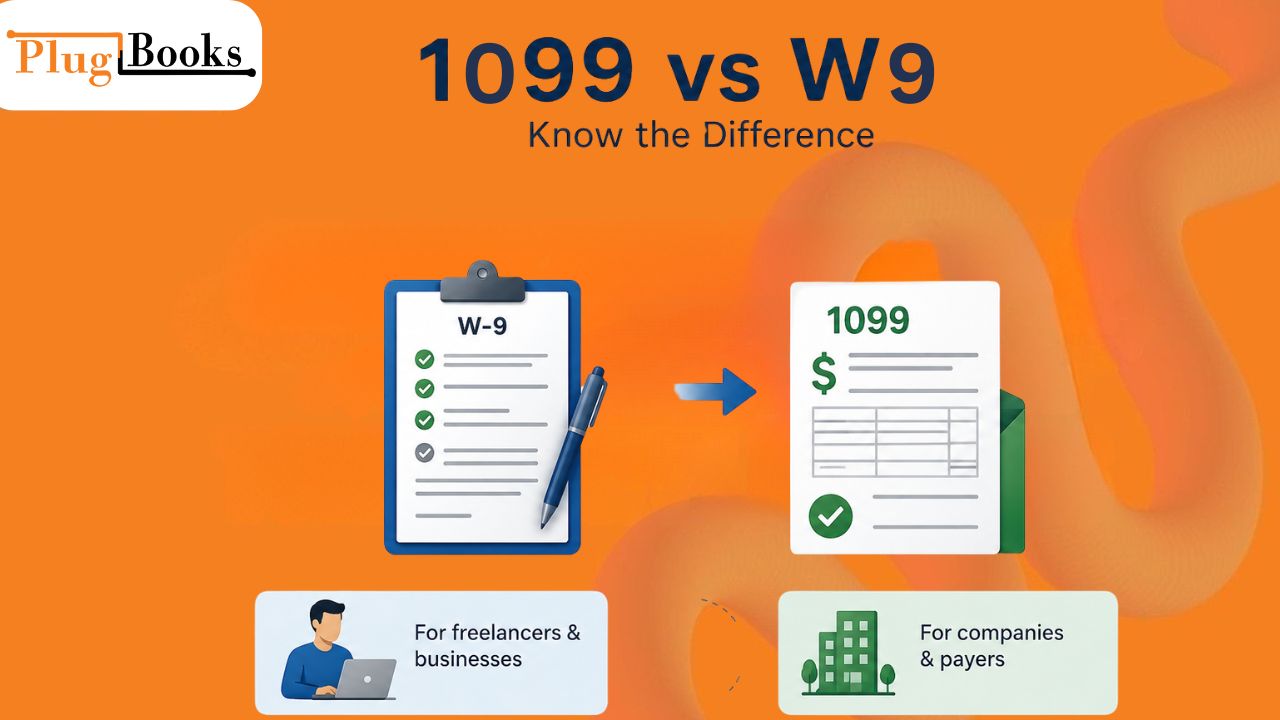
Tax paperwork can feel confusing, especially when you’re dealing with independent contractors, freelancers, and business payments. One of the most common questions people ask is whether they need a 1099 or w9 form and what each document actually does.
If you’ve ever hired a freelancer, received contractor income, or run a small business, understanding these forms can help you stay compliant, avoid IRS penalties, and simplify tax season.
In this guide, we’ll explain everything about tax forms for freelancers and contractors, including usage, requirements, deadlines, and common mistakes.
Key Takeaways
- W-9 forms collect taxpayer information from contractors.
- 1099 forms report payments made to non-employees.
- Businesses typically request a W-9 before issuing a 1099.
- Contractors are responsible for reporting income received.
- Missing deadlines can lead to IRS penalties.
Why Understanding 1099 or W9 Matters
Many entrepreneurs think both forms are the same. They aren’t.
One form collects taxpayer information and the other reports income to the IRS. Understanding the difference between a 1099 and a w9 is useful to both payers and recipients by avoiding reporting errors and compliance difficulties.
If you are a freelancer making some side income or a corporation that pays contractors, knowing how these forms relate to each other is a must.
What Is a 1099 Form?
A 1099 is an informational tax document used for various types of income other than wages from work.
“Employees get a W-2. Independent contractors generally get a 1099 showing how much they made throughout the year.
The IRS uses this information as an aid in verifying that income is properly reported on tax returns.
Typical Forms 1099 Variations
Form 1099 is used to report different sorts of income. There are several forms of Form 1099.
1099-NEC — Payment to freelancers and contractors.
1099-MISC — Miscellaneous revenue, including rent, royalties and prizes.
1099-INT — Interest revenue from banks and other financial institutions.
1099-DIV — Dividends and payouts from investments.
1099-K — Payments made via third-party networks and marketplaces.
1099-R – Pensions and retirement account distributions.
1099-G — Government payments (unemployment compensation, etc.).
1099-B — Proceeds from broker and barter exchange transactions .
1099-S — Income from Real Estate Transactions.
1099-C — Cancellation or discharge of debt.
1099-SA — Distributions from Health Savings Accounts (HSA).
1099-Q – Qualified education program distributions
1099-LTC — Profits from long-term care insurance
1099-OID = Income from Original Issue Discount.
1099-PATR— Patronage dividends paid by cooperatives.
1099-A — Acquisition or Abandonment of Property Secured.
1099-H — Health Coverage Tax Credit Advance Payments.
1099-CAP — Changes in the capital structure and control of corporations.
1099-QA — Distributions from ABLE Accounts
Each Form is designed to report a certain sort of income or financial transaction to the IRS . This enables people to record their profits accurately and comply with tax requirements.
Comparing 1099-NEC and 1099-MISC
Although both belong to the 1099 family, they serve different functions.
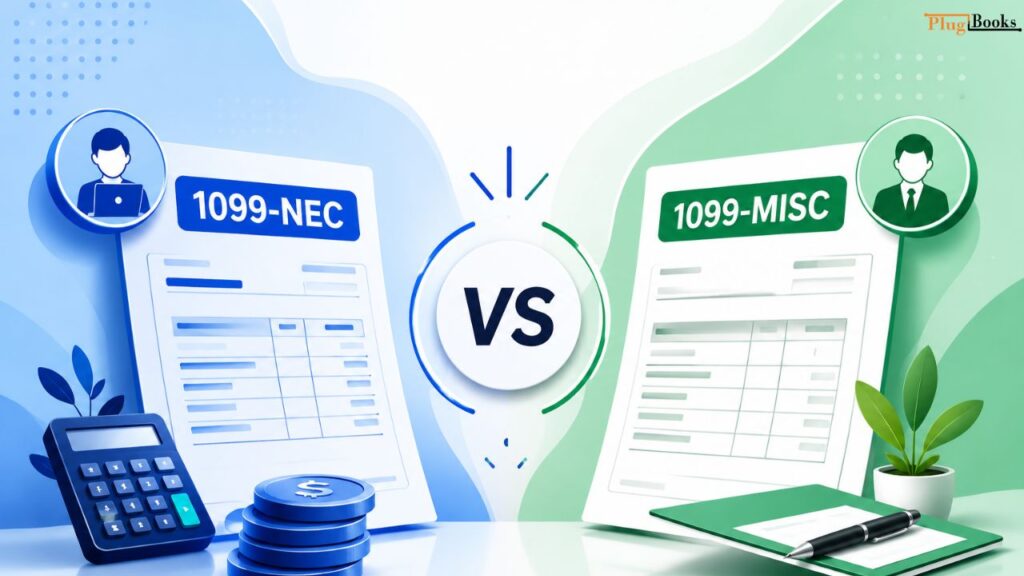
| Feature | 1099-NEC | 1099-MISC |
| Primary Purpose | Nonemployee compensation | Miscellaneous payments |
| Common Recipients | Freelancers and contractors | Landlords and royalty recipients |
| Reporting Threshold | Generally $600 | Varies by payment type |
| Business Use | Service payments | Other reportable transactions |
Businesses often use both forms depending on the nature of payments made during the year.
Who Typically Receives a 1099?
You may receive a 1099 if you:
- Work as an independent contractor
- Perform freelance services
- Operate a sole proprietorship
- Earn commission income
- Participate in gig economy work
Generally, businesses issue a 1099 when annual payments meet IRS reporting thresholds.
Understanding the W-9 Form
A W-9 is not an income reporting form.
Instead, it is a request for taxpayer identification information. Businesses use it to collect the details needed to prepare tax documents later.
When discussing 1099 and w9, remember that the W-9 comes first in most business relationships.
Why Businesses Request a W-9
Before issuing payments, companies need accurate tax information from contractors.
The W-9 helps businesses obtain:
- Legal name
- Business name (if applicable)
- Tax classification
- Taxpayer Identification Number (TIN)
- Mailing address
Without this information, preparing year-end tax forms becomes difficult.
Information Requested on the Form
The document contains several important sections.
| Field | Description |
| Taxpayer Identification Number | SSN or EIN |
| Business Name | Legal business name if applicable |
| Address | Mailing address for tax documents |
| Tax Classification | Individual, partnership, corporation, LLC, etc. |
Providing accurate information helps prevent reporting errors and IRS notices.
Situations Where a W-9 Is Required
Businesses often request a W-9 when:
- Hiring freelancers
- Working with consultants
- Paying independent contractors
- Engaging service providers
- Establishing vendor relationships
It’s generally best practice to obtain the form before issuing the first payment.
How the Forms Work Together
The easiest way to grasp 1099 or w9 is to think of them as the same process.
Step 1
A contractor fills out a W-9.
Step 2
The business has the information.
Step 3
Payments are made throughout the year.
Step 4
1099 issued by business if reporting requirements are met.
Step 5
Income report received by the IRS.
This approach ensures that both parties are accurately reported.

Tax Responsibilities for Independent Contractors
Unlike employees, contractors generally do not have taxes withheld from their payments.
This means they must manage:
- Federal income taxes
- State income taxes (where applicable)
- Self-employment taxes
- Quarterly estimated payments
Many new freelancers underestimate these obligations, leading to unexpected tax bills.
Keeping Accurate Records
Contractors should maintain:
- Payment records
- Invoices
- Expense receipts
- Bank statements
- Mileage logs
Good documentation supports deductions and simplifies tax preparation.
Responsibilities for Business Owners
When working with contractors, businesses have reporting duties.
Such responsibilities include:
- Gathering W-9s
- Payment tracking
- Establishing reporting obligations
- Timely issuance of forms
- Record-keeping
You could face fines if you don’t do this.
When Should Each Form Be Used?
Understanding the timing helps eliminate confusion.
Request a W-9 When
- Beginning a contractor relationship
- Adding a new vendor
- Updating taxpayer information
- Verifying contractor details
Issue a 1099 When
- Payments meet IRS reporting thresholds
- The recipient qualifies as a nonemployee
- Reportable compensation has been paid
This sequence is a major part of understanding 1099 or w9 correctly.
Backup Withholding Rules
Sometimes businesses must withhold a portion of payments.
This generally happens when:
- A contractor fails to provide a valid TIN
- The IRS requires backup withholding
- Taxpayer information is incorrect
Obtaining a completed W-9 reduces the likelihood of these situations.
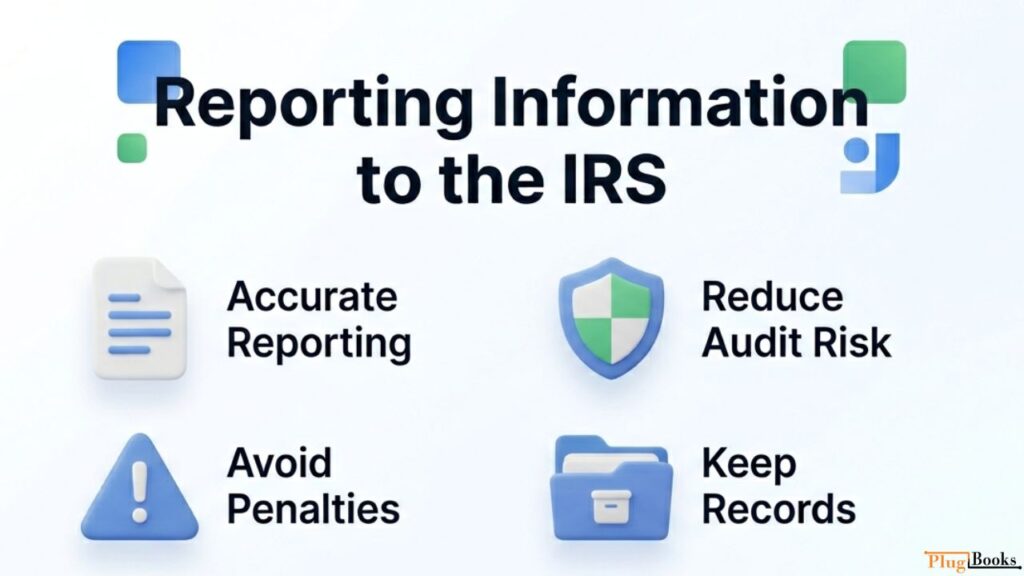
Reporting Information to the IRS
Businesses must submit required forms according to IRS guidelines.
Accurate reporting helps:
- Reduce audit risks
- Avoid penalties
- Ensure income matching
- Maintain compliance
Companies should retain supporting documentation for several years.
Important Filing Deadlines
Deadlines matter.
Missing them can trigger penalties that increase over time.
Businesses should:
- Gather contractor information early
- Review records before year-end
- Verify taxpayer details
- Submit forms before required due dates
Proactive planning prevents last-minute filing problems.
Potential Penalties for Mistakes
Failure to comply may result in:
- Late filing penalties
- Incorrect information penalties
- Backup withholding issues
- Increased IRS scrutiny
Even small administrative errors can become expensive when repeated across multiple contractors.
Real-World Examples
Example 1: Freelance Graphic Designer
A company hires a designer for several projects throughout the year.
Before payment, the designer completes a W-9.
At year-end, the company determines reporting requirements and issues a 1099 if necessary.
Example 2: Marketing Consultant
A consultant provides monthly services to a business.
The business collects tax information upfront and maintains payment records throughout the year.
When tax season arrives, reporting becomes straightforward.
Example 3: Small Business Vendor
A local business hires several contractors.
By collecting W-9 forms immediately, the owner avoids scrambling for information during filing season.
Freelancers, Consultants, and Gig Workers
The modern workforce increasingly relies on independent work arrangements.
Whether you:
- Drive for delivery apps
- Design websites
- Provide consulting services
- Manage social media accounts
- Offer virtual assistance
Understanding tax reporting forms for contractors and freelancers is an important part of managing your finances and taxes responsibly.
Small Business Best Practices
To stay organized:
- Request W-9 forms before payment
- Use accounting software
- Track contractor expenses monthly
- Review records quarterly
- Meet filing deadlines
A proactive approach minimizes compliance risks.
Working with Freelancers and Consultants
Many businesses hire freelancers for services like marketing, design, bookkeeping, and web development. Before making payments, businesses should collect a W-9 to obtain accurate taxpayer information for future tax reporting.
For example, Amazon, Shopify, and eBay sellers often work with virtual assistants, PPC specialists, and other contractors. Keeping proper records helps ensure compliance and accurate reporting.
Small Business Transactions
Small businesses frequently pay independent contractors instead of hiring full-time employees. Collecting tax information early and tracking payments throughout the year can simplify reporting and help avoid penalties.
How PlugBooks Helps Sellers
PlugBooks helps Amazon, Shopify and eBay sellers organize financial records, track expenses, and maintain accurate bookkeeping, making tax season easier and more efficient.

Legal and Compliance Considerations
Tax compliance isn’t optional.
Businesses should ensure:
- Accurate contractor classification
- Proper record retention
- Timely reporting
- Correct taxpayer information
Misclassification and reporting errors can create significant legal issues.
Understanding Your Tax Responsibilities
Both businesses and contractors share responsibility for accurate reporting.
Contractors must:
- Report all taxable income
- Maintain records
- Pay required taxes
Businesses must:
- Collect information
- Report payments properly
- File forms accurately
Following these rules helps avoid complications.
What Happens If Requirements Are Ignored?
Non-compliance can lead to:
- Financial penalties
- Interest charges
- IRS notices
- Additional documentation requests
- Potential audits
The cost of prevention is usually far lower than the cost of correcting mistakes later.
FAQs
W-9 vs. 1099 – What’s the Difference?
A W-9 form is used to gather tax information from independent contractors, freelancers, and gig workers. A 1099 records income paid to those people to the Internal Revenue Service.
Do I Need to Fill Out a W-9 Form?
A W-9 usually is required of independent contractors, freelancers, consultants and other nonemployees who supply services to a firm.
When is a business required to provide a 1099 to a contractor?
Generally, a business will send you a 1099 if it has paid you the proper amount in the tax year, and it meets IRS reporting standards.
Does that mean I have to pay my own taxes if I fill out a W-9?
Yes. Income taxes and self-employment taxes are largely the responsibility of independent contractors, as taxes are not usually withheld from their compensation.
W-9 for Employees or Contractors?
The W-9 is for independent contractors and freelancers, not employees. Generally, employees fill out Form W-4.
What does getting a 1099 indicate for my tax return?
If you get a 1099 it signifies the income was reported to the IRS. You will have to report that income on your tax return and claim any allowable business deductions.
Can you explain 1099 or w9 requirements for new freelancers starting their first client relationship?
New freelancers usually provide a W-9 form to share their tax information with clients. If their earnings reach the IRS threshold, the client issues a 1099 form to report the income, which must be included in their tax return.

Final Thoughts
If you’ve been confused about 1099 or w9, you’re not alone. These forms serve different but connected purposes. The W-9 gathers taxpayer information, while the 1099 reports income paid to independent contractors and other eligible recipients.
By understanding how they work together, meeting deadlines, and maintaining accurate records, both businesses and contractors can avoid penalties and make tax season far less stressful.