




Deciding where to start your online selling journey can be confusing. Should you sell on eBay or Amazon in 2025? Both platforms have unique advantages. Amazon offers massive traffic, scalable fulfillment, and strong trust signals, while eBay is flexible, great for niche or used items, and easier to start with.
This guide will help answer if it is better to sell on eBay or Amazon, explain if it is better to sell on Amazon or eBay for your product type, and give actionable steps to succeed.
Keynotes
- Deciding to sell on eBay or Amazon depends on product type, budget, and business goals.
- Amazon is ideal for scalable, high-volume, new products; eBay excels with used, niche, or collectible items.
- Fees, fulfillment, and platform rules directly affect your profit margins.
- A hybrid approach (selling on both platforms) can maximize sales and reduce risk.
- Effective setup, optimized listings, and consistent fulfillment determine success.
- Automating bookkeeping and tracking costs with tools like PlugBooks simplifies growth.
- Success comes from understanding competition, marketing strategies, and staying updated with 2025 marketplace trends.

1. Marketplace Overview & Product Fit
Amazon Highlights:
- Best for new products with private labels and a lot of stock
- Strong infrastructure: FBA, Prime delivery, and automated fulfillment
- Buy Box and rigorous rules make it a competitive atmosphere.
Key Features of eBay
- Great for used, collectible, refurbished, or rare things
- More options: auctions, listings with set prices, and seller branding
- It’s easier for beginners to get started and try out things.
Quick Tip: eBay might be easier if you’re just starting out. Amazon is the best choice for size and traffic. A lot of sellers utilize a mix of both: they sell fresh things on Amazon and one-of-a-kind things on eBay.
2. Fees & Profit Margins
| Platform | Key Fees | Notes |
| Amazon | Referral (8–15%), FBA, subscription | High competition, but scalable |
| eBay | Listing, final value, optional promoted listings | Flexible, lower upfront costs |
Pro Tip: Calculate fees + shipping + ad spend before deciding. Profit margins often determine is it better to sell on eBay or Amazon for your business.

3. Fulfillment & Logistics
- Amazon FBA: automatic storage, fast shipment for Prime members, and customer trust
- eBay: seller-managed or third-party fulfillment; better control, lower cost
- Scaling is important: Amazon makes it easier to handle large orders, while eBay prefers individualized service.
Keep in mind that your logistical choice often tells you if it’s preferable to sell on Amazon or eBay.
4. Competition, Visibility & Marketing
- Amazon: Buy Box competition, limited branding, and pay-per-click marketing to get seen
- eBay: auctions, listings with set prices, and a stronger seller identity
- To get better ranks, make sure your titles, keywords, and images are all optimized.
- Hybrid vendors can use both platforms to reach more people.
5. Step-by-Step Seller Setup
| Step | Amazon | eBay |
| Account Setup | Individual or Professional | Seller profile & store |
| Listing | Product research & SEO | Auction/fixed-price, good photos |
| Fulfillment | FBA or merchant-fulfilled | Self-fulfillment or 3PL |
| Growth | Reviews, PPC ads, inventory | Feedback, niche marketing |
| Scale | Hybrid with eBay for extra items | Add Amazon for volume items |
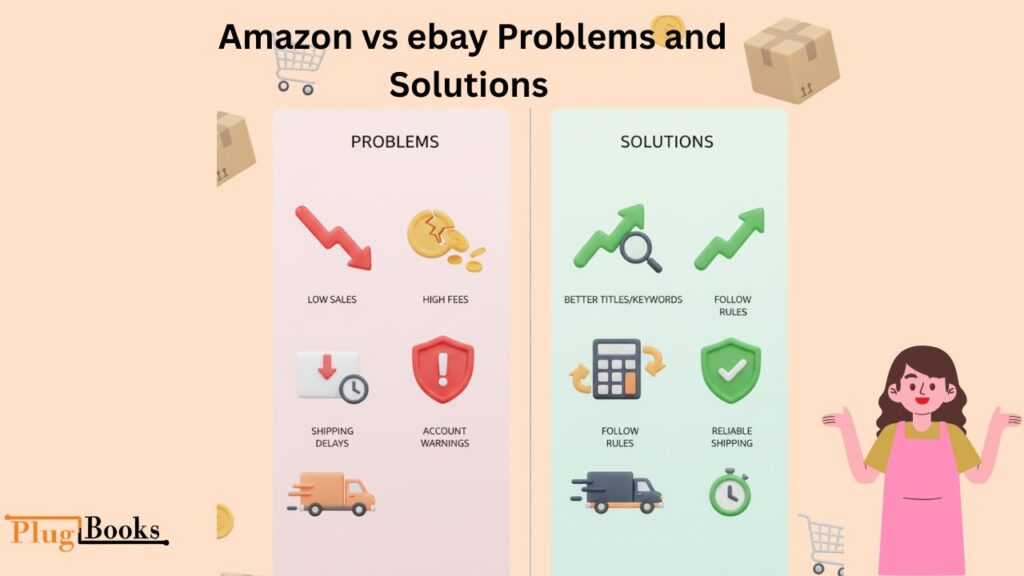
6. Problems and Solutions That Happen a Lot
- Sales are low: Make titles, keywords, and prices better.
- High fees: Look over margins and think about which platform to use.
- Account warnings: Follow the rules of the platform
- Shipping delays: Use dependable carriers and make sure your fulfillment is as good as it can be.
Taking care of these things stops blunders when deciding whether to sell on eBay or Amazon.
7. Security, Brand Protection & Best Practices
- Avoid prohibited/counterfeit items
- Maintain strong seller ratings
- Track finances & automate bookkeeping
- Monitor platform updates for fee changes, policy shifts, and buyer behavior
8. PlugBooks Seller Support
Whether you sell on eBay or Amazon, managing finances, tracking fees, and keeping inventory organized can be overwhelming. PlugBooks simplifies bookkeeping, saves time, and helps you focus on growing your business.
1. Keep an eye on fees and payouts
Automatically keep track of Amazon and eBay sales, including shipping, returns, referral fees, listing fees, and rewards. Get accurate information about your profits without having to use spreadsheets.
2. Sync and automate your inventory
Easily connect to QuickBooks or Xero to keep track of sales, inventory, and net profit. Stay on top of your multi-platform business and make fewer mistakes.
Bottom line: PlugBooks takes care of your bookkeeping, fees, and profit tracking in the background so you can focus on growing your business.
9. FAQs
1) Is it better to sell on eBay or Amazon for beginners?
eBay is easier for testing, Amazon better for scale.
2) Is it better to sell on Amazon or eBay for used items?
Used, niche, or collectibles sell best on eBay.
3) Can I sell on both platforms?
Yes, hybrid selling maximizes profits and diversifies risk.
4) Do I need inventory to start?
Not necessarily — dropshipping and print-on-demand allow you to start without stock.
5) Which platform pays faster?
Amazon pays every 2 weeks; eBay payments usually in 1–3 business days.
6) Which platform is easier to get reviews?
eBay reviews are easier to obtain; Amazon reviews are harder but impactful.
7) Can I sell internationally?
Yes — both offer global selling options.
8) Do I need a trademark or brand registry?
Recommended for Amazon if building a long-term brand; optional for eBay.
Quick Recap
- eBay: flexible, niche-friendly, great for used items
- Amazon: scalable, high traffic, ideal for new products
- Fees, fulfillment, and competition are key in deciding is it better to sell on eBay or Amazon
- Hybrid sellers often succeed by leveraging both platforms
- Back-office automation (PlugBooks) helps maximize profit

In conclusion
So, which is better for selling: eBay or Amazon? The answer depends on what you sell, what your business goals are, and what resources you have. Amazon is great for high-volume or branded products because it has scale, traffic, and automation. eBay is better for unique or used items because it is more flexible, has niche opportunities, and is easier to get into.
The ideal way to go is to start on the platform that works best for your product and company model, keep a careful eye on your profits, and grow prudently. With PlugBooks, you can automate your bookkeeping so you can focus on growing your business while still keeping track of fees, inventory, and profits. Selling on eBay or Amazon may be both successful and long-lasting if you plan beforehand.